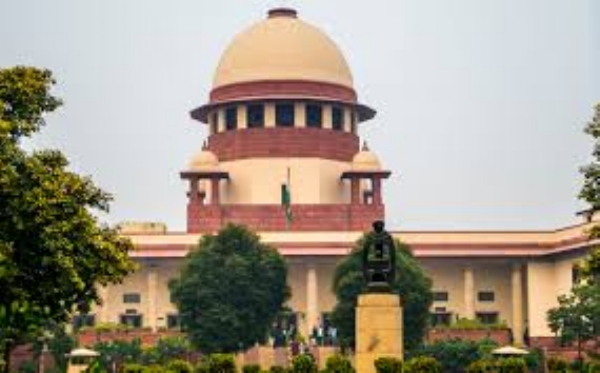
New Delhi, 03 January (H.S.): The Supreme Court ruled on Friday that judicial imposition of timelines for completing investigations by probe agencies occurs reactively in cases of inordinate delay causing prejudice, rather than prophylactically as a standard practice.
A bench comprising Justices Sanjay Karol and N.K. Singh delivered these observations while overturning an Allahabad High Court order that mandated Uttar Pradesh Police to conclude a probe within 90 days and shielded accused individuals from coercive action.
Scrutiny of High Court Directive
The High Court had directed the 90-day timeline and interim protection in a case involving allegations of procuring arms licences through fabricated documents in Agra, Uttar Pradesh.
The FIR stemmed from a Special Task Force (STF) inquiry revealing irregularities, including forgery, concealment of facts, and false affidavits by licence holders and a retired arms clerk, Sanjay Kapoor.
The bench set aside these orders, granting accused only two additional weeks of protection before allowing lawful actions to proceed.
Judicial Restraint on Investigations
Justice Karol, authoring the December 19 verdict, emphasized that investigations are inherently unpredictable, influenced by factors like witness reluctance, unusable evidence, and intersecting court proceedings.
Courts must accord agencies reasonable latitude, intervening only where evident stagnation, unexplained inaction, or unjustified delays threaten fairness, liberty, or justice integrity—making time-bound directives an exception, not the norm.
The apex court clarified: timelines arise reactively when prejudice is demonstrable on record, not prophylactically to preempt issues, as that encroaches on executive functions.
Balancing Speedy Justice with Practicality
While affirming Article 21's mandate for timely investigations as part of the right to speedy trial, the bench cautioned against mechanical orders that disregard probe complexities.
It advocated a balanced approach: respecting investigative realities yet safeguarding against inertia where prolonged delays impact personal liberty, such as extended custody.
Precedents underscore this nuance, with timelines warranted only amid clear prejudice, not routinely.
Arms Licence Forgery Case Details
The Uttar Pradesh government challenged the High Court's reliance on its prior Shobhit Nehra ruling, arguing it hampered the ongoing STF probe into systemic licence issuance flaws.
The Supreme Court upheld the state's position, prioritizing procedural autonomy over blanket protections equivalent to unmerited anticipatory bail.
---------------
Hindusthan Samachar / Jun Sarkar



04 Jan 2026