New Delhi, 12 January (H.S.): Prime Minister Narendra Modi delivered opening remarks on Monday during a joint press meet with German Chancellor Friedrich Merz, welcoming him on Swami Vivekananda Jayanti and highlighting the historic bridge of philosophy, knowledge, and spirit between India and Germany that Vivekananda forged.
PM Modi noted the significance of Merz's first visit as Chancellor to India—and Asia—reflecting his deep personal commitment to bilateral ties. India remains fully committed to strengthening friendship and partnership with Germany, PM Modi affirmed, invoking Gujarat's traditional welcome: Aavkaru mitho aapje re, meaning heartfelt reception with affection.
He emphasized the timely nature of the visit, marking 25 years of the Strategic Partnership last year and 75 years of diplomatic relations this year.Bilateral trade has reached a record high above $50 billion, with over 2,000 German companies operating long-term in India, signaling unwavering confidence in its opportunities.
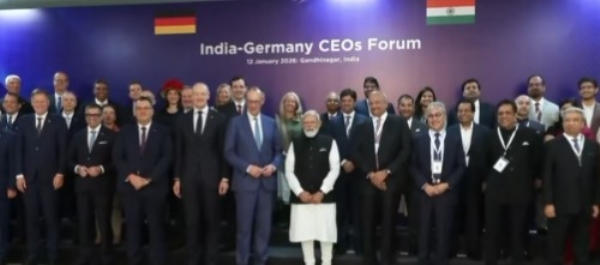
The India-Germany CEO Forum earlier that morning showcased this vibrancy. Technological collaboration has strengthened annually, with shared priorities in renewable energy leading to a new Centre of Excellence for knowledge, technology, and innovation exchange.
PM Modi highlighted expanding joint projects in climate, energy, urban development, mobility, and green hydrogen—termed a game-changer mega project by companies from both nations. Secure supply chains and today's Memorandums of Understanding (MoUs) will accelerate cooperation.
In defense and security, growing ties reflect mutual trust; Modi thanked Merz for simplifying defense trade processes and outlined a roadmap for co-development and co-production opportunities.Deep people-to-people links trace back to Rabindranath Tagore's influence on German intellectuals, Vivekananda's inspiration across Europe, and Madam Cama's raising of India's independence flag in Germany.
Modern initiatives include enhanced migration, mobility, skilling via a Global Skills Partnership—easing healthcare professionals' movement—and sports cooperation. A Comprehensive Roadmap for Higher Education invites German universities to open campuses in India.Modi expressed gratitude for visa-free transit for Indians and the German Maritime Museum's tie-up with Gujarat's Lothal National Maritime Heritage Complex, plus an MoU on traditional medicines with Gujarat Ayurveda University.
Globally, trilateral projects in Ghana, Cameroon, and Malawi exemplify successful models; a new Indo-Pacific consultation mechanism will boost coordination.Discussions covered Ukraine, Gaza, and regional issues, with India advocating peaceful resolutions and both nations united against terrorism as a grave threat to humanity. They agree on reforming global institutions, including UN Security Council expansion via G4 efforts.
Concluding, PM Modi reiterated a warm welcome from 1.4 billion Indians, confident the talks infuse new energy into the partnership. Danke schoen, he signed off.
---------------
Hindusthan Samachar / Jun Sarkar
12 Jan 2026