Lucknow,
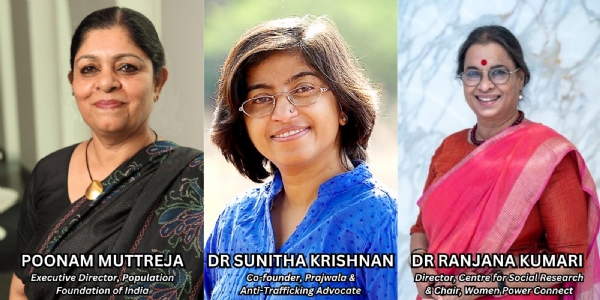
11 Dec (HS): Poonam Muttreja, Sunitha Krishnan, and Ranjana Kumari's work is
causing systemic change across the country.
16 Days of Activism (November 25–December 10) was founded in 1991 by
activists and is organized by the Centre for Women's Global Leadership. Its
goal is to encourage concerted action against all kinds of gender abuse. This year's campaign addresses digital
violence against women and girls. It is
crucial to note, however, that gender-based violence is a structural issue that
ultimately percolates into digital realms.
According to the National Crime Records Bureau, approximately 4.5 lakh
cases of crimes against women were registered in India in 2023 alone. They are
striving to improve the situation by influencing policy, raising public
awareness, offering survivor-focused assistance, and catalyzing systemic
change.
Poonam
Muttreja, Executive Director of Population Foundation of India: Poonam Muttreja has been a leading advocate
for women's health, gender equity, and reproductive rights in India for more
than four decades. As Executive Director
of the Population Foundation of India, she has spearheaded some of the
country's most effective online and offline initiatives against gender-based
violence, such as Bas Ab Bahut Ho Gaya and Desh Badlega Jab Mard Badlega. She is also a co-creator of the award-winning
transmedia campaign Main Kuch Bhi Kar Sakti Hoon, which used entertainment and
community participation to challenge harmful gender stereotypes and combat
gender-based violence.
Poonam, a Schwab Foundation awardee, has
considerable experience working with governments, civil society, and
international partners to scale community health action and increase
communication about social and behavioral change. She is a Delhi University and
Harvard Kennedy School alumni who serves on various national and international
governing committees and frequently participates in public discussions via
television, print, and policy forums.
Dr. Sunitha Krishnan, co-founder of Prajwala
and an anti-trafficking advocate:
Sunitha Krishnan, a human rights activist, won the Best International
Book (Nonfiction) prize at the Sharjah International Book Fair 2025 in November
for her book 'I Am What I Am.' The event
was more than a literary honor for Padma Shri recipient and founder of
Prajwala, India's largest anti-trafficking organization. The prize offers us a larger platform to
advocate for legislation that prioritize victims, stronger implementation, and
greater attention to the reasons driving demand. We've built frameworks, but the urgency to
put them into action is still lacking, she added.
Working
tirelessly and regularly, she shaped Prajwala's path and raised awareness about
sex trafficking. She was also selected
Tallberg Global Leader for 2016 and serves as an advisor to various state
governments on the development of comprehensive victim care.
Dr. Ranjana Kumari, Director, Centre for
Social Research, and Chair, Women Power Connect: Dr Ranjana Kumari, a renowned
social activist, academic, and champion for women's rights in India and South
Asia, is now the Director of the Centre for Social Research and the President
of Women Power Connect. She has
committed her life to promoting gender equality, increasing women's involvement
in government, and combating dowry violence, female foeticide, and human
trafficking.
Her
involvement in social work began in 1976, when she became concerned about dowry
deaths near her house, which eventually inspired her well-known publication
'Brides Are Not for Burning'. She has
also worked as the Coordinator of the South Asia Network Against Trafficking in
Persons and is a member of the Central Advisory Board for the Pre-Conception
and Pre-Natal Diagnostic Tests Act of 2001.
Freedom is being free of all ties, yet an Indian woman is bound by
many. One of the most significant ones
is societal pressure. Women are still
viewed as second-class citizens in our society, and the reason for this is our
thinking, Ranjana stated in an interview, adding that her battle for women's
rights would continue until genuine equality is realized.
Hindusthan Samachar / Abhishek Awasthi