Kolkata, 10 December (H.S.):
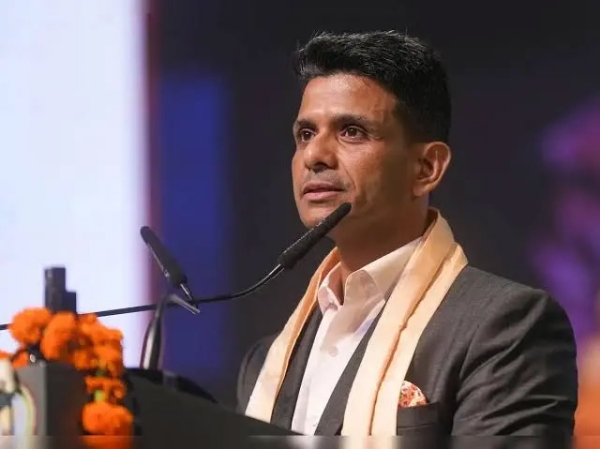
Air Force Group Captain Shubhanshu Shukla, the first Indian astronaut to visit the International Space Station (ISS), said on Wednesday that India is now “harbouring big and bold dreams,” having entered a new era in human spaceflight after a gap of 41 years.
Shukla, who travelled to the ISS under the Axiom-4 mission, returned to India from the United States on August 17, 2025, after an 18-day stay in space. Interacting with school students at an event organised by the Indian Centre for Space Physics in Kolkata, he said, “Space is a wonderful place — deeply peaceful, with a view that becomes even more captivating over time.”
Laughing, he added, “The longer you stay there, the more you enjoy it. Honestly, I didn’t quite feel like coming back.” He noted that the hands-on experience in space was very different from what he had learned during training and said it would play a crucial role in shaping India’s upcoming human spaceflight programmes.
Describing the future of India’s space science as “extremely bright,” Shukla said the country is now working to realise “very big and bold dreams.” He termed his ISS mission a “stepping stone” towards India’s ‘Vision Gaganyaan’ and added that “the experience gained is a national asset, already being used by internal committees and design teams to guide future missions.”
Outlining India’s space ambitions, he said that upcoming projects include the ‘Gaganyaan’ human spaceflight mission, the country’s own space station ‘Bharatiya Station,’ and eventually a human landing on the Moon. He stated that the Moon landing target has been set for 2040 and that the sector would evolve at a “rapid pace” over the next 10 to 20 years.
Encouraging students, Shukla said, “These goals are indeed challenging but completely achievable for young people like you.” He added that India’s expanding human spaceflight capabilities will generate “vast employment opportunities.”
Echoing India’s first astronaut Rakesh Sharma’s iconic words, he said, “From orbit, our India still looks the best in the world.” Shukla stressed that the achievement was not his alone but that of the entire nation.
“The youth of India are immensely talented. They must stay focused, remain curious, and work hard. It is their responsibility to help build a developed India by 2047,” he said.
Highlighting a generational shift since Sharma’s era, Shukla pointed out that India has now developed a complete astronaut ecosystem. “With Gaganyaan and future missions, Indian children will not only dream of becoming astronauts but will also be able to achieve it within the country,” he said.
“When one person goes to space, it lifts a million dreams. That’s why such programmes must continue — the sky is no longer the limit,” Shukla remarked.
He urged scientists to build systems capable of lasting 20 to 30 years while ensuring adaptability to future technologies. Shukla also expressed his desire to participate in future space missions and said he looks forward to undertaking a spacewalk, which would require an additional two years of training.
---------------
Hindusthan Samachar / Satya Prakash Singh
10 Dec 2025