New Delhi, 05 September (H.S.). — India’s efforts to eliminate child marriage have received a major global endorsement, with the United Nations declaring November 27 as the International Day for the Elimination of Child, Early and Forced Marriage.
The date carries special significance for India as it marks the day the Government of India launched the ‘Bal Vivah Mukt Bharat’ campaign in 2024.
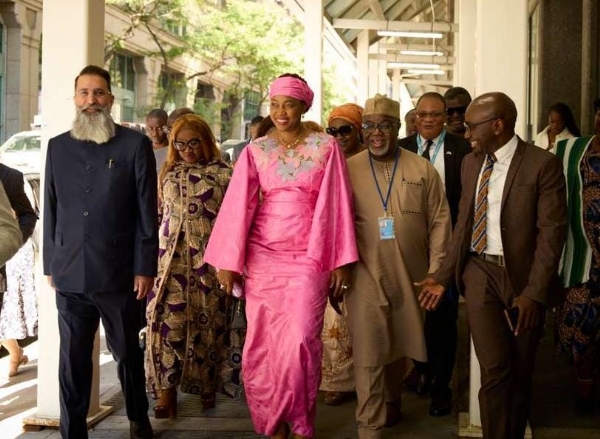
The international initiative for a dedicated global day was spearheaded by Bhuwan Ribhu, founder of Just Rights for Children (JRC). During his address at the United Nations in March 2026, Ribhu reiterated the call for a UN resolution to designate a day dedicated to ending child marriage. The initiative subsequently received support from international leaders, including Dr Fatima Maada Bio, First Lady of Sierra Leone.
Sierra Leone, backed by 67 countries, including India, presented the resolution before the United Nations General Assembly.
The resolution was adopted by the UN on September 4.
During the presentation of the resolution, Dr Fatima Maada Bio made a special mention of Just Rights for Children in the UN Hall. JRC founder Bhuwan Ribhu was present with the UN delegation during the adoption of the resolution and was the only civil society representative present.
Welcoming the UN declaration, Ribhu said the development was a moment of pride for India and credited children, community leaders, faith leaders and NGO partners for their efforts to combat child marriage.
He also acknowledged the leadership of the Government of India under Prime Minister Narendra Modi and Union Minister for Women and Child Development Annapurna Devi, saying the global recognition demonstrated the growing international focus on ending child marriage.
Ribhu said the global commitment should now translate into decisive action by governments to end child marriage by 2030 and ensure education, protection and development opportunities for every child.
The latest national data cited by JRC indicate a decline in child marriage in India. According to the 2019-21 National Family Health Survey (NFHS-5), 23.3 per cent of women aged 20-24 were married before the age of 18. The figure was 20.1 per cent in NFHS-6 (2023-24), according to the data provided by the organisation.
The Government of India has set a target of reducing the prevalence of child marriage by 10 per cent by 2026. The global commitment to eliminate child marriage by 2030 is aligned with Target 5.3 of Sustainable Development Goal 5 on gender equality, which calls for the elimination of harmful practices, including child, early and forced marriage.
India’s efforts have also been extended beyond its borders. Inspired by the ‘Bal Vivah Mukt Bharat’ campaign, the ‘Child Marriage Free Nepal’ campaign was launched in December 2024 through the efforts of JRC. The organisation said the movement has since expanded to more than 99 countries, with over 250 million people taking pledges to work towards ending child marriage.
Between December 2025 and March 2026, JRC also undertook a 100-day ‘Child Marriage Free World’ campaign aimed at engaging governments across 100 countries and reaching one lakh schools. The campaign’s experiences and recommendations were subsequently taken to international platforms, including the United Nations.
JRC describes itself as one of the world’s largest child protection networks and is leading the Child Marriage Free World campaign through law, accountability and collective action.
In India, JRC partners work alongside governments and law-enforcement agencies across 782 districts, involving communities, schools, panchayats, women, faith leaders, police, political representatives and vulnerable populations in efforts to prevent child marriage.
According to JRC, its partners have stopped and prevented more than 5.5 lakh child marriages in India, highlighting the role of coordinated action by governments, civil society and communities in addressing the practice.
---------------
Hindusthan Samachar / Indrani Sarkar
18 Aug 2026