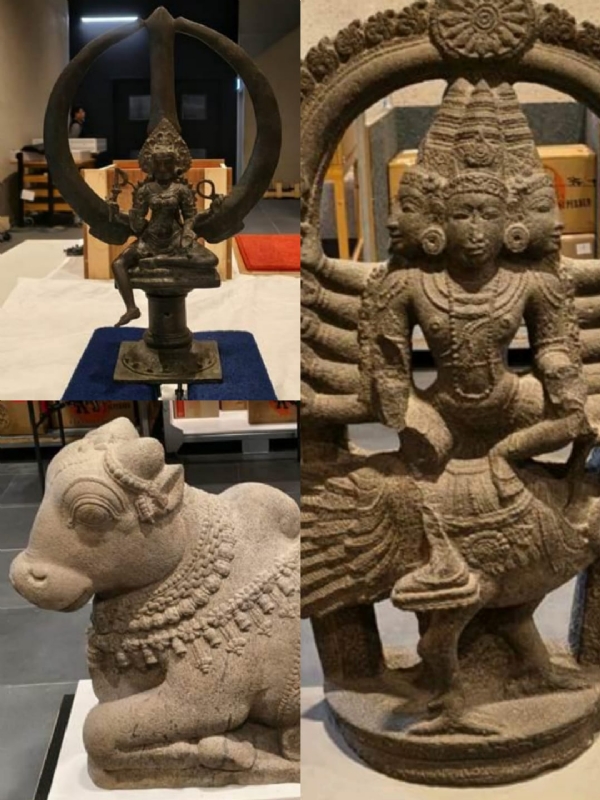
New Delhi, 09 July (H.S.): Australia is set to return three significant ancient Indian religious artefacts to India, including a ceremonial trident depicting Goddess Bhadrakali, a stone sculpture of Nandi, the sacred mount of Lord Shiva, and a rare stone idol of the six-faced Lord Kartikeya. Associated with historic temples in Tamil Nadu, these artefacts date back to the Chola and Vijayanagara-Nayak periods and are regarded as invaluable components of India's cultural and civilisational heritage.
According to the Prime Minister's Office (PMO), the return of these priceless artefacts forms part of the bilateral understandings reached between India and Australia. The ancient treasures will soon be repatriated to India with due honour and respect.
One of the key artefacts is a ceremonial metal trident (Trishul) bearing the image of Goddess Bhadrakali. The upper portion of the trident is adorned with the fierce manifestation of Shakti, Goddess Bhadrakali, who is revered in the Shaiva-Shakta tradition as a symbol of protection, the destruction of evil, and divine power. Crafted in the traditional South Indian temple metalworking style for ritual worship, the artefact belongs to the historic Sri Kashi Viswanathaswamy Temple at Kollumangudi in Tamil Nadu. The temple was constructed between the 13th and 16th centuries, spanning the late Chola and Vijayanagara-Nayak periods.
The second artefact is a finely carved stone sculpture of Nandi, the sacred bull and devoted vehicle of Lord Shiva. In accordance with the Tamil Shaiva temple tradition, Nandi is always positioned facing the sanctum sanctorum, symbolising unwavering devotion, strength, and righteousness. Executed in the classical Tamil Shaiva sculptural style, the sculpture displays exceptional anatomical proportions and intricate ornamental detailing. Nandi is depicted in the traditional reclining posture, adorned with decorative bells and garlands around the neck. This sculpture also originates from the historic Sri Kashi Viswanathaswamy Temple in Kollumangudi village, Tiruvarur district, Tamil Nadu, dating from the 13th to 16th centuries CE.
The third artefact is a rare stone sculpture of Lord Kartikeya, also known as Murugan or Shanmukha, the six-faced son of Lord Shiva, who symbolises wisdom, valour, and divine protection. The sculpture portrays the deity with twelve arms holding his principal weapon, the Vel (spear), along with other traditional weapons. His divine mount, the peacock, is intricately carved alongside him. The sculpture is considered an outstanding example of Chola-period artistry, celebrated worldwide for its refined proportions and lifelike craftsmanship. It belongs to the Naganathaswamy Temple at Manambadi village in Tamil Nadu's Thanjavur district. The historic temple was built during the reign of Emperor Rajendra Chola I in the early 11th century CE.
The repatriation of these ancient and invaluable artefacts from Australia underscores the growing strength of India-Australia bilateral relations and reflects the two countries' shared commitment to preserving and protecting historical and cultural heritage.
---------------
Hindusthan Samachar / Jun Sarkar

09 Jul 2026
Movie Review:'Dhamaal 4' Delivers a Complete Package of Laughter, Adventure and Family Entertainment
09 Jul 2026