Tehran/Washington, 20 July (H.S.): Tensions in West Asia have reached a critical level amid the escalating conflict between the United States and Iran over the Strait of Hormuz. Several Iranian cities witnessed explosions following US air strikes, while the death of an American soldier in a drone-related incident in Iraq has further intensified the situation. Meanwhile, Lebanon’s President has arrived in Washington for talks with senior US officials amid the growing regional crisis.
Iran has accused the United States of targeting its Darkhovin nuclear power plant, alleging that the attack violated international law and Iranian sovereignty. The development has triggered global concern over the possibility of further escalation in the region.
According to reports by Al Jazeera, CNN, CBS and ABC News, the US Central Command (CENTCOM) said American forces launched another round of strikes against Iran on Sunday evening. The US military has carried out air operations against Iranian targets for the ninth consecutive night and indicated that the campaign would continue.
The situation became more serious after a US soldier was killed during an operation in northern Iraq involving an Iranian drone. CENTCOM said the soldier died while securing and destroying explosives from a downed Iranian drone. Another soldier was injured in the incident and is receiving medical treatment.
The United States has said that 17 American military personnel have been killed since the conflict began on February 28. The latest incident has added to concerns over the widening scope of the confrontation between Washington and Tehran.
Iran claimed that the US had carried out an attack on the under-construction Darkhovin nuclear power plant in Khuzestan province of southwestern Iran. The facility, located along the Karun River, is also referred to as the Karun Nuclear Power Plant. Iran’s Atomic Energy Organisation described the strike as a violation of international law and an attack on the country’s sovereignty.
The alleged attack reportedly took place at around 3:40 am local time on Sunday. Iran claimed that it later carried out a retaliatory drone strike targeting a US base in Kuwait.
Iranian officials also said that the United States launched a missile attack on the outskirts of Abadan city in Khuzestan province on Sunday, though no casualties were reported. Iran’s Islamic Revolutionary Guard Corps (IRGC) claimed that it had shot down a US MQ-9 drone near Ahvaz city. The US has not immediately issued an official response to the claim.
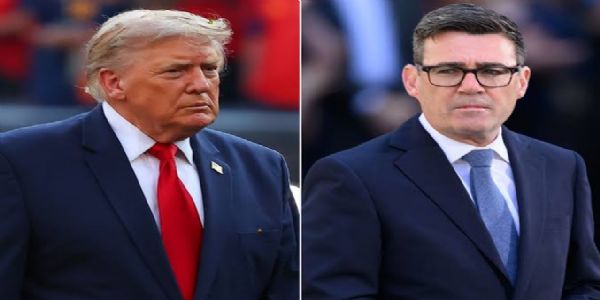
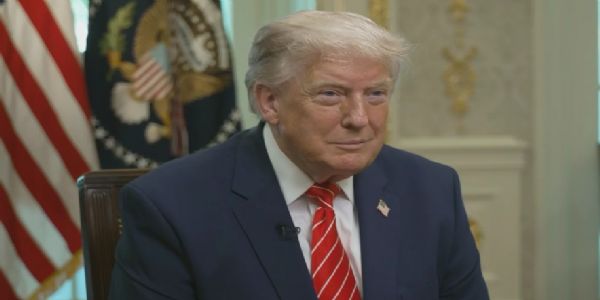
Amid the rising tensions, US President Donald Trump said he was not concerned about Iran’s failure to comply with a memorandum of understanding, adding that Washington’s primary objective was to prevent Iran from acquiring nuclear weapons under any circumstances.
The International Atomic Energy Agency (IAEA), a United Nations-linked nuclear watchdog, said it had begun examining reports of the alleged attack on the Darkhovin nuclear facility. The agency stated that the plant was still in the early stages of construction and that no nuclear material was present during its last inspection of the site.
The IAEA said there was no indication of any radiological threat from the reported attack. However, Director General Rafael Grossi renewed his call for military restraint around all nuclear-related facilities.
Meanwhile, Iran’s Islamic Revolutionary Guard Corps Navy claimed that it had intercepted two vessels in the Strait of Hormuz. The navy said the ships were attempting to pass through an unsafe route with US support. Iranian officials warned that Tehran maintains full control over the strategic waterway and that the transportation of oil, gas and chemical fertilisers would not be possible without Iran’s approval.
Iranian Deputy Foreign Minister Kazem Gharibabadi warned that the attack on the Darkhovin nuclear facility would receive an appropriate response and said the United States would be responsible for the consequences.
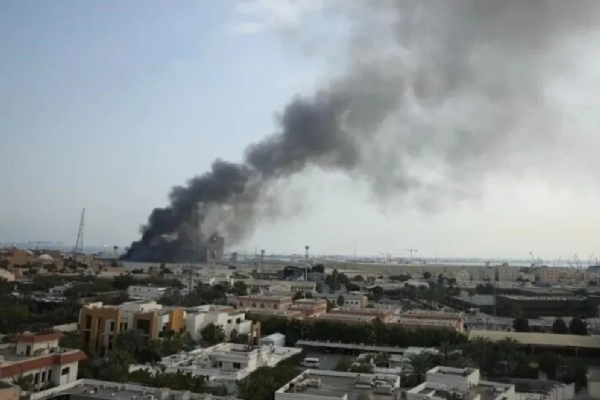
The UK Maritime Trade Operations reported that a vessel caught fire near the Strait of Hormuz off the coast of Oman. The incident occurred around eight nautical miles northwest of Kumzar in northern Oman, though the cause of the fire remains unknown.
Meanwhile, the US Embassy in Bahrain said it had received information suggesting that Iran could target specific locations in the capital Manama. The embassy advised American citizens to remain alert, follow instructions from local authorities and monitor updated security guidance.
Amid the deepening crisis, Lebanon’s President Michel Aoun has arrived in Washington for discussions with US officials. The visit has sparked renewed debate over regional security and Middle East politics.
However, former US diplomat Nabil Khoury said that the meeting was unlikely to immediately produce a major breakthrough. He noted that demands for Lebanon’s army to ensure Hezbollah’s disarmament remain highly sensitive and difficult to implement.
Khoury added that a negotiated settlement could change the situation in the future, but at present, the possibility of such an agreement appears limited.
---------------
Hindusthan Samachar / Jun Sarkar

21 Jul 2026
Flash Floods Kill 20 in Afghanistan's Nuristan Province; Over 80 Injured, Around 100 Missing
21 Jul 2026