




Washington, 04 May (H.S.):
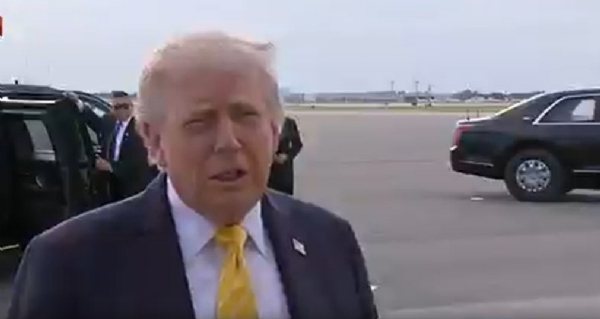
US President Donald Trump has declared that the United States will soon begin guiding commercial vessels safely through the blockade‑stricken Strait of Hormuz, in what the White House is framing as a “humanitarian” intervention to relieve a mounting maritime crisis.
In a statement posted on his Truth‑Social‑style platform on Sunday, Trump said Washington has been in “very positive discussions” with Iran even as his administration prepares to launch a naval‑backed operation to escort ships out of the Gulf, citing urgent requests from dozens of countries.
Trump portrayed the move as a global‑public‑good gesture, arguing that hundreds of crewed vessels are stranded in the Gulf with dwindling food, fuel, and medical supplies.
He referred to the planned operation as “Project Freedom,” scheduled to begin Monday morning, Middle East time, and claimed that nations “from all over the world” have sought American help to navigate the Strait, which Tehran has effectively sealed since the onset of the US‑Israel‑Iran war in February 2026.
Analysts note that the Strait of Hormuz channels roughly a fifth of the world’s seaborne oil and a significant share of gas and fertilizer shipments; the prolonged blockade has already driven up global energy prices and disrupted supply chains, particularly to Asian and European markets.
Trump’s announcement suggests a calibrated escalation: using US‑led naval escorts to reassert freedom of navigation while still publicly leaving room for diplomacy, rather than an immediate large‑scale military strike.
Iran’s foreign‑ministry spokesperson Esmaeil Baqaei told state‑run television that Tehran had submitted a 14‑point plan “focused on ending the war,” which US officials had acknowledged in a written response to Pakistani mediators.
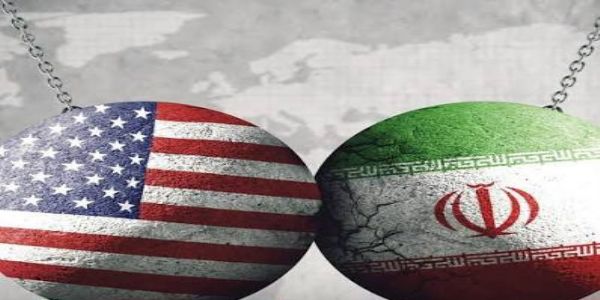
However, Teheran has also warned that any direct US military “interference” in the Strait’s waters would constitute a breach of the fragile April 8 cease‑fire and could trigger a renewed cycle of strikes.
The current truce, reached after weeks of cross‑border attacks and tit‑for‑tat retaliation, has so far held, even though the stranglehold on the Strait persists and both sides remain entrenched on core demands.
US‑led strikes in late February killed Iran’s supreme leader, triggering a series of Iranian missile and drone assaults on US bases and Israeli‑linked targets; the counter‑blockade imposed by Washington has also damaged Iran’s own export infrastructure.
The Trump‑announced escort plan has already drawn mixed responses. Gulf‑based shipping firms and European energy companies have quietly welcomed the prospect of safer passage, while maritime‑intelligence firms estimate that over 900 commercial vessels remain clustered in the Gulf, down from more than 1,100 at the war’s peak.
The UK‑led coalition has separately reported that a cargo ship was attacked by multiple small vessels near the Strait, underscoring the risks facing unprotected shipping.
Indian and Chinese diplomats, both heavily reliant on Gulf energy flows, have called for “de‑escalation and dialogue,” while New Delhi and Beijing have urged the US and Iran to avoid any actions that could spark a wider regional conflagration.
Experts warn that if “Project Freedom” leads to a naval standoff or direct clashes with Iranian fast‑attack boats, the pause in ground‑and‑air warfare could quickly unravel.
At home, Trump is selling the operation as a display of American strength and global leadership, framing it as part of a broader narrative of restoring “order” after what his allies describe as years of “weakness” under previous administrations.
His recent press gaggles and public appearances have highlighted what he calls “economic and security wins,” including the post‑election consolidation of Republican control in Congress and the rollback of several regulations.
Yet polling data indicate that Trump’s approval has slipped in key demographic groups since his 2024 victory, with critics arguing that his focus on immigration, crime, and foreign‑policy brinkmanship has distracted from public‑priority issues like inflation, jobs, and healthcare.
As the 2026 midterm elections approach, his administration’s handling of the Iran‑Gulf crisis is likely to become a central test of whether voters credit his confrontational style with stability or blame it for heightened global risk.
---------------
Hindusthan Samachar / Jun Sarkar

24 May 2026