





By H.E. Anil Kumar Rai - Indian Ambassador to the African Union and Ambassador of India to Ethiopia
Africa covers nearly 30.3 million sq. km, representing about 20% of the world’s total landmass and hosts approximately 18% of the global population. The continent has an estimated coastline of about 30,500 km, extending across the Atlantic Ocean, Indian Ocean, Mediterranean Sea and Red Sea, providing enormous opportunities for blue economy development, fisheries, maritime trade and climate-resilient coastal agriculture.
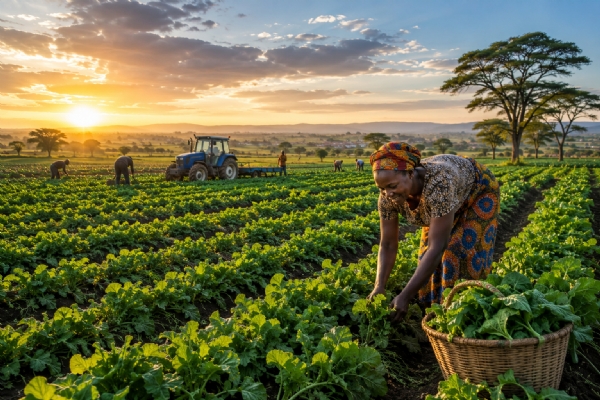
Africa’s greatest strategic advantage lies in agriculture and natural resources. The AU’s Agenda 2063 Framework and CAADP documents repeatedly emphasize that Africa possesses nearly 60% of the world’s uncultivated arable land, making it potentially the future global food basket. Agriculture contributes roughly 37% of Africa’s GDP, accounts for nearly 40% of export earnings, and employs over 60–65% of the workforce, especially women and youth. Agriculture also remains the primary livelihood source for nearly 70% of Africa’s population.
The continent possesses enormous freshwater systems, including the Nile, Congo, Niger and Zambezi river basins as well as major lakes such as Lake Victoria, Lake Tanganyika and Lake Malawi. According to AU and Africa Water Vision documents, Africa’s annual renewable freshwater availability is estimated at around 4,000 cubic meters per capita, above the global water stress threshold, although unevenly distributed geographically. About 90% of Africa’s surface water resources are transboundary, requiring regional cooperation for sustainable management. Groundwater supports nearly 75% of the African population, yet remains underutilized for irrigation and agricultural modernization.
Despite these advantages, Africa’s agricultural productivity remains significantly below global standards. Agenda 2063 documents note that although Africa has 60% of global arable land but the continent generates only around 10% of global agricultural output. Only about 3.5–6% of African agricultural land is irrigated, compared with much higher levels in Asia and Latin America. Agricultural growth in Africa has averaged around 4% annually, below the 6% CAADP target adopted by African leaders.
One of the major constraints is soil degradation and low input use. AUDA-NEPAD reports indicate that nearly 75–80% of cultivated land in Africa is degraded, resulting in nutrient losses of 30–60 kg per hectare annually. Fertilizer use in Sub-Saharan Africa averages only about 11 kg per hectare, compared to around 167 kg per hectare in other developing regions and approximately 250 kg per hectare in Asia. Mechanization levels also remain among the lowest globally, with motorized equipment contributing only about 10% of farm power compared to around 50% in many developing regions.
The major crops cultivated across Africa include:
-
Maize
-
Wheat
-
Rice
-
Sorghum
-
Millet
-
Cassava
-
Yams
-
Coffee
-
Cocoa
-
Cotton
-
Tea
-
Sugarcane
-
Oil palm
-
Groundnuts
-
Horticultural crops
Africa is globally dominant in certain crops. For example:
-
Côte d’Ivoire and Ghana together produce over 60% of global cocoa output.
-
Africa accounts for more than 50% of global cassava production.
-
Ethiopia is Africa’s leading coffee producer.
-
Nigeria remains one of the world’s largest yam producers.
However, yields per hectare remain below world averages for most staple crops:
-
Maize yields in Sub-Saharan Africa average roughly 2 tons/hectare, compared with global averages exceeding 5.5 tons/hectare.
-
Rice yields average around 2.5 tons/hectare, compared with Asian averages above 4.5-5 tons/hectare.
-
Wheat yields in Africa remain less than half of many developed agricultural systems.
-
Only about 25% of agricultural growth since 2000 has come from productivity improvements, while nearly 75% resulted from expansion of cultivated land, often at the expense of forests and grazing lands.
African Leadership repeatedly stress that agriculture remains “the backbone of Africa’s socio-economic foundation” but faces growing vulnerabilities from climate change, droughts, weak infrastructure, limited financing and global supply chain disruptions. Climate change is expected to reduce crop productivity further, particularly in the Sahel, East Africa and Southern Africa, where warming trends are already exceeding global averages.
The African Union’s strategy under Agenda 2063 and CAADP therefore focuses on:
-
Expanding irrigation;
-
Improving soil health;
-
Increasing fertilizer efficiency;
-
Promoting climate-smart agriculture;
-
Expanding mechanization;
-
Strengthening agricultural value chains;
-
Enhancing regional trade under AfCFTA;
-
Supporting digital agriculture and innovation;
-
Increasing investment in agricultural research and extension systems.
The AU increasingly sees agriculture not merely as a food security issue but as the foundation for industrialization, employment generation, export diversification and economic transformation. With proper investment in infrastructure, irrigation, logistics, digital systems, fertilizer efficiency, mechanization and regional integration, Africa possesses the potential to become world’s largest agricultural growth engines during the 21st century.
*****
---------------
Hindusthan Samachar / Indrani Sarkar

20 May 2026
_202605161337387909.jpg)