Kolkata, 23 February (H.S.) :
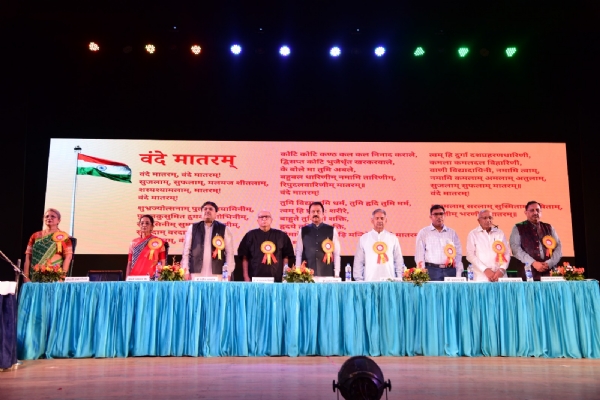
The 43rd annual celebration of the Akhil Bharatiya Vanvasi Kalyan Ashram was held at Kala Mandir in Kolkata with a grand programme highlighting the empowerment of tribal communities through education, healthcare, self-reliance and cultural awakening.
The event was organised in collaboration with the Purvanchal Kalyan Ashram, an affiliate of the organisation, along with members of the tribal (Vanvasi) community. The primary objective of the programme was to strengthen tribal society and integrate it more effectively into the national mainstream through sustained developmental initiatives.
The Kolkata and Howrah metropolitan units of the Ashram have been working continuously for the upliftment of tribal communities since 1952. Over the past 73 years (1952–2025), the organisation has undertaken several initiatives in the fields of education, medical assistance and social awareness.
The programme was presided over by Pramod Gupta, Chairman of Haryana International School and a noted industrialist. The chief guest, Dr Shyam Agrawal, Central Treasurer of the Vishwa Hindu Parishad and a renowned ophthalmologist, emphasised the need for discipline in Bengal’s political and social life. He said that social welfare can only be achieved through discipline and added that the Vanvasi Kalyan Ashram has been making consistent efforts to empower tribal communities and connect them with the broader social framework.
The keynote address was delivered by noted filmmaker, writer and actor Dr Chandraprakash Dwivedi. Referring to the evolution of civilisation from forests to urban centres, he highlighted the importance of forest regions in India’s cultural and spiritual history. Citing references from the Ramayana, he underlined that forest areas have historically been centres of knowledge and culture.
In his presidential address, Gupta lauded the efforts of the Purvanchal Kalyan Ashram in serving tribal communities. He said tribal societies are often perceived as being outside the mainstream, whereas they are culturally rich and deeply rooted in values. Referring to episodes from the Ramayana, including the example of Hanuman, he said forest-dwelling communities have traditionally upheld principles of faith, truth and righteousness.
He further described tribal communities as living examples of environmental conservation and said working for their upliftment is both a social and spiritual responsibility. Emphasising the relevance of ecological balance in contemporary times, he referred to Lord Shiva as a symbol of harmony between nature and society.
The second session of the programme featured a cultural presentation titled “Haare Ka Sahara – Barbarik Shyam Hamara,” based on the legend of Naresh Baba Shyam. The production was directed by Shubhra Agrawal of the cultural organisation “Madhura.”
The event was attended by representatives of various social organisations, academicians, medical professionals and a large number of members of the tribal community. The programme concluded with a renewed pledge to strengthen the role of tribal society in nation-building.
Hindusthan Samachar / Satya Prakash Singh

23 Feb 2026