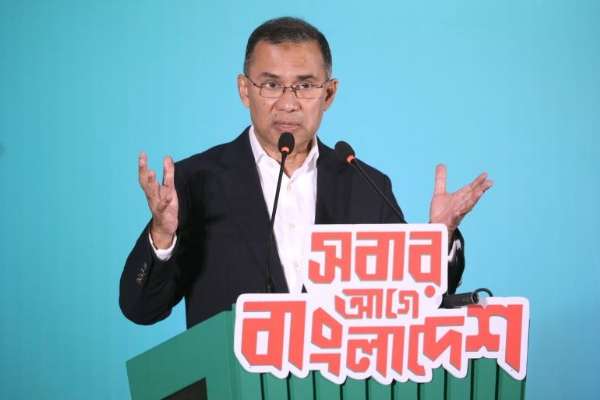
Dhaka, 13 February (H.S.): The Bangladesh Nationalist Party (BNP) has achieved a resounding victory in Bangladesh's 13th Jatiya Sangsad parliamentary election held on Thursday,( February 12) securing at least 151 seats in the 300-member house and surpassing the simple majority threshold, as reported by local broadcaster Ekattor TV early Friday.
This outcome, drawn from ongoing vote counts involving over 127 million eligible voters across 299 constituencies (one canceled due to a candidate's death), affirms the BNP-led alliance's dominance in the nation's first polls since the July 2024 student-led uprising that toppled Sheikh Hasina's 15-year Awami League regime.
BNP Chairperson Tarique Rahman, 60-year-old son of former President Ziaur Rahman and ex-Prime Minister Khaleda Zia (who passed in December), spearheaded the campaign on platforms including economic diversification, foreign investment, a 10-year premiership cap, and enhanced women's safety.
He personally won Dhaka-17 and Bogura-6 seats, emerging as the prime ministerial frontrunner; spokesperson Mahdi Amin previously projected a two-thirds majority.
The Islamist Jamaat-e-Islami's 11-party coalition, resurgent post-Hasina ban and contesting 224 seats with vows of anti-corruption and reduced garment reliance, garnered around 42 seats per Ekattor trends, lagging behind despite voter turnout exceeding 55%—buoyed by Gen Z and women blocs.
Chief Election Commissioner AMM Nasir Uddin lauded the free and fair process amid 500 international observers from the EU and Commonwealth, despite minor incidents like crude bomb blasts in Munshiganj and Gopalganj, a BNP leader's death in Khulna, and minority violence concerns.
Interim Chief Adviser Muhammad Yunus, Nobel laureate, celebrated the concurrent July Charter referendum as a new Bangladesh birthday, rejecting past nightmares; exiled Hasina decried it as an illegal farce from India.
With postal voting introduced for expatriates and security bolstered nationwide, results signal stabilized democracy, though India eyes implications for migration, anti-Hindu tensions, and regional balances.
---------------
Hindusthan Samachar / Jun Sarkar

13 Feb 2026
BNP Charges Towards Historic Victory in Bangladesh, Jamaat Routed as Tarique Rahman Eyes Premiership

13 Feb 2026