




Guwahati, 30 October (H.S.): For decades, travelling across Mizoram's rugged mountainous terrain meant long, difficult and often unpredictable road journeys. Geographical isolation, winding roads, steep hills and deep valleys posed significant challenges for passengers, traders, students and patients, while the transportation of essential commodities and construction materials remained heavily dependent on road networks.
However, the commissioning of the 51.38-km Bairabi-Sairang broad-gauge railway line has begun to fundamentally change this reality, bringing Mizoram closer to the national mainstream and emerging as a lifeline for people across the hill state.
Inaugurated by Prime Minister Narendra Modi last year, the railway project has completed its first year of operation, marking a significant milestone in the state's connectivity and development journey. What was once a long-cherished aspiration has now become an important transportation corridor, connecting Sairang, near the state capital Aizawl, with the national railway network through Bairabi.
The impact of the railway line extends well beyond passenger transportation. From reducing the logistical challenges of bringing essential commodities into the state to opening new opportunities for tourism, trade, education and local enterprises, the railway has started reshaping the socio-economic landscape of Mizoram.
A Major Breakthrough In Connectivity
Before the railway line became operational, people travelling from Mizoram to other parts of the country had to depend predominantly on road transportation. Difficult terrain and long travel distances frequently made journeys exhausting and time-consuming, while transportation costs added to the burden on ordinary passengers and businesses.
The new railway corridor has provided an alternative, more dependable and economical mode of transportation. With Sairang connected to Guwahati, Kolkata and Delhi through direct train services, residents of Mizoram now have improved access to some of the country's major commercial, educational and healthcare centres.
The Sairang-Anand Vihar Terminal Rajdhani Express has provided Mizoram with its first direct premium railway connection to the national capital. The Sairang-Guwahati and Sairang-Kolkata services have further strengthened connectivity with important economic and administrative centres.
Additionally, the introduction of the Sairang-Silchar passenger train service in January 2026 has strengthened the railway connection between Mizoram and Assam's Barak Valley, providing another important travel option for people on both sides.
This connectivity is particularly significant for residents of remote hill settlements, for whom access to major towns and cities has traditionally involved considerable travel difficulties.
Passenger Response Reflects Growing Dependence On Railways
The growing popularity of the railway services is evident from the passenger figures recorded during the first year.
According to the Ministry of Railways, the train services operating from Sairang completed more than 1,100 trips and carried over 15 lakh passengers during their first year of operation. Passenger occupancy has remained exceptionally high, with the services consistently operating at more than 100% capacity.
The Sairang-Kolkata service recorded average occupancy exceeding 140%, while the daily Sairang-Guwahati service registered occupancy of more than 110%. The Sairang-Anand Vihar Rajdhani Express also recorded average occupancy exceeding 145%.
Sairang railway station alone handled more than 5.54 lakh passenger movements during the year, averaging approximately 3,300 passengers daily. The railway services generated around 54 crore rupees in passenger ticket revenue.
These figures indicate the substantial demand for affordable and reliable railway connectivity among the people of Mizoram.
Freight Transportation: A Major Relief For Consumers And Traders
Perhaps one of the most significant contributions of the railway line has been the transformation of freight transportation in Mizoram.
For years, the transportation of cement, foodgrains, fertilisers, automobiles and other essential commodities depended largely on road-based supply chains. This often increased transportation expenses and created logistical challenges, particularly for bulky construction materials.
The arrival of the first freight train at Sairang, just a day after the inauguration of the railway line, marked the beginning of a new chapter in the state's logistics sector.
The inaugural freight consignment carried more than 26,000 bags of cement from the STAR Cement siding at Tetelia near Guwahati. The arrival of the consignment reportedly had an immediate impact on cement prices in Aizawl, demonstrating the potential of railway transportation to reduce logistics expenses.
During the first year, more than 2,500 freight wagons were delivered at Sairang. Around 70% of the cargo comprised construction materials, including cement, stone and sand.
These supplies are particularly important for a mountainous state where construction and infrastructure development frequently involve considerable transportation challenges.
The availability of railway transportation has created an alternative supply channel, supporting housing projects, public infrastructure works and other development activities while improving the movement of essential goods.
The railway network has also facilitated the transportation of rice and fertilisers, supporting agricultural requirements and the Public Distribution System.
Automobile Transportation Gets A New Route
Another important development has been the introduction of railway-based automobile transportation.
In December 2025, the first automobile consignment comprising 119 Maruti cars from Changsari near Guwahati arrived at Sairang.
During the first year, 156 wagons carrying automobiles were delivered through the railway network.
The facility has created a higher-capacity transportation channel for automobiles, helping reduce logistical expenses and improving the supply of vehicles to the state.
For consumers and automobile dealers in Mizoram, this represents an important improvement in the existing transportation and distribution system.
Tourism Sector Receives A Major Boost
Improved railway connectivity has also opened new possibilities for Mizoram's tourism industry.
The state is known for its picturesque hills, natural landscapes, waterfalls, rich cultural traditions and unique Mizo heritage. However, geographical isolation and transportation difficulties had previously limited the ease with which tourists could visit the region.
The introduction of direct railway services from Delhi, Kolkata, Guwahati and Silchar has made Mizoram more accessible to domestic tourists.
According to the Ministry of Railways, tourism in Mizoram has registered growth of more than 86% since the introduction of railway connectivity.
The increased movement of visitors is creating opportunities for hotels, homestays, restaurants, taxi operators, local guides, cultural enterprises and small businesses.
Greater accessibility is also strengthening the state's ability to organise educational, sporting, cultural and official events with wider participation from other parts of the country.
For local communities, increased tourism activity can translate into additional livelihood opportunities and greater demand for locally produced goods and services.
New Opportunities For Students And Patients
The railway line is also expected to have a far-reaching social impact, particularly in education and healthcare.
For students aspiring to pursue higher education outside Mizoram, improved connectivity with Guwahati, Kolkata and Delhi offers a more convenient transportation option.
Students travelling for university admissions, competitive examinations, professional courses, coaching and academic programmes can now access the national railway network from Sairang.
Similarly, improved connectivity with major urban centres can facilitate travel for patients and their families seeking specialised medical consultation and treatment outside the state.
The availability of railway services provides an additional transportation option for families who previously had to depend predominantly on lengthy road journeys or other relatively expensive modes of travel.
Local Produce Gets Access To National Markets
The railway corridor is also creating opportunities for local producers, farmers, artisans and entrepreneurs to reach markets beyond the state.
Mizoram has considerable potential in horticulture, floriculture, bamboo products, cane crafts, handloom and traditional handicrafts.
The first parcel consignment from Sairang was booked on September 19, 2025, carrying Anthurium flowers to Delhi through the parcel van of the Sairang-Anand Vihar Rajdhani Express.
The development demonstrated the potential of railway parcel services to transport locally produced goods to distant markets.
For producers of flowers and other high-value agricultural commodities, improved transportation can help expand market access and create opportunities to reach consumers outside the Northeast.
Similarly, better connectivity can support the wider promotion of Mizoram's traditional handloom, bamboo, cane and craft products.
An Engineering Achievement Across Difficult Mountainous Terrain
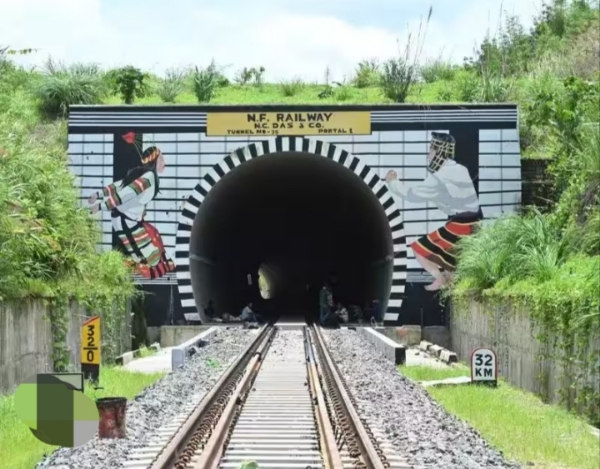
The Bairabi-Sairang railway line is also a major engineering achievement, constructed through some of the most challenging geographical conditions in the Northeast.
The 51.38-km broad-gauge corridor passes through steep hills, deep valleys, dense forests and difficult geological formations.
The project comprises 45 tunnels stretching nearly 16 kilometres and 153 bridges, including 55 major bridges, 88 minor bridges and 10 road overbridges and road underbridges.
Six bridges have heights exceeding 70 metres, with the tallest rising to approximately 114 metres, around 42 metres higher than Delhi's Qutub Minar.
The railway corridor connects Bairabi with four newly developed stations at Hortoki, Kawnpui, Mualkhang and Sairang, bringing the national railway network to the threshold of Aizawl.
The scale of engineering involved in constructing the tunnels and bridges reflects the considerable challenges overcome to establish railway connectivity in Mizoram's mountainous landscape.
Beyond Mizoram: Strengthening Regional Connectivity
The importance of the Bairabi-Sairang railway line is not confined to Mizoram alone.
Its connectivity with Assam's railway network, particularly through the Barak Valley and Guwahati, strengthens transportation links across the wider Northeast.
The Sairang-Silchar passenger service provides an important regional connection, while freight movement through the railway corridor creates additional opportunities for businesses and traders operating across state boundaries.
For the hill region, improved railway connectivity represents an important step towards reducing geographical isolation and strengthening economic integration with the rest of the country.
The railway line also provides a foundation for further development of logistics, tourism and commercial activities in the region.
A New Chapter In Mizoram's Development Journey
The first year of operation has demonstrated that the Bairabi-Sairang railway line is much more than an infrastructure project connecting two railway stations.
With more than 15 lakh passenger journeys, over 2,500 freight wagons delivered and tourism registering significant growth, the railway has already begun producing tangible benefits across multiple sectors.
Its greatest significance, however, lies in the opportunities it has opened for ordinary people.
For passengers, it means greater travel choices. For students, it means improved access to educational institutions. For traders, it means a more efficient supply chain. For farmers and artisans, it offers access to wider markets. For tourists, it provides a more convenient gateway to explore Mizoram.
As Mizoram continues its development journey, the Bairabi-Sairang railway line is emerging as a vital link between geographical connectivity and economic opportunity.
The railway has not merely brought trains to the hills; it has brought the hills closer to the national economy, creating new possibilities for mobility, livelihoods, trade and inclusive development.Editorial note: The passenger figures have been carefully distinguished: over 15 lakh passengers used the train services during the first year, while Sairang station recorded over 5.54 lakh passenger movements. These are separate statistics reported by the Ministry of Railways.------------
Hindusthan Samachar / Sriprakash