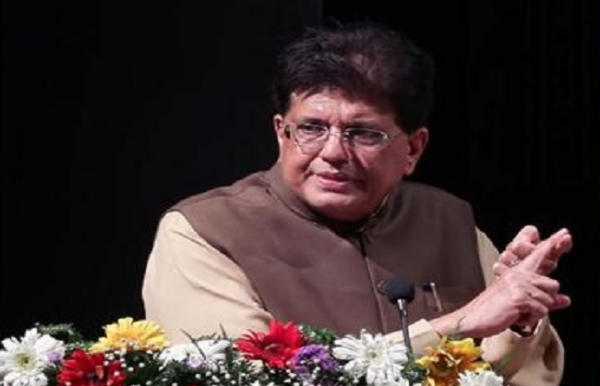
New Delhi, 29 October (H.S.): Union Commerce and Industry Minister Piyush Goyal on Thursday asserted that India’s proposed bilateral trade agreement with the United States would safeguard all the country’s sensitive interests, including those of farmers and other stakeholders. He expressed confidence that the agreement would be welcomed by the public once its details were made public.
Piyush Goyal made the remarks while addressing the Fourth ISID-IDRA National Conference on India’s Industrial Transformation in New Delhi. He said the agreement would not compromise the interests of Indian farmers or any other stakeholder.
The minister also criticised opposition parties for questioning the proposed agreement before its full terms had been disclosed, arguing that some of the criticism stemmed from a lack of understanding and information about the negotiations.
“Some people try to politicise the free trade agreement with the United States. This is due to a lack of understanding and information,” Piyush Goyal said.
He noted that the complete details of the agreement had not yet been made public and questioned the basis on which opposition parties were criticising it.
“I am fully confident, and I can say with complete conviction, that when the details of the trade agreement with the United States are made public, the people of the country will welcome it. Not a single sensitive interest of our trade or any stakeholder has been compromised. On the contrary, India will be placed in a strong position of comparative advantage, and trade is fundamentally based on comparative advantage,” he said.
India and the United States announced in February this year that they had finalised the framework for the first phase of their Bilateral Trade Agreement (BTA). However, negotiations are continuing amid changes in the US tariff regime.
Piyush Goyal also defended India’s decision to stay out of the Regional Comprehensive Economic Partnership (RCEP), saying the proposed trade arrangement could have had a serious impact on the country’s manufacturing sector.
He recalled that India decided in November 2019 not to join the mega free trade agreement because it did not adequately address the country’s concerns.
The RCEP comprises the 10 ASEAN member states — Brunei, Cambodia, Indonesia, Laos, Malaysia, Myanmar, the Philippines, Singapore, Thailand and Vietnam — along with Australia, China, Japan, South Korea and New Zealand. India was also among the six countries that were negotiating partners of the bloc but ultimately chose not to join the agreement.
---------------
Hindusthan Samachar / Jun Sarkar