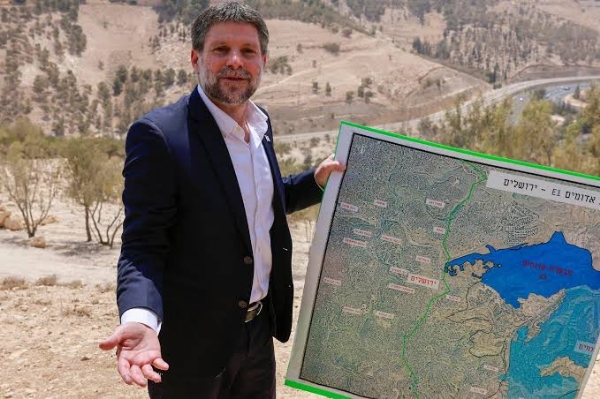
Jerusalem, 07 January (H.S.): Israel has cleared the final administrative hurdle to begin construction on the contentious E1 settlement project near Jerusalem, a move that would effectively divide the occupied West Bank into two disconnected parts. The Israeli government published a tender seeking bids from developers to build 3,401 housing units in the E1 area, which lies between Jerusalem and the settlement of Ma’ale Adumim.
According to the anti-settlement group Peace Now, initial construction could begin within the month.The E1 project has been under consideration for more than two decades but was previously frozen due to international pressure, especially from the United States.
The international community overwhelmingly considers Israeli settlement construction in the West Bank illegal and a major obstacle to peace, warning that the E1 project would make a contiguous Palestinian state impossible.
Israeli Finance Minister Bezalel Smotrich, a far-right politician overseeing settlement policy, stated that every new settlement unit is “another nail in the coffin of the dangerous idea” of a Palestinian state.
The announcement has drawn strong criticism from global powers. A joint statement by 14 countries, including France, Britain, and Germany, condemned the approval, calling it a violation of international law and a threat to the fragile ceasefire in Gaza.
The United Nations and humanitarian groups have also expressed concern that the move could undermine efforts to stabilize the region and escalate tensions.Israel-Syria Talks and Security MechanismIn a separate development, Israel and Syria have agreed to establish a joint communication mechanism following US-mediated talks in Paris.
The mechanism will facilitate intelligence sharing, military de-escalation, diplomatic engagement, and commercial opportunities under US supervision. Both sides agreed to set up a joint cell to resolve disputes and prevent misunderstandings, but Syrian officials continue to demand the withdrawal of Israeli forces from occupied areas in southern Syria, a demand Israel has not yet met.
Meanwhile, the United Nations reported that aid groups now have enough food in Gaza to meet 100% of the minimum caloric standard for the first time since the war began over two years ago. However, the flow of humanitarian aid remains challenging as Israel has revoked the licenses of more than three dozen organizations, including Doctors Without Borders, Norwegian Refugee Council, and Oxfam, citing security reasons.
Hindusthan Samachar / Jun Sarkar

08 Jan 2026