(Updated) NEERI's research: Ganga water has unique ability of self-purification
This groundbreaking research by NEERI not only highlights the self-purifying properties of Ganga water but also emphasizes the importance of preserving the continuous flow of the river. Unfortunately, due to various human activities such as dam construction, industries, and sewage disposal, the natural flow of the Ganga has been disrupted, leading to a decline in its self-purifying ability.


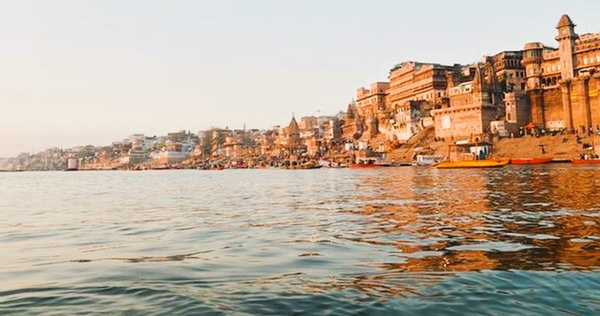
Delhi/Nagpur, February 14 (HS): The holy Maha Kumbh in Prayagraj is one of the largest religious gatherings in the world, where crores of people come together to bathe in the holy Triveni Sangam every day. While this event is considered a spiritual and cultural experience, there has been a lot of discussion and concern on social media about the issue of water pollution and water quality in the Ganga river. However, recent research by the National Environmental Engineering and Research Institute (NEERI) has shed some light on the self-purifying properties of Ganga water.
NEERI, a research institution under the Ministry of Environment and Forests, has been studying the Ganga river for the past 12 years. Their research has revealed that the Ganga water has the ability to keep itself pure due to certain unique properties. In fact, NEERI had submitted a report to the Central Government in December 2024, even before the Maha Kumbh began, highlighting this important finding.
In this regard, Dr. Krishna Khairnar, head of the research team of NIRI, said that there are four main reasons why the water of the Ganga is cleaner than other rivers. The first reason is that the oxygen dissolved in the water of the Ganga is much more than that of other rivers. The Ganga river flows through the very high-altitude and extremely low-temperature area of the Himalayas. Due to extremely low temperatures, the amount of dissolved oxygen in Ganga water is high; as a result, the water of Ganga remains pure. He said that the second reason is that the natural plants and trees on the banks of the Ganga emit a large amount of 'terpenes,' and these terpenes keep the water of the Ganga pure. The third important reason is that the 'bacteriophage' present in Ganga water is the natural enemy of bacteria, and it purifies Ganga water by keeping it free from bacteria. Dr. Khairnar said that another reason for the purity of Ganga water is that the very fine stones, pebbles, and particles (sediments) present at the bottom of the river Ganga act like a sieve to purify the flowing Ganga water. When the water of the Ganga keeps flowing, the sediment keeps moving with the velocity of its water and purifies the Ganga water.
He said that where the speed of the flow of the Ganga decreases, the ability of the stones, pebbles, and sediments present at the bottom to purify the water of the Ganga decreases. Due to all these properties, although the water of the Ganga gets polluted due to human use and various human activities, it gets purified to some extent due to the dissolved oxygen, terpenes, bacteriophages, and sediments flowing for a short distance in the Ganga water.
Dr. Khairnar said that this study of NEERI has been done by dividing the 2510 km long Ganga river into three parts. The first part is from Gomukh to Haridwar, the second part is from Haridwar to Patna, and the third is from Patna to Ganga Sagar. Thousands of water samples were taken from a total of 155 ghats. Various IITs, Banaras Hindu University, and other prestigious educational institutions like NEERI have also cooperated in this study. According to Dr Khairnar, the team of NEERI has done similar studies on the water of the Ganga as well as the Yamuna and Narmada, but the properties of self-purification that are in the Ganga were not seen in the Yamuna and Narmada.
This groundbreaking research by NEERI not only highlights the self-purifying properties of Ganga water but also emphasizes the importance of preserving the continuous flow of the river. Unfortunately, due to various human activities such as dam construction, industries, and sewage disposal, the natural flow of the Ganga has been disrupted, leading to a decline in its self-purifying ability.
It is essential for us to understand that Ganga is not just a river, but a lifeline for millions of people who depend on it for their daily needs. The Maha Kumbh is a reminder of the sacredness and cultural significance of this river, and it is our responsibility to protect and preserve it for future generations.
The Indian government has taken several initiatives to clean and rejuvenate the Ganga, including the Namami Gange project. However, it is also crucial for us as individuals to be mindful of our actions and contribute towards keeping the river clean. Simple steps like avoiding plastic waste, using eco-friendly products, and proper disposal of waste can go a long way in preserving the purity of Ganga water.
Hindusthan Samachar / Manish Kulkarni/Indrani Sarkar

Related News
04 Apr 2026