Delhi, 18 December (H.S.): To curb rising air pollution in the national capital, the Delhi government on Thursday enforced a set of stringent measures affecting commuters, private vehicle users, cab operators and office-goers across Delhi and the National Capital Region (NCR).
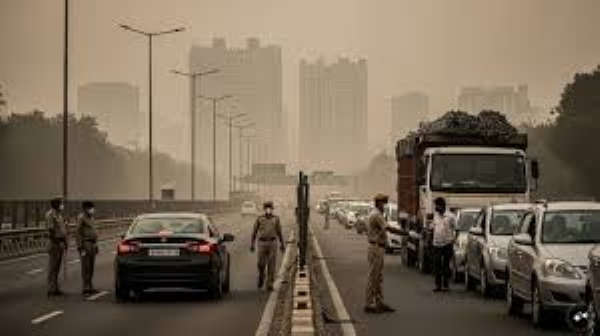
Under the new rules, only BS-VI-compliant petrol and diesel vehicles are permitted to enter Delhi from December 18. Vehicles meeting BS-IV, BS-III or older emission norms have been barred, while electric vehicles are exempt. Enforcement teams from the police and transport departments have been deployed at all entry points to ensure compliance.
The restriction is expected to impact around 12 lakh vehicles that routinely enter Delhi for work, business and personal travel, particularly from NCR districts. More than four lakh vehicles from Noida, around 5.5 lakh from Ghaziabad and over two lakh from Gurugram are estimated to be affected.
The move is also likely to impact the livelihoods of cab drivers operating older vehicles, many of whom depend on daily trips into Delhi for income. Reduced cab availability and higher fares could affect commuters, while drivers of goods vehicles operating under older emission norms may face operational challenges.
In another major step, petrol pumps across Delhi have been directed not to supply fuel to vehicles without a valid Pollution Under Control Certificate (PUCC). Authorities said a significant number of vehicles operate without valid PUCCs, contributing to deteriorating air quality. Earlier violations attracted fines, but denial of fuel is expected to keep non-compliant vehicles off the roads.
Additionally, private offices have been mandated to ensure that only 50 per cent of their staff work from office, with the remaining employees working from home. The Labour Department has warned that non-compliance will invite penal action under Sections 15 and 16 of the Environment (Protection) Act, 1986. Offices have also been advised to implement staggered working hours to reduce traffic congestion.
The work-from-home directive does not apply to essential services, including healthcare, fire services, prisons, public transport, electricity, water supply, sanitation, municipal services, disaster management and departments involved in air pollution control and enforcement.
The measures follow directions issued by the Commission for Air Quality Management under GRAP Stage IV and are aimed at improving air quality, public health and traffic flow over the long term.
---------------
Hindusthan Samachar / Jun Sarkar