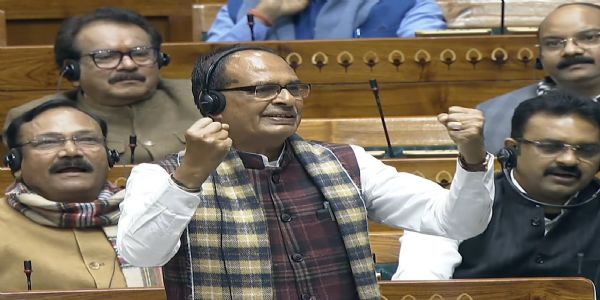
New Delhi, 18 December (H.S.): The Lok Sabha concluded a protracted debate on the Viksit Bharat Guarantee for Rozgar and Ajeevika Mission (Gramin) (VB-G RAM G) Bill, 2025, deep into Wednesday night, with 98 parliamentarians contributing before adjournment at 1:35 a.m.
Introduced on December 16 by Rural Development Minister Shivraj Singh Chouhan, this legislation proposes supplanting the two-decade-old Mahatma Gandhi National Rural Employment Guarantee Act (MGNREGA) by elevating guaranteed unskilled manual work from 100 to 125 days annually per rural household.
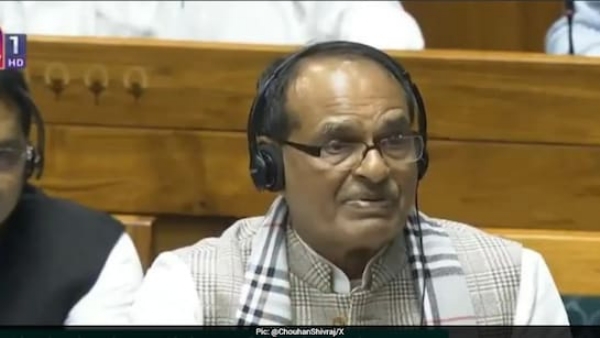
Chouhan is slated to respond Thursday, amid opposition demands for Standing Committee scrutiny.
Ideological Clash Over Gandhi's Legacy
Opposition INDIA bloc lawmakers, including Congress's K. Suresh, decried the renaming as an insult to Mahatma Gandhi, insisting the bill dilutes MGNREGA's foundational ethos while burdening states with funding shortfalls exceeding Rs 9,700 crore.
Protests loom within Parliament premises, as amendments seek reinstating MGNREGA nomenclature alongside safeguards against delayed payments and biometric overreach.
Treasury benches counter that VB-G RAM G forges a Ram Rajya aligned with Viksit Bharat 2047, aggregating works into a National Rural Infrastructure Stack spanning water security, livelihoods, and climate resilience.
Enhanced Guarantees Amid Tech-Driven Reforms
The bill mandates Viksit Gram Panchayat Plans for saturation coverage, institutionalizes Grameen Rozgar Guarantee Councils, and enforces digital oversight via GPS, AI, and biometrics to curb leakages.
Critics warn of deepened inequities for poorer states, while proponents herald convergence of schemes for resilient rural economies. With air pollution discussions queued—initiated by Priyanka Gandhi Vadra—the session underscores Parliament's winter grind.
---------------
Hindusthan Samachar / Jun Sarkar