New Delhi, 08 September (H.S.):
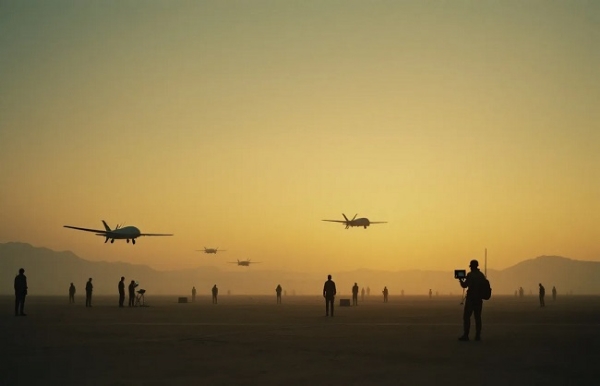
The Indian Air Force (IAF) is set to organise ‘IAF Dronathon’ at the Pokhran Range in Jaisalmer from September 14 to 16, providing domestic industry with an opportunity to demonstrate its capabilities and advancements in Unmanned Aerial Systems (UAS) and Counter-Unmanned Aerial Systems (CUAS). The event has been designed to assess new drone and counter-drone technologies, evaluate their operational effectiveness, and promote mutual learning among stakeholders.
According to the Ministry of Defence, the event will feature both static and live demonstrations. These demonstrations will facilitate the identification of contemporary solutions and the assessment of their effectiveness in combat scenarios. The focus areas will include surveillance and reconnaissance, autonomous operations, swarm technologies and electronic warfare. Aligned with the national vision of Aatmanirbhar Bharat, Dronathon-2026 aims to bring together industry experts, start-ups and innovators to strengthen the indigenous defence ecosystem. Through such initiatives, the Indian Air Force is reaffirming its commitment to building a technologically advanced, indigenous and future-ready force capable of meeting emerging challenges.
The Indian Air Force is facing evolving security challenges in a rapidly changing operational environment. Against this backdrop, ‘Dronathon’ will bring together industry players, start-ups and technology developers to demonstrate their capabilities in unmanned and counter-unmanned systems. During the three-day event, the IAF will evaluate performance in surveillance and reconnaissance, autonomous operations, swarm technology and electronic warfare applications. The government’s initiative is aligned with the objective of Aatmanirbhar Bharat, aimed at enhancing India’s domestic defence capabilities.
The IAF has conceptualised ‘Dronathon’ as an initiative aimed at achieving technological self-reliance in unmanned systems, at a time when operational requirements are evolving much faster than conventional acquisition timelines. In particular, counter-drone capabilities have transitioned from an experimental requirement to an operational priority across the armed forces, reflecting the growing threat posed by hostile drone activity in regional theatres. The Dronathon initiative underscores the IAF’s increasing reliance on industry partnerships to accelerate capability development in unmanned systems.
Recent initiatives across the armed forces have, in fact, expanded the role of private manufacturers, ranging from the deployment of drones for logistics to the integration of stand-off weapons on transport aircraft and helicopters. Dronathon is expected to help the IAF identify solutions more rapidly than through traditional procurement processes. The event also signals the Ministry of Defence’s continued commitment to developing an indigenous drone industrial base, further strengthening ongoing partnerships between the armed forces and domestic defence companies in areas ranging from ammunition production and missile systems to advanced platforms.
---------------
Hindusthan Samachar / Jun Sarkar

18 Aug 2026