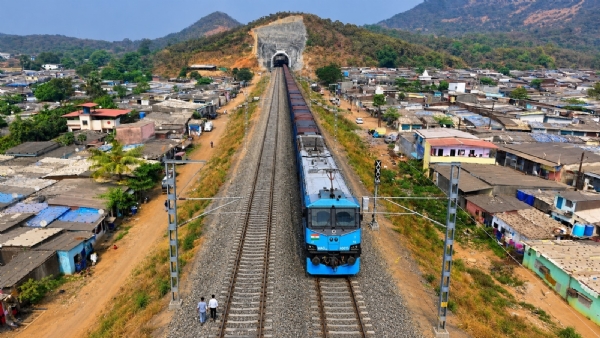
Guwahati, 07 September (HS): The operationalisation of India’s Dedicated Freight Corridor (DFC) network is set to bring a major transformation in the country’s freight transportation system, improving logistics efficiency and strengthening connectivity with the Northeastern region.
Developed by the Dedicated Freight Corridor Corporation of India Limited (DFCCIL), the 2,843-km DFC network comprises the 1,337-km Eastern Dedicated Freight Corridor (EDFC), connecting New Sahnewal in Punjab with New Sonnagar in Bihar, and the 1,506-km Western Dedicated Freight Corridor (WDFC), linking New Dadri in Uttar Pradesh with the New Jawaharlal Nehru Port Authority (JNPA) in Maharashtra.
With the completion of the approximately 102-km Vaitarna-JNPT section on March 31, 2026, the entire Western DFC has become operational, providing seamless freight connectivity to one of the country’s major maritime gateways.
The DFC network is currently carrying more than 14% of Indian Railways’ freight traffic over just around 4% of its railway network. Up to August 31, 2026, around 5.21 lakh freight train trips had been handled, averaging nearly 435 trains per day. The network has recorded approximately 658 billion Gross Tonne Kilometres and 360 billion Net Tonne Kilometres, while freight traffic grew by 13.74% during 2025-26.
By separating freight operations from passenger-dominated routes, the corridors are creating additional capacity on the conventional railway network while enabling faster freight movement, improved punctuality and more reliable services.
The Eastern DFC, including its 99-km stretch in Bihar, is particularly significant for strengthening freight movement towards eastern and Northeastern India. Its integration with the wider Indian Railways network is expected to facilitate the efficient transportation of foodgrains, fertilisers, petroleum products, coal, cement, automobiles, containerised cargo and other essential commodities.
For the Northeast, improved freight connectivity is expected to provide industries, traders and agricultural producers with better access to major production centres, consumption markets and ports. Faster and more predictable freight services could particularly benefit the transportation of tea, horticultural produce, processed food and other time-sensitive commodities from the region.
The DFC network, supported by Gati Shakti Cargo Terminals, Multimodal Logistics Facilities, Digital Freight Management Systems and services such as Truck-on-Train and rapid parcel cargo, is also expected to reduce logistics costs, road congestion, diesel consumption and carbon emissions.
For Northeast Frontier Railway (NFR) and the Northeastern region, the strengthened national freight backbone is expected to enhance supply-chain reliability, encourage investment in logistics and warehousing, generate employment and promote greater integration of the region with domestic and global markets.-----------
Hindusthan Samachar / Sriprakash
18 Aug 2026
ED raids KPSC office, 20 other locations over Karnatak veterinary recruitment scam
ED raids KPSC office, 20 other locations over Karnatak veterinary recruitment scam..