New Delhi, 30 September (H.S.): The Delhi Jal Board (DJB) has approved a 10-year, Rs 17,969.93-crore programme for a comprehensive overhaul of the capital’s sewerage maintenance system, introducing a new “One Zone, One Operator” model under which Delhi will be divided into eight zones, with a single operator responsible for the entire sewer network in each zone.
The scope of responsibility will cover sewer lines, manholes, pumping stations and grievance redressal. The new model is intended to shift the system from complaint-driven repairs to planned and preventive maintenance. The programme will also provide for real-time monitoring through geo-tagged inspections and a central command centre, along with 100 per cent mechanical and robotic cleaning of sewers.
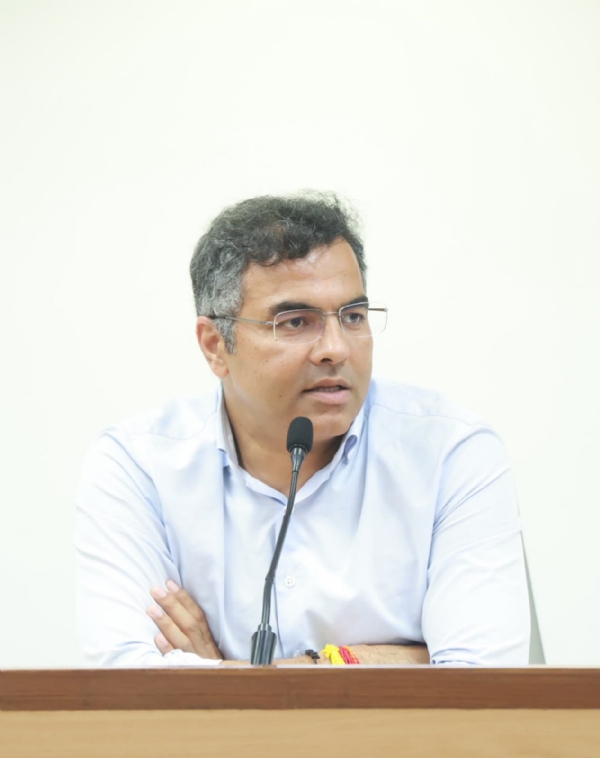
Delhi Water Minister Parvesh Sahib Singh said in a statement on Wednesday that the central objective of the reform was to establish clear accountability. He said the Delhi Jal Board currently maintains 11,212 kilometres of sewer lines, 6.68 lakh manholes and 145 pumping stations across 68 Assembly constituencies.
Under the new system, payments will be linked to performance, with the aim of ensuring faster resolution of complaints and reducing incidents of sewer overflow.
The Board has also approved a Rs 6,044.05-crore project for a comprehensive revamp of Delhi’s water-supply infrastructure in South Delhi. The project will cover 247 square kilometres, 13 underground reservoir (UGR) command areas, 12 Assembly constituencies and 2,44,381 domestic consumers.
Smart meters, bulk flow meters and chlorine and pressure sensors will be installed to enable real-time monitoring, accurate metering and water audits.
“We are not looking at water supply merely from the perspective of laying more pipelines. We need to know where the water is going, where losses are occurring, and whether the pressure and quality of water are appropriate. Technology will help make the system more accountable and effective,” Parvesh Sahib Singh said.
Apart from the Chandrawal and Wazirabad water treatment plant command areas, the remaining parts of Delhi have been divided into six zones — South, South-West, West, North-West, East and North-East.
The Minister said administrative approval had already been granted for the West and South-West zones. A total investment of Rs 11,427 crore, including 15 years of operation and maintenance, will be made for a comprehensive overhaul of water-supply infrastructure in these two zones. Consultants have also been appointed for three other zones.
To strengthen sewage treatment infrastructure and support the rejuvenation of the Yamuna, the Delhi Jal Board has approved the invitation of tenders for 13 new sewage treatment plants (STPs) with a combined capacity of 328 million gallons per day (MGD). The projects have an estimated cost of Rs 7,373 crore and will be undertaken under AMCG funding.
A Rs 123.23-crore project for a decentralised STP with a capacity of 5.5 MGD at Naya Bans in Narela has already been awarded.
“We must first prevent untreated sewage from entering drains. Increasing treatment capacity is an important part of this effort,” the Minister said.
The long-pending Wazirabad water-supply project has also received fresh impetus. The Board has granted administrative approval for a package estimated at Rs 1,214.58 crore. It includes a new 80-MGD water treatment plant, an automated raw-water intake system and 15 years of operation and maintenance. The existing 40-MGD plant will also be rehabilitated.
In addition, an Asian Development Bank (ADB) top-up loan of Rs 3,505 crore has been approved for another 60-MGD plant, transmission upgrades, a Supervisory Control and Data Acquisition (SCADA) system and improvements to the distribution network.
The Delhi Jal Board has also approved the Delhi Water and Sewer (Tariff and Metering) Regulations, 2026, which will replace the 2012 regulations. The new framework is intended to simplify the process for obtaining water and sewer connections, rationalise charges, clarify billing provisions and expand digital services. Rebates have also been proposed for households adopting rainwater harvesting and wastewater recycling.
The Board has approved Rs 65.49 crore for the reconstruction of 25 water emergency centres across Delhi. The centres will be equipped with modern, secure and digital facilities.
Where technically feasible and subject to prescribed conditions, individual water connections may be approved for residential and non-domestic units irrespective of building height. Consumers will, however, be required to maintain adequate water-storage arrangements below a height of 17.5 metres or in accordance with the prescribed standards.
The Board has also taken steps towards implementing the Rainwater Harvesting Policy, 2026. Under the policy, groundwater recharge will be integrated with flood management, with mandatory compliance to be ensured in government buildings.
The DJB’s broader sewerage planning is aimed at adopting a more comprehensive and planned approach to upgrading Delhi’s existing sewer network.
Hindusthan Samachar / Jun Sarkar

18 Aug 2026
ED raids KPSC office, 20 other locations over Karnatak veterinary recruitment scam
ED raids KPSC office, 20 other locations over Karnatak veterinary recruitment scam..