New Delhi, 30 September (H.S.): The controversy surrounding an alleged ‘purification ritual’ performed at Ramlila Maidan in Haldwani, Uttarakhand, following a public meeting addressed by Congress president and Leader of the Opposition in the Rajya Sabha Mallikarjun Kharge, is escalating. The Congress has described the incident as an affront not only to Kharge but also to the dignity and self-respect of Dalit and tribal communities. In protest, the Congress SC/ST Forum organised a ‘Dalit-Adivasi Self-Respect Meeting’ at Mavalankar Hall in New Delhi, marking the beginning of a nationwide campaign.
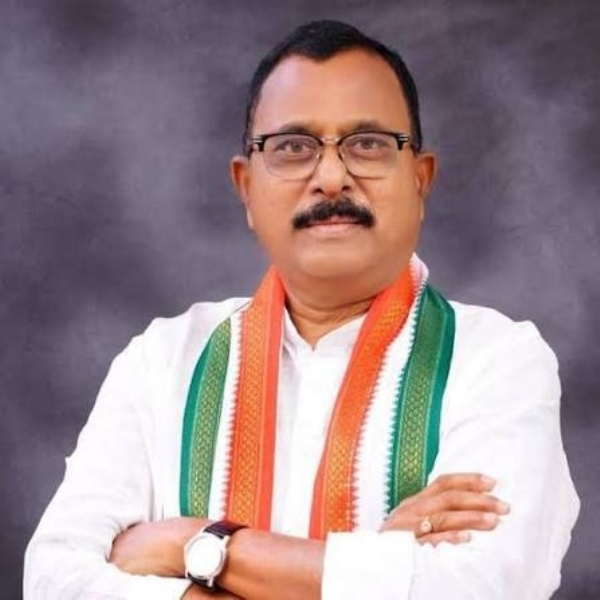
Congress MP Dr Mallu Ravi, who is leading the campaign, spoke exclusively to Hindusthan Samachar about the Haldwani incident, cases registered against Rahul Gandhi, ‘One Nation, One Election’, delimitation, the Election Commission’s Special Intensive Revision (SIR) of electoral rolls and the caste census, among other issues. Excerpts:
QUESTION: In Haldwani, action on your complaint concerning the alleged ‘purification’ ritual following Mallikarjun Kharge’s public meeting was slow, while an FIR was instead registered against Rahul Gandhi. A Zero FIR was also registered in Bengaluru. What has happened so far, and what will you do next?
ANSWER: SC and ST MPs from both the Lok Sabha and Rajya Sabha met in Indirapuram on September 7 to discuss the alleged purification ritual that took place after Mallikarjun Kharge’s programme. The MPs described it as an insult not only to Kharge but to the entire SC/ST community. On September 8, around 22 MPs went to the Parliament Street Police Station and demanded the registration of a Zero FIR, but the police refused. The MPs staged a sit-in at the police station for around three and a half hours. Subsequently, the police said their complaint would be added to the FIR already registered against unidentified persons in Haldwani.
I have alleged that there has still been no impartial investigation or action against those responsible. We have demanded that the FIR against Rahul Gandhi be withdrawn and that action be taken against those responsible for the incident.
QUESTION: What is the ground-level plan for the ‘Self-Respect Campaign’ that begins today? Will it remain confined to symbolic protests, or will it develop into a grassroots Dalit mobilisation and a nationwide public movement?
ANSWER: More than 1,000 representatives from across the country participated in the ‘Dalit-Adivasi Self-Respect Meeting’ held at Mavalankar Hall at the Constitution Club. The meeting passed a resolution condemning the Haldwani incident and demanding prompt action from the central and Uttarakhand governments. It also passed a resolution thanking Leader of the Opposition Rahul Gandhi for his support in the struggle for the rights of Dalit and tribal communities.
The campaign will be taken to every state in the country, where meetings will be organised under the leadership of local SC/ST leaders. A national convention has been proposed at Talkatora Stadium in Delhi in the last week of November, with Rahul Gandhi and Mallikarjun Kharge expected to attend. The campaign will be based on Babasaheb Dr B. R. Ambedkar’s message to “educate, organise and agitate” and on the pursuit of justice through peaceful and democratic means.
QUESTION: The BJP and some organisations have argued that the issue was not directed against any individual but concerned the religious sanctity of Ramlila Maidan. The Congress is being accused of turning it into a political issue. What is your response?
ANSWER: This is an extremely unfortunate argument. Delhi also has a Ramlila Maidan, where all political parties, including the Congress, BJP, CPI(M) and CPI, hold political rallies. That does not mean that only religious issues can be discussed there. Political subjects have always been discussed at such venues.
Mallikarjun Kharge is the national president of the Congress and the Leader of the Opposition in the Rajya Sabha. He delivered a political speech there and did not make any objectionable remarks against anyone. Does the fact that it is a Ramlila Maidan mean that a leader belonging to a Dalit or backward community cannot go there and address a gathering? Other leaders routinely deliver political speeches there.
QUESTION: Leaders from the ruling side in the Rajya Sabha had condemned the incident and assured the House that strict action would be taken. Why, then, are you still having to launch this movement?
ANSWER: J. P. Nadda, the BJP’s former national president and Leader of the House in the Rajya Sabha, had clearly assured the House that strict action would be taken in the matter. But what happened despite that assurance given on the floor of the House? The Chief Minister of Uttarakhand continued to support a position that appeared to justify the incident, the Prime Minister of the country did not say a word about it, and the Union Home Minister did not issue any official statement.
When no action is being taken, the direct implication is that the so-called purification episode has the silent support of the Prime Minister, the Home Minister and the Chief Minister of Uttarakhand.
QUESTION: Mallikarjun Kharge is the elected president of the country’s oldest national political party. Do you view this merely as an insult to an individual leader, or as a direct attack on the self-respect of the entire Bahujan community?
ANSWER: This is not a personal attack on Mallikarjun Kharge. It was not a physical attack against him, but a form of mental injury inflicted through him on Dalit and tribal communities across the country. It is also an attack on the Congress party because he is its elected national president.
The message they seek to convey is that they can target the Congress and SC/ST communities at will, outside the constitutional framework.
QUESTION: Parliament passed the ‘Nari Shakti Vandan Adhiniyam’, or the women’s reservation law, but its implementation has been linked to the next census and delimitation. What is the Congress doing to have it implemented immediately, including quotas within the reservation for OBC, SC and ST women?
ANSWER: The Congress is in favour of implementing women’s reservation with immediate effect. In fact, the legislation was first passed in the Rajya Sabha during the tenure of a Congress government. We want it to be fully enacted and implemented immediately.
However, the central government has deliberately linked women’s reservation to the delimitation process. If the government’s intentions are clear, it should delink women’s reservation from delimitation and implement it immediately. We would extend our full support to such a move.
Our position is also clear that within this reservation, women from the SC, ST and Other Backward Classes (OBCs) must receive an appropriate share, or quota, in proportion to their population.
QUESTION: There are serious concerns in southern states over delimitation that states which successfully implemented population-control measures could see their representation reduced, while northern India’s influence could increase. As a southern Indian MP, what is your assessment and position?
ANSWER: The concerns of the southern states regarding delimitation are extremely serious and genuine. Southern states implemented the Government of India’s family-planning programme in earnest, resulting in controlled population growth. If the central government now carries out delimitation solely on the basis of population, or proposes increasing the number of seats in every state by 50 per cent, it would be grossly unfair to the South.
Take a straightforward example. Kerala currently has 20 Lok Sabha seats, while Uttar Pradesh has 80, a difference of 60 seats. If the number of seats in both states were increased by 50 per cent, Kerala would go from 20 to 30 seats, while Uttar Pradesh would rise from 80 to 120. The difference would therefore increase from 60 to 90 seats.
Similarly, the disparity between states such as Telangana or Tamil Nadu and the northern states would become much wider. If the number of seats in northern India increases so substantially, the southern states would have virtually no decisive role in the selection of the country’s prime minister. If governments no longer depend on the South politically, they would have little incentive to focus on the region’s development, budgetary needs or interests.
Our clear position is that even if delimitation takes place, the existing numerical difference in representation between states should be preserved. That balance should not be disturbed.
QUESTION: Will all political parties in the southern states unite, both inside and outside Parliament, to demand statutory guarantees of financial and parliamentary balance before delimitation?
ANSWER: Certainly. We will unite to demand democratic fiscal decentralisation, equitable distribution of budgetary resources and equal rights for all citizens. An imbalance in parliamentary representation between the northern and southern states will not be allowed to emerge.
If a state has controlled its population while faithfully implementing a national policy, it should not be penalised by losing its voice in Parliament.
QUESTION: The Monsoon Session was adjourned sine die but has not formally been prorogued. Does the Opposition fear that the government could suddenly convene a special session and introduce controversial legislation?
ANSWER: The government has the constitutional authority to convene a special session, and it can do so. Our primary concern, however, is that the South or smaller states that have strictly followed national population policies should not be treated unfairly.
Any unexpected legislative move will be opposed with full force in Parliament and on democratic platforms.
QUESTION: The central government is pushing ahead with ‘One Nation, One Election’. What preparations is the Congress making to oppose it in Parliament?
ANSWER: The Congress is completely opposed to the idea of ‘One Nation, One Election’. India is a vast, multi-state federal system. In any democratic federal structure, elections may have to be held at different times in different states because of varying political circumstances.
Sometimes a state government falls; at other times, a central government may collapse before completing its term. We saw this in 1996 and 1998, when central governments fell and Lok Sabha elections were held without forcibly dissolving state assemblies.
Our country functions not through authoritarian rule but through parliamentary democracy and the Constitution. One rule cannot simply be imposed in a manner that undermines the country’s federal structure. We will strongly oppose it both inside and outside Parliament.
QUESTION: You have raised serious objections to the Election Commission’s Special Intensive Revision (SIR) of electoral rolls. Does the Opposition fear that the exercise is being used deliberately to disenfranchise disadvantaged sections?
ANSWER: This is an extremely serious issue, which Leader of the Opposition Rahul Gandhi raised forcefully in Parliament. Throughout the session, we demanded that the Prime Minister or the Home Minister explain the SIR process on the floor of the House, but the government continued to avoid a discussion.
The revelations that have now emerged in the media, we believe, indicate that decisions are being taken within the Election Commission without the concurrence of the other Election Commissioners. According to the Commission’s rules, decisions are supposed to be taken either unanimously or by at least a two-thirds majority. Yet decisions were allegedly imposed despite the dissent of the other two Commissioners.
QUESTION: Rahul Gandhi has been demanding a nationwide caste census and the removal of the 50 per cent ceiling on reservations. How are Congress-ruled states advancing this agenda amid the Centre’s position?
ANSWER: As long as this government remains in office, we will continue to pursue this politically and democratically. Under the direction of Rahul Gandhi, the government of Telangana, led by Chief Minister A. Revanth Reddy, secured unanimous passage in the state Assembly of a historic resolution calling for a caste census and the removal of the 50 per cent ceiling on reservations. The resolution was sent to the central government for legislation in Parliament and is currently pending with the Centre.
The central government says it will undertake the exercise along with the general census, but there is no clarity in its approach. They are merely going through the motions. Until you identify, within the backward classes, who is extremely backward, who has received employment and who has not, and where different communities stand in terms of political representation, the system will not withstand judicial scrutiny.
---------------
Hindusthan Samachar / Jun Sarkar
18 Aug 2026