— Strong objection to farmers being singled out and blamed for Delhi-NCR pollution
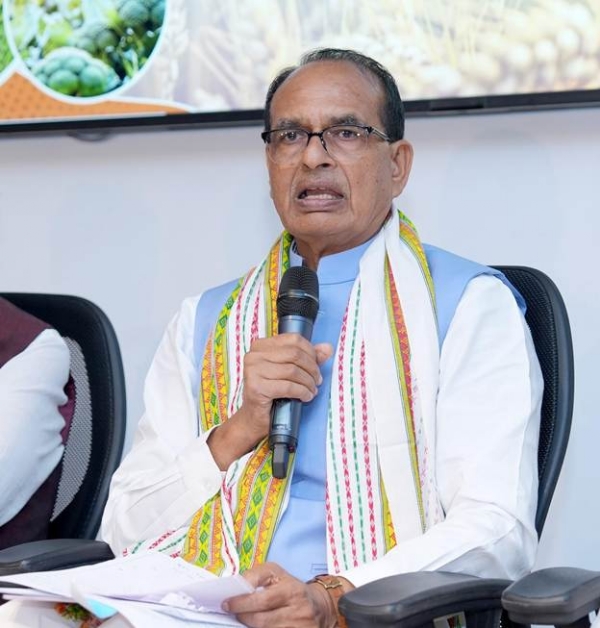
New Delhi, September 29 (HS): Union Minister for Agriculture and Farmers’ Welfare Shivraj Singh Chouhan said the Central Government had taken a decisive resolve to safeguard the interests of the country’s farmers amid the possibility of El Niño, a 12 per cent deficit in monsoon rainfall and soaring international fertiliser prices. He said that whether farmers faced adverse weather conditions or natural disasters, the government stood with them at every step.
Union Agriculture Minister Shivraj Singh Chouhan was speaking to journalists on Tuesday on the sidelines of the National Agriculture Conference – Rabi Campaign 2026 at Pusa in New Delhi. He assured farmers that adequate fertilisers, certified seeds and the necessary financial resources would be available for Rabi sowing across the country.
He also strongly objected to the practice of placing one-sided blame on farmers for pollution in Delhi-NCR, saying unequivocally that it was wholly inappropriate to portray farmers as the sole villains responsible for pollution and subject them to harassment.
Ground-level preparations: 15 days of deliberations and continuous dialogue with states
Shivraj Singh said preparations for the Rabi season had not been undertaken suddenly, but were the result of a robust three-tier administrative process. Consultations were held at the district and state levels. Since agriculture is primarily a state subject under the Constitution and the realities of farming are experienced on the ground in the states, state governments had been continuously engaged in preparations for the Rabi campaign at both district and state levels for the past 15 days.
He said that on the first day of the conference, the principal secretaries of agriculture, agriculture production commissioners and teams of technical experts from all states had arrived in Delhi. From 10 a.m. to 8 p.m., the Centre and states conducted an intensive 10-hour review covering every aspect of farming and various agricultural schemes on a state-by-state basis.
He said agriculture ministers from different states were personally present at the meeting on Tuesday. They shared the priorities and requirements of their respective states, on the basis of which the national action plan for the Rabi season was being finalised.
Shivraj Singh Chouhan said Indian agriculture had witnessed a historic acceleration since 2015. Presenting comparative data on agricultural development, he said he viewed the trajectory of agricultural growth in independent India in three distinct historical phases. The figures, he said, clearly demonstrated the scale of transformation witnessed in Indian agriculture in recent years.
First phase (1967–1995): During this period, the average annual increase in foodgrain production stood at 4.1 million tonnes.
Second phase (1996–2014): During this period, the average annual increase in foodgrain production declined to 3.9 million tonnes.
Third phase (post-2015): After 2015, the country witnessed a historic rise in foodgrain production, with the average annual increase reaching 8.4 million tonnes, or 84 lakh tonnes a year.
50 per cent increase in average growth rate
Shivraj Singh Chouhan said that while the average agricultural growth rate had remained at around 3 per cent during the two preceding phases, from 1967 to 2014, it had risen to 4.5 per cent after 2015, representing a notable 50 per cent increase in the average growth rate.
Monsoon, El Niño and Kharif sowing: Contingency plan averts major crisis
Addressing concerns over the possibility of El Niño and variations in monsoon rainfall this year, the Union Minister outlined the prevailing situation. He said the Central Government had begun comprehensive preparations to deal with the possibility of El Niño as early as April.
In the initial period, up to around August 24–25, the country had recorded a 14 per cent deficit in monsoon rainfall. However, following good rainfall over the preceding three to four days, the deficit had fallen to 12 per cent.
According to agricultural parameters, he said, rainfall is not considered indicative of a severe drought situation unless the deficit exceeds 19 per cent.
Success of the contingency plan
He said concerns over a sharp decline in the area under Kharif crops because of inadequate rainfall had been averted through the joint efforts of the Centre, state governments, the Indian Council of Agricultural Research (ICAR) and farmers. The total sown area had declined by only 1 per cent, which was broadly in line with normal levels.
Providing a crop-wise assessment, he said the largest decline in the sown area had been recorded for paddy, with approximately 16.32 lakh hectares less under cultivation. Smaller declines had also been recorded in the areas under maize, soybean and cotton.
He said an especially encouraging development was the significant increase in the area under pulses, oilseeds and coarse grains such as urad, pearl millet, sorghum, sesame, sunflower and pigeon pea.
Preliminary reports indicated that crops had been affected across approximately 6.11 lakh hectares in Karnataka, Maharashtra, Tamil Nadu, Telangana, Andhra Pradesh, Rajasthan and Gujarat due to heavy rainfall, floods or drought. A detailed scientific assessment of the losses was being undertaken, he said.
Fertiliser security cushion amid global price pressures
163 lakh metric tonnes in stock: Addressing concerns over surging global fertiliser prices and supply constraints, Chouhan assured farmers that adequate supplies were available. He said states had collectively projected a requirement of 380 lakh metric tonnes of fertilisers, including DAP, urea and NPK, for the Rabi season of 2026–27, and that sufficient supplies were available to meet the demand.
More than 163 lakh metric tonnes of fertilisers were already in stock across the country. At the beginning of the Rabi season around the same time last year, the stock had stood at only 122 lakh metric tonnes.
Responding to local concerns expressed by some states, including Punjab, he made it clear that there was no shortage of fertilisers in the country. He said Indian farmers would not be allowed to bear any financial burden arising from fluctuations in international fertiliser prices. The Centre was maintaining continuous communication with the states to ensure that adequate fertiliser supplies reached them on time.
‘Khet Bachao Abhiyan’ from October 22: Balanced fertiliser use and direct savings of Rs 1,400 crore
The Union Agriculture Minister said the government had drawn up an extensive ground-level campaign to protect soil fertility and reduce farmers’ input costs.
Citing a pilot project conducted during the Kharif season, he said balanced use of chemical fertilisers based on soil testing had been promoted in two districts each across major states. Farmers were informed about the quantity of fertiliser required for their particular soil and crops.
The results, he said, had been highly encouraging. Total fertiliser consumption in the districts covered by the pilot had declined by 27 per cent, resulting in direct savings of more than Rs 1,400 crore for the country.
---------------
Hindusthan Samachar / Jun Sarkar
18 Aug 2026