— EV-powered machines to be deployed for cleaning smaller roads; real-time identification of PM2.5 and PM10 pollution sources to be undertaken
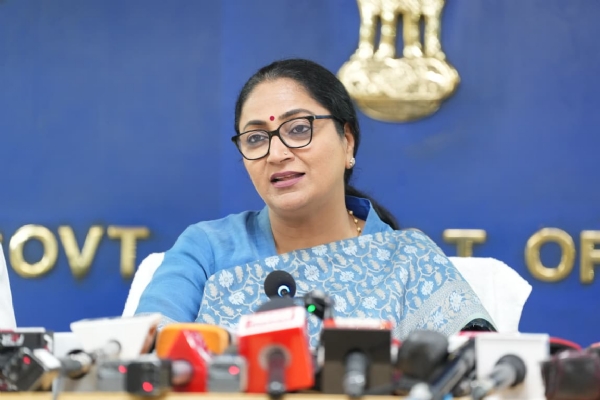
New Delhi, September 29 (HS): The Delhi government has rolled out its Winter Action Plan 2026–27 with public participation as part of its efforts to curb pollution in the national capital. At a Delhi Cabinet meeting chaired by Chief Minister Rekha Gupta on Tuesday, two key decisions were taken to strengthen cleanliness operations at the grassroots level and establish a scientific, real-time system for identifying and analysing pollution sources.
Under the first decision, mechanised cleaning operations will be expanded to smaller roads across Delhi. For this purpose, the Delhi Municipal Corporation (MCD) will be provided a grant to deploy 30 electric vehicle-based Mechanical Road Sweeping Machines (MRSMs). Under the second decision, a system for continuous, real-time source apportionment and analysis of PM2.5 and PM10 pollution will be developed in collaboration with the Indian Institute of Technology Delhi (IIT Delhi).
The Chief Minister said the Delhi government was not viewing pollution merely as a problem that intensifies during winter, but was working continuously and scientifically throughout the year to address its sources. With the guidance and support of the Central Government and Prime Minister Narendra Modi, the government is working with full commitment towards making Delhi cleaner and pollution-free. Various government departments, the Delhi Pollution Control Committee (DPCC), the municipal corporation and scientific institutions are working together to undertake sustained measures to control pollution.
She said every major source of pollution must be addressed simultaneously and adequate resources must be made available for the purpose. The government is taking continuous action across a range of areas, including road dust, vehicular emissions, dust generated by construction and demolition activities, industrial pollution, pollution caused by waste and biomass burning, expansion of green cover and effective enforcement of regulations.
The Chief Minister said that, recognising road dust as a significant source of particulate pollution, the Cabinet had decided to expand mechanised road cleaning to smaller roads where such facilities are currently unavailable. The initiative will cover approximately 609 kilometres of roads with a right of way of less than 10 metres. A total of 854 roads across 250 wards have been identified under the programme.
She said the government would provide a grant to the municipal corporation for the initiative, while the corporation would be responsible for deploying and operating the machines on the ground. The 30 EV-based Mechanical Road Sweeping Machines are estimated to entail an expenditure of approximately Rs 393.73 crore over 10 years. The use of electric machines will also ensure that the cleaning process undertaken as part of pollution-control efforts remains environmentally sustainable. Through this decision, the Delhi government and the municipal corporation will jointly broaden on-ground action to reduce pollution arising from road dust.
The Chief Minister further said that, to strengthen the government's scientific strategy against pollution, the Cabinet had approved continuous, real-time source apportionment of PM2.5 and PM10 in partnership with IIT Delhi. The system will enable round-the-clock scientific identification and quantitative assessment of major pollution sources. It will be used to identify and assess sources such as vehicular emissions, road dust and biomass burning.
She said the existing super site at Rouse Avenue would be reactivated for scientific operations. The mobile laboratory would also be brought back into operation to facilitate targeted studies of pollution hotspots and local emission sources. The collaboration with IIT Delhi will run for five years and is estimated to cost approximately Rs 19.22 crore.
The project will include the reactivation of the existing super site and mobile laboratory, development of a real-time dashboard and analytical reports, and capacity-building initiatives for officials of the Delhi Pollution Control Committee (DPCC).
---------------
Hindusthan Samachar / Jun Sarkar
18 Aug 2026
ED raids KPSC office, 20 other locations over Karnatak veterinary recruitment scam
ED raids KPSC office, 20 other locations over Karnatak veterinary recruitment scam..