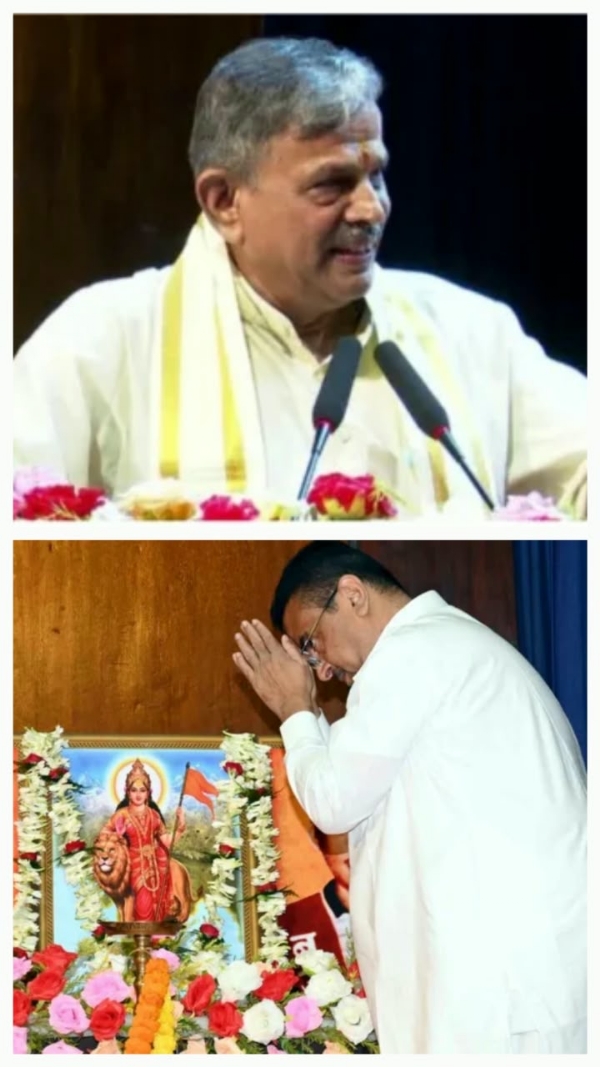
Kolkata, 27 September (H.S.): The sacrifice of Ram and Sharad Kothari continues to serve as a profound inspiration for national and social development, stated Rashtriya Swayamsevak Sangh (RSS) Sarkaryavah Dattatreya Hosabale during the Ram-Sharad Kothari Pratibha Samman 2026. Addressing the gathering at the Alipore National Library Auditorium in Kolkata, Hosabale emphasized that remembering the brothers' martyrdom should actively motivate society to engage in constructive service. The Kothari brothers, who began their association with the RSS as students in Kolkata, were martyred in Ayodhya in 1990, two days after climbing the dome of the disputed structure to hoist the saffron flag. Hosabale equated their dedication to historical figures such as the Chapekar brothers, the Savarkar brothers, and the four sons of Guru Gobind Singh, highlighting a rich historical tradition of collective familial sacrifice for the nation and Dharma.
Shifting focus to the current socio-political climate in West Bengal, the RSS leader observed a significant transformation, noting that for the first time in his decades of visiting the state, the people of Bengal are freely expressing their thoughts and breathing a sigh of relief. He urged the public to exercise patience with the newly formed state government, explaining that it is unrealistic to expect all administrative initiatives to be completed within a single year. Stressing the importance of synergy between the administration and the public, Hosabale remarked that a government attuned to societal aspirations, paired with a supportive public, is essential for the state's ultimate development. He also expressed hope for the return of an era where Bengal's intellectual leadership guides the nation, recalling the historic adage, What Bengal thinks today, Bharat thinks tomorrow.
West Bengal Chief Minister Suvendu Adhikari, attending as the chief guest, utilized the platform to outline several major policy shifts and administrative priorities undertaken by his administration. Adhikari announced the implementation of the Bharatiya Nyaya Sanhita alongside stringent new laws aimed at protecting women, as well as the initiation of a campaign to deport illegal infiltrators. Furthermore, he stated that the government has prioritized allocating border land to the Border Security Force (BSF), implemented all relevant Central Government laws, and made the recitation of 'Vande Mataram' mandatory across all schools, including registered madrasas. The Chief Minister also confirmed that the Uniform Civil Code (UCC) will be implemented in the state once the commission led by retired Justice Ranjana Prakash Desai concludes its hearings in the coming months.
Highlighting a renewed focus on cultural and religious heritage, Adhikari appealed to citizens to establish 'gaushalas' (cow shelters) across the state without fear, noting that the recent Bakrid festival was celebrated without any harm coming to cows. He announced a departure from practices observed during the previous Trinamool Congress rule, declaring that upcoming Durga Puja inaugurations will take place strictly during 'Matri Paksha' rather than 'Pitri Paksha' in order to uphold Sanatani traditions and rituals. Additionally, the state government has allocated Rs 2,000 crore to develop a religious tourism circuit connecting Tarapith to Tarakeswar, and a dedicated committee has been formed to rename roads after notable historical and spiritual personalities. Reflecting on his personal history, Adhikari recalled participating as a VHP sevak under former MLA Satyabrata Maiti in his hometown during the Ram Mandir movement.
The commemorative event concluded by honouring individuals and organisations for their significant contributions to social development. This year's awardees included Ishwarchandra Hembram, a headmaster of Vidyasagar Shishu Shiksha Niketan in Purulia; Ramesh Chandra Mishra, an environmental activist hailing from Odisha; and the Jharkhand-based Dhyan Foundation.
---------------
Hindusthan Samachar / Satya Prakash Singh
18 Aug 2026
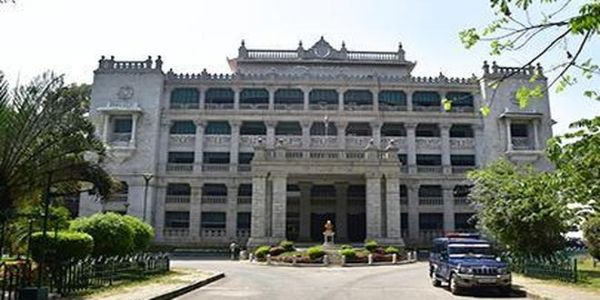
ED raids KPSC office, 20 other locations over Karnatak veterinary recruitment scam
ED raids KPSC office, 20 other locations over Karnatak veterinary recruitment scam..