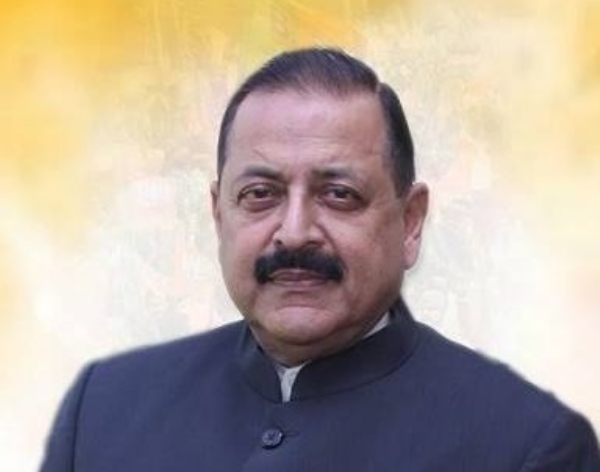
New Delhi, 27 September (H.S.): Union Minister for Science and Technology Dr Jitendra Singh said on Sunday that India’s indigenous research has immense potential to make a global impact. He said nanomedicine would give a new direction and impetus to next-generation precision medicine and personalised healthcare.
Addressing the inaugural session of the World Congress of Nanomedicine 2026 at Vigyan Bhavan in New Delhi, Union Minister Dr Jitendra Singh said nanomedicine is one of the most revolutionary innovations in the field of medicine, capable of bringing unprecedented precision to healthcare.
The Union Minister said modern medicine is now moving towards personalised healthcare. Different patients suffering from the same disease may require different treatments based on their genetic profiles, dietary patterns, lifestyles and environmental factors. Nanotechnology, through microscopic interventions at the cellular level, can make such treatments more precise and effective. Its use will enhance the cost-effectiveness of healthcare processes and also provide an impetus to the country’s overall economy.
Amid the growing use of new technologies in medical practice, Dr Singh cautioned against excessive dependence on them, saying that advanced systems such as artificial intelligence (AI) and nanotechnology are opening up new possibilities, but they should complement, rather than replace, the clinical knowledge and understanding of physicians. Despite sophisticated modern tools, basic clinical skills such as physical examination and careful observation should continue to be prioritised in medical education.
Elaborating on the government’s support for the field of nanomedicine, he said the Department of Biotechnology (DBT) is providing financial assistance of Rs 174 crore to 210 research and development projects across the country. These projects cover targeted drug delivery, cancer nanomedicine, infectious diseases, nucleic acid and vaccine delivery, nanodiagnostics, regenerative medicine and wound-healing technologies.
Specialised research is also underway on nanobots for the treatment of breast cancer, precision nano-injections and oral insulin nanoparticles, which could help address the longstanding challenge of insulin being destroyed by digestive enzymes. India’s nanomedicine ecosystem is now moving beyond laboratories and reaching markets and patients with the support of startups, new infrastructure and regulatory facilitation.
The World Congress on Nanomedicine 2026 was organised by the Institute of Nano Medical Sciences (INMS) of the Faculty of Medical Sciences, University of Delhi, under the aegis of the International Society of Nano Medical Sciences (ISNS) and the International Society for Nanomedicine (ISNM). More than 2,000 delegates, including scientists and young researchers, are participating in the four-day global conference.
Nobel laureate and Stanford University Professor Roger D. Kornberg and Professor T.M.S. Chang of McGill University, Canada, were present at the inaugural ceremony. Vice-Chancellor of the University of Delhi Professor Yogesh Singh, NITI Aayog Member Professor Gobardhan Das, Professor G.P. Talwar, Professor Ramesh Chandra and Professor Indrajit Roy, among several other prominent figures from the medical and scientific community, were also present on the occasion.
Hindusthan Samachar / Jun Sarkar
18 Aug 2026