Gorakhpur, 24 Sept (HS): Gorakhpeethadhiswar and Chief
Minister Yogi Adityanath said that foreign invaders not only plundered India's
wealth but also attempted to destroy its knowledge tradition and wisdom.
Attacks on temples were part of this mindset. Only the method of this effort
changed during the British period. By creating confusion, the British attempted
to cut Indians off from their traditions, values, and roots. He said that now
is the time to recognize our knowledge tradition, present it to the world with
evidence, and pass it on to the new generation by connecting it with modern
technology.
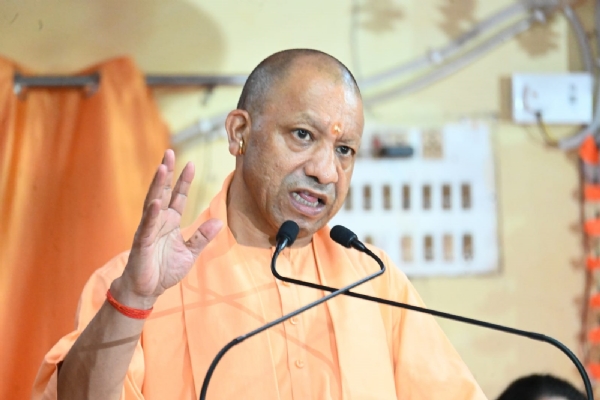
Chief Minister Yogi was chairing a conference on
Current Perspective of the Indian Knowledge Tradition on Thursday,
the first day of a series of conferences on contemporary topics to commemorate
the 57th death anniversary of the great man, late Mahant Digvijaynath Ji
Maharaj, and the 12th death anniversary of the national saint, late Mahant
Avedyanath Ji Maharaj. Held in the Mahant Digvijaynath Smriti Bhavan auditorium
of the Gorakhnath Temple complex, the Chief Minister painted a vivid picture of
the Indian knowledge tradition, from ancient times to the present. Referring to
the attacks on the ashrams of sages in Dandakaranya during the Ramayana period,
he said that whether by demonic and devilish forces or foreign invaders, the
objective of attacks on India was not only to plunder its wealth but also to
destroy its knowledge heritage. Referring to Mahmud Ghaznavi's attack on the
Somnath Temple, he said that the purpose of destroying the temple was not only
looting but also destroying the eternal tradition.
Chief Minister Yogi said that during the British period, the
approach changed. Indians were misled about their language, medical system, and
knowledge tradition. English was given importance over Sanskrit, and modern
medicine was given importance over traditional medicine. As a result, we
gradually became disconnected from our traditions, values, and roots.
Chief Minister Yogi said that in ancient times, India's
knowledge was amazing and the best in every field. India's ancient universities
produced excellent graduates in all fields, including language, grammar,
economics, science, astronomy, Ayurveda, astrology, crafts, technology, etc. By
preserving this rich knowledge tradition of India, we can give a lot to the
world for the welfare of the people. He said that the new generation must be
introduced to the heritage of Panini, Patanjali, the Acharyas of Ayurveda, and
Chanakya's Arthashastra. About three thousand years ago, 88 thousand sages
gathered in Naimisharanya to document the knowledge acquired through the
listening tradition.
Indian scholars have always pondered over issues of the
past, present and future.
Chief Minister Yogi, quoting the lines of national poet
Maithilisharan Gupt, 'Who were we, what have we become and what will we become
now, let us think about all these problems together today', said that Indian
scholars have always pondered over the issues of the past, present and future.
Keeping that tradition of contemplation in mind, the Indian sage tradition has
always preserved its heritage in some form or the other. The Chief Minister
said that Indian society is the only one in the world which has not limited
knowledge to just learning letters or attaining material achievements. The
Indian tradition has considered education as a medium to pave the way to
liberation.
India was called the world teacher because of its tradition
of knowledge: The Chief Minister said that India has the world's best climate,
the best fertile land, and the best water resources. Despite all this, if India
was called the world leader, it was because of its tradition of knowledge. We
had a monopoly on this heritage of knowledge. He said that many of today's
developed countries have a history of 400 to 500 years, whereas India had
universities like Takshashila 2600 years ago and Nalanda around 1700 to 1800
years ago. Kashi, Ujjain, and Kanchi were also major centers of knowledge. He
said that the Kumbh was not just a bathing event. In Prayagraj, Haridwar,
Ujjain, and Nashik-Trimbakeshwar, saints and scholars discussed their research
and innovation. Indian society still links its festivals, celebrations, and
auspicious events to the Indian Hindu calendar.
PM Modi encouraged the preservation of the knowledge
tradition: The Chief Minister said that in 2020, Prime Minister Narendra Modi
inspired the countrymen to preserve and advance India's knowledge tradition. In
that same vein, discussions began to preserve ancient manuscripts,
inscriptions, copper plates, and parchments scattered throughout India. Society
and families, captivated by modernity, were unable to understand their
significance. Today, when work is underway and people are expressing a desire
to learn about them, their importance is now becoming clear to everyone.
More than one lakh manuscripts are being preserved: Chief
Minister Yogi stated that over one lakh ancient manuscripts have been collected
at Sampurnanand Sanskrit University, Kashi, and their preservation and
digitization work is underway. Such knowledge heritage also exists in families,
the homes of scholars, ancient monasteries, and temples. Manuscripts, copper
plates, and inscriptions have been found in various places, including Ayodhya,
Prayagraj, Mathura-Vrindavan, and Lucknow.
It is the right time to make the present generation aware of
the heritage of knowledge.
Chief Minister said that today, to express gratitude to our
Rishi tradition and to give India a sense of Indianness, the work of
establishing research centers on the Indian knowledge tradition has begun
again. He appealed to educational institutions, saying that this is the most
opportune time to preserve all the heritage associated with the Indian
knowledge tradition and make the current generation aware of it.
The conference began with homage to the departed Mahants: The
conference began with a floral tribute to the pictures of Yugpurusha Brahmalin
Mahant Digvijaynath Ji Maharaj and Rashtrasant Brahmalin Mahant Avedyanath Ji
Maharaj. Digvijay Stotra was recited by Dr. Abhishek Pandey, Mahant Avedyanath
Stotra was recited by Dr. Prangesh Kumar Mishra, Vedic Mangalacharan was
recited by Ashwini Tripathi and Goraksha Ashtak was recited by Mrityunjay and
Gaurav Pandey. The keynote speaker, Acharya Dr. V. Ramanathan of IIT BHU
presented a set of his four books based on the Indian knowledge tradition to
Chief Minister Yogi Adityanath. The program was conducted by Dr. Shri Bhagwan
Singh.
On this occasion, prominent people present were
Malukpeethadhiswar from Vrindavan, Agrapeethadhiswar Dwaracharya Swami
Rajendradas Ji Maharaj, Mahant Shernath Ji Maharaj from Junagadh, Gujarat,
Jagadguru Shri Vishnuswami Sampradayacharya Shri Santoshacharya 'Satua Baba' Ji
Maharaj from Kashi, Peethadheeshwar Mahant Narayan Giri Ji of Shri
Dudheshwarnath Mahadev Math Temple Ghaziabad, Mahant Rajudas Ji from
Hanumangarhi Ayodhyadham, Swami Narsinghdas Ji Maharaj from Jabalpur, Mahant
Rambalkdas Ji Maharaj from Ayodhyadham, Mahant Shivnath Ji Maharaj from
Cuttack, Orissa, Swami Keshavanand Ji Maharaj from Patna from Bharat Sadhu
Samaj, Mahant Jai Bakshdas Ji from Tapsidham Basti, Peer Ramnath Ji from
Ujjain, Madhya Pradesh, Mahant Ram Lakhandas Ji from Digambar Akhara
Ayodhyadham, Mahant Mithileshnath Ji Maharaj from Devipatan Temple, Balrampur,
Mahant Ravindradas Ji Maharaj from Kalibari, Gorakhpur, etc.
Hindusthan Samachar / Abhishek Awasthi
18 Aug 2026
ED raids KPSC office, 20 other locations over Karnatak veterinary recruitment scam
ED raids KPSC office, 20 other locations over Karnatak veterinary recruitment scam..