Prayavgraj, 24 Sept (HS): Rain comes,
leaves its mark and moves on. But what if every drop could stay back and give
something to the earth? What if the same drop could travel beneath the ground
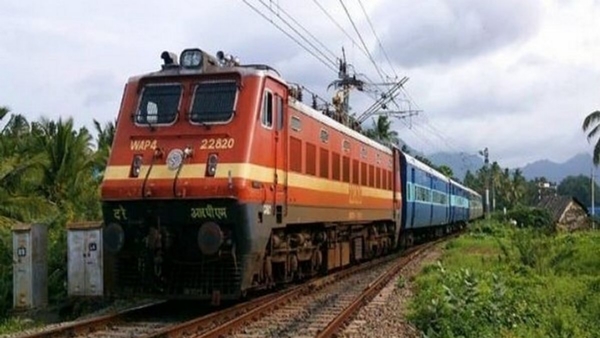
and become part of the water stored for tomorrow? North Central Railway is
giving rainwater a different journey by promoting rainwater harvesting and
groundwater recharge through practical, sustainable solutions that capture
rainwater, reduce runoff and return it to the ground.
The basic idea is simple - collect the
rain, filter it and let it return to the ground. Water from rooftops and other
suitable areas is channelled to recharge pits, soak pits, existing wells and
borewells. After filtration, the water gradually seeps into the soil, helping
replenish groundwater. The soil also acts as a natural filtering layer as the
water moves underground.
The scale of the effort is visible across
NCR’s three divisions The effort has already taken shape across Agra, Prayagraj
and Jhansi divisions. As of September 18, 2026, NCR had completed 124
rainwater-harvesting installations, including 38 in Agra Division, 41 in Prayagraj
Division and 45 in Jhansi Division.
In Jhansi Division, rainwater harvesting is
being implemented through different solutions suited to individual locations.
Installations have been taken up at Mahoba, Paman, Malasa, Ata, Bhua, Mustra,
Chirgaon, Parichha, Jhansi and Gwalior, among several other railway locations.
At Mahoba, rooftop rainwater is channelled into an existing old well, allowing
it to gradually percolate into the surrounding soil. At Paman, a dry borewell
is being used for groundwater recharge, while Jal Tara and soak-pit systems
have been adopted at locations such as Malasa and Ata. At Jhansi, recharge
systems have been provided at railway colonies, the BTC AC Loco Shed and other
railway premises, while Gwalior has also taken up recharge-pit based systems to
make effective use of rainwater.
In Prayagraj Division, rainwater harvesting
has been taken up at 41 locations, with different recharge solutions adopted
according to the site. At places such as Prayagraj, Kanpur, Etawah, Firozabad,
Hathras, Dadri, Dankaur, Chunar, Lusa and Khairahi, rainwater collected from
railway buildings and other suitable surfaces is guided through pipes and
filtration arrangements before being allowed to percolate into the soil. At
suitable locations, existing deep bores are also being reused as recharge
points, turning idle railway assets into useful links to the groundwater below.
The division is also making use of existing
borewells and deep-bore structures wherever technically feasible. Instead of
allowing rainwater to flow away as surface runoff, it is channelled through
pipes and suitable filtration or first-flush arrangements before being directed
into these existing structures for groundwater recharge. This approach not only
gives rainwater a route back into the ground but also puts unused railway
assets to productive use, reducing the need for new recharge structures at such
locations.
Across NCR, therefore, rainwater harvesting
is not being treated as a single standard structure. The solution changes with
the location - but the objective remains consistent: capture rainfall where it
falls, filter it appropriately, reduce unnecessary runoff and use suitable
railway infrastructure to help replenish groundwater.
The approach may differ - from old wells
and dry bores to soak pits and dedicated recharge structures - but the purpose
remains the same: to retain more rainwater within railway premises and return
it to the ground. What would otherwise be a passing monsoon shower is thus
being given a longer journey - from rooftop to recharge, and from rain to
groundwater.
Hindusthan Samachar / Abhishek Awasthi
18 Aug 2026
ED raids KPSC office, 20 other locations over Karnatak veterinary recruitment scam
ED raids KPSC office, 20 other locations over Karnatak veterinary recruitment scam..