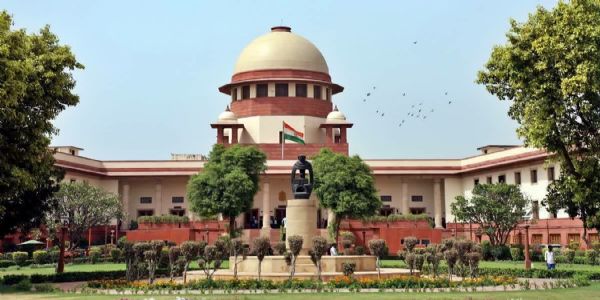
New Delhi, 22 September (H.S.): The Supreme Court on Tuesday expressed concern over the manner in which notices citing “logical discrepancies” were being issued to voters during the ongoing Special Intensive Revision (SIR) of electoral rolls in Delhi. The Court observed that the notices appeared to have been issued almost mechanically.
A three-judge Bench headed by Chief Justice of India Surya Kant made the observation while hearing a petition filed by social activist Anjali Bhardwaj concerning the transparency of the SIR process. The Bench also sought greater clarity on the basis for identifying voters under the “logical discrepancies” category.
During the hearing, the Court said detailed information should be provided about voters who had been served notices citing logical discrepancies. Chief Justice Surya Kant referred to his own circumstances, saying that he had moved from Chandigarh to Delhi in 2019. He observed that if he were to cast his vote in Delhi and received a notice citing a logical discrepancy, it would be necessary to specify the basis for issuing such a notice.
The Court also emphasised that Booth Level Officers should be adequately sensitised and trained to deal with such cases.
During the mentioning of the matter on September 17, advocate Prashant Bhushan had told the Bench headed by the Chief Justice that more than 47 lakh names had already been excluded from Delhi’s draft electoral roll during the SIR exercise. He further submitted that the Election Commission had issued notices to around 33 lakh voters on grounds of “logical discrepancies”. Bhushan argued that the entire process lacked clarity.
During the mentioning, Bhushan also questioned the basis on which names had been excluded from the electoral roll. He said the reasons had not been disclosed, despite the requirement to publish the relevant information on the Election Commission’s website.
He submitted that some people had received notices while others had not, and that the notices did not clearly explain why the concerned voters had been asked to appear before the electoral authorities.
Bhushan further submitted that voters were not being informed of the specific basis on which their records had been classified under “logical discrepancies”. He contended that the process was unclear and lacked sufficient information for voters to understand the reasons for the notices issued to them.
---------------
Hindusthan Samachar / Jun Sarkar
18 Aug 2026