New Delhi, 20 September (H.S.): The Delhi government has taken a significant step towards redeveloping the historic Town Hall in Chandni Chowk as a Global Heritage Centre.
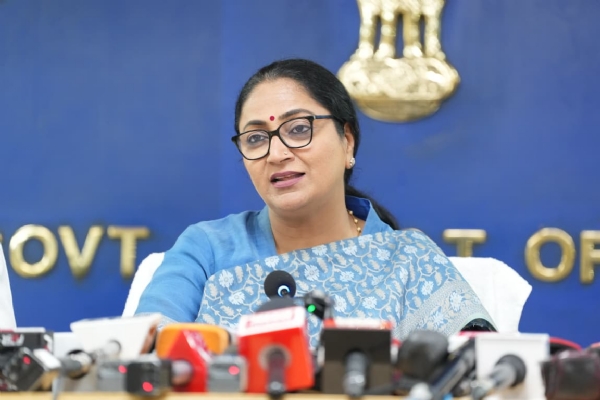
An agreement was signed between the Delhi Tourism and Transportation Development Corporation (DTTDC), the nodal agency of the Delhi government's Tourism Department, and the Municipal Corporation of Delhi (MCD) in the presence of Chief Minister Rekha Gupta. Under the Memorandum of Understanding (MoU), the historic Town Hall, Press Building and adjoining park will be conserved and developed as a Global Heritage Centre.
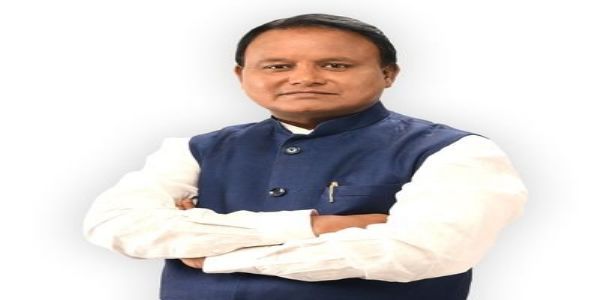
Delhi Tourism Minister Kapil Mishra, Delhi Mayor Pravesh Wahi and senior officials from the concerned departments were also present at the MoU signing ceremony held at the Delhi Secretariat.
According to the information released on Sunday, the project holds particular significance as the Town Hall and its adjoining complex form part of the historic Chandni Chowk and Shahjahanabad area. The Grade-I heritage complex was constructed between 1860 and 1866.
The premises served as the headquarters of the municipal corporation for several decades before the civic body shifted its headquarters in 2010 to the Dr Shyama Prasad Mukherjee Civic Centre on Minto Road. Since then, a substantial portion of the historic complex has remained largely vacant.
Under the MoU, ownership of the approximately 12,180-square-metre heritage complex will continue to remain with the Municipal Corporation of Delhi.
The project aims to preserve the original heritage character of the historic building while giving it an adaptive reuse. This means the structure will be conserved in accordance with its historical and architectural identity while being made suitable for contemporary tourism and cultural activities.
The proposed Global Heritage Centre is expected to include a museum, cultural activities and tourism-related facilities. The development is intended to provide domestic and international visitors to Old Delhi with a major attraction where the city's history, heritage and culture can be experienced within a single complex.
Located in the busy Chandni Chowk area and close to the Old Delhi Railway Station, the complex has considerable potential for enhanced heritage and tourism use because of the large number of visitors travelling through the area.
Under the MoU, DTTDC will undertake the survey, structural assessment of the buildings and preparation of a Detailed Project Report (DPR). Following this process, the government will decide whether the project should be developed through public investment or under a Public-Private Partnership (PPP) model.
A joint working group comprising representatives of DTTDC and the municipal corporation will also be established to regularly review the progress of the project.
The initial term of the MoU has been fixed at 30 years and may be extended by another 30 years with the mutual consent of the parties.
Heritage materials, archival documents, artefacts and historical records associated with the Town Hall will continue to remain with the Municipal Corporation of Delhi. The project will place particular emphasis not only on conserving the building but also on preserving the historical heritage associated with the complex.
Chief Minister Rekha Gupta said the historic Town Hall in Chandni Chowk was not merely a building but an important part of Delhi's rich history and heritage. She said the government's objective was to preserve its historical and architectural identity while connecting it with modern tourism and cultural activities.
Gupta added that once developed as a Global Heritage Centre, the complex would serve as an important destination for visitors from India and abroad to learn about the history, culture and heritage of Old Delhi.
Tourism Minister Kapil Mishra said Chandni Chowk's historic heritage was an important part of Delhi's identity. He said developing the Town Hall, Press Building and park as a Global Heritage Centre would give a new dimension to heritage tourism in the area.
Mishra added that the government's aim was to preserve historic landmarks while making them more accessible, attractive and useful for visitors from India and overseas.
---------------
Hindusthan Samachar / Jun Sarkar
18 Aug 2026
ED raids KPSC office, 20 other locations over Karnatak veterinary recruitment scam
ED raids KPSC office, 20 other locations over Karnatak veterinary recruitment scam..