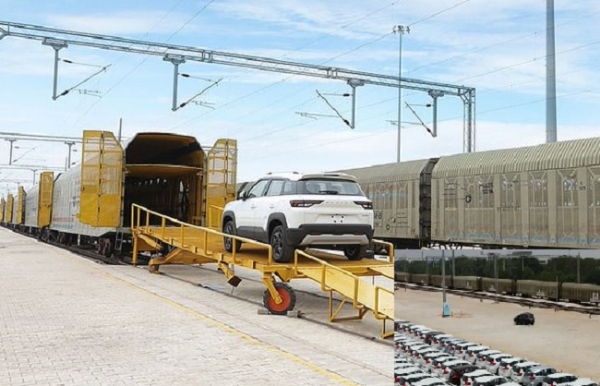
New Delhi, 18 September (H.S.): Automobile manufacturer Maruti Suzuki India Limited (MSIL) has crossed the milestone of dispatching one million vehicles through railway sidings at its manufacturing plants in Gujarat and Haryana. The two plant-based railway terminals have transported more than one million vehicles in just over three years since dedicated rail transportation facilities were introduced at the plants.
Maruti Suzuki India said on Friday that the Gujarat facility accounted for 7.9 lakh vehicles, while the Manesar facility in Haryana contributed 2.1 lakh vehicles to the total dispatches. The company said these two centres accounted for 70 per cent of its rail-based vehicle dispatches during financial year 2026-27 up to August.
Operations at the railway siding at the company’s Hansalpur plant in Gujarat began in March 2023, while the railway siding at Manesar, Haryana, commenced operations in June 2025.
The company said that 70 per cent of its total rail-based vehicle transportation during the current financial year has been carried out through the railway sidings located at these two manufacturing plants. Maruti Suzuki has set a medium-term target of increasing the share of railways in its overall vehicle transportation to 35 per cent by financial year 2030-31.
The company also said that its rail-based vehicle dispatches had crossed three lakh units during the current financial year as of August 31.
Hisashi Takeuchi, Managing Director and Chief Executive Officer of Maruti Suzuki India Limited, said reaching the milestone of transporting one million vehicles through the company’s plant-based railway sidings was a landmark achievement in its green logistics journey.
He said the sidings, developed under the PM Gati Shakti National Master Plan, demonstrate how integrated multimodal infrastructure can deliver both operational efficiency and environmental benefits.
Maruti Suzuki is the first and only passenger vehicle manufacturer in India to establish railway sidings at its manufacturing plants. The company said shifting vehicle transportation from road to rail through these plant-based facilities has helped reduce greenhouse gas emissions, lower fuel consumption and ease congestion on roads.
---------------
Hindusthan Samachar / Jun Sarkar