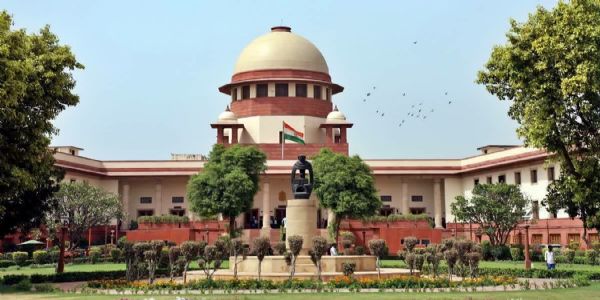
New Delhi, 17 September (H.S.): The Supreme Court has told the Tamil Nadu government that it needs to reconsider its approach towards Hindi, observing that Hindi cannot simply be excluded from education in the state. A bench headed by Justice B.V. Nagarathna said that it could not be the case that Hindi would not be taught anywhere in Tamil Nadu.
The Supreme Court also questioned the notion of keeping Chennai and Delhi isolated from each other. The court said that people in Chennai should not be separated from those in Delhi, nor should Delhi be isolated from Chennai. The observations were made while hearing a petition filed by the Tamil Nadu government challenging a Madras High Court judgment directing the establishment of Navodaya Vidyalayas in every district.
The state government has argued that the Navodaya Vidyalaya system is not compatible with its education and language policy.
Earlier, on December 15, 2025, the Supreme Court had directed the Tamil Nadu government to work with the Centre to identify land for establishing Navodaya Vidyalayas in the state. The court had told the Tamil Nadu government not to turn the issue of establishing Navodaya Vidyalayas into a language dispute.
During the hearing, the Tamil Nadu government had submitted that Navodaya Vidyalayas follow the three-language formula, whereas Tamil Nadu has a legally implemented two-language policy. In response, the court had said that the state should not make language the issue. It observed that India has a federal system and that Tamil Nadu is part of the Republic. The court said the matter was one of federal discussion and did not involve imposing anything on the state.
The court had also said that its direction was intended to serve the interests of rural students in Tamil Nadu who are eligible for admission to these schools.
During the hearing, the Tamil Nadu government had further submitted that more than Rs 3,000 crore was outstanding from the Central government under the Samagra Shiksha Abhiyan. The court had suggested that the state could place its conditions before the Centre during consultations, including adherence to its two-language policy and the release of outstanding funds.
---------------
Hindusthan Samachar / Jun Sarkar
18 Aug 2026