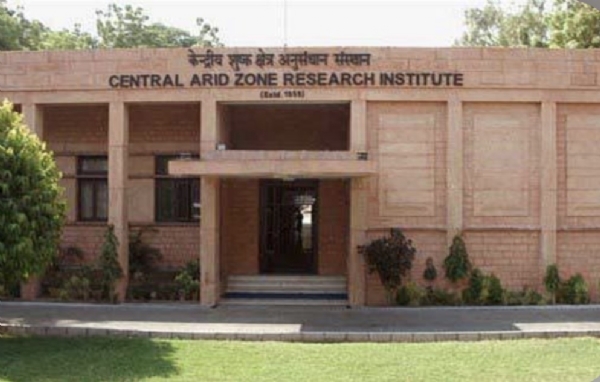
NEW DELHI, September 13 (H.S.): New varieties of moth bean developed by the Indian Council of Agricultural Research’s (ICAR) Central Arid Zone Research Institute (CAZRI), Jodhpur, have demonstrated exceptional drought tolerance during the ongoing El Niño year (Kharif 2026), withstanding an extended 35-day dry spell. Despite the absence of rainfall for nearly a month and a half in the arid regions of western Rajasthan, the varieties not only maintained their green foliage and vegetative growth but also produced abundant pods.
According to the Union Ministry of Agriculture and Farmers’ Welfare, moth bean is cultivated across nearly one million hectares in the hot and arid regions of western Rajasthan. However, erratic rainfall of 150 to 250 mm and prolonged dry spells lasting 20 to 30 days restrict its productivity to an average of only 350 kg per hectare. To address this challenge, the institute has released four improved varieties over the past three years — CAZRI Moth-4, CAZRI Moth-5, CAZRI Moth-6 and CAZRI Moth-7 — all of which have performed exceptionally well under difficult conditions during the current Kharif season.
According to CAZRI, during crop development between July 10 and September 2, there was virtually no rainfall for around 35 days following the last significant rainfall of 86 mm recorded on August 3, with rainfall remaining absent until September 7. During this period, evaporation reached as high as 180 mm, while moisture in the surface soil declined to just 5 to 6 per cent. Despite these severe conditions, the varieties efficiently utilised the 16 per cent moisture available in the lower soil layer at a depth of 10 to 40 cm and maintained remarkable pod development even 55 days after sowing.
According to CAZRI, a key characteristic of these varieties is their developmental plasticity. They begin flowering approximately 30 days after sowing and adjust their growth and maturity duration according to the availability of moisture. Timely sowing at a spacing of 45 × 10 cm, intercultural operations for moisture conservation 20 days after sowing, and effective weed-management practices helped strengthen the crop even in low-fertility sandy soils.
At present, seed production of these varieties is being undertaken across seven hectares at the CAZRI research farm to meet the demand for 23.32 quintals of breeder seed sought for 2026 through the ‘Sathi Portal’. Certified seed is being produced by the Rajasthan State Seeds Corporation, the National Seeds Corporation and private companies. One quintal of breeder seed can generate between 1,000 and 1,400 quintals of certified seed, sufficient to sow approximately 10,000 hectares. If the adoption of these varieties is expanded, they could potentially cover 25 per cent of Rajasthan’s total moth bean cultivation area.
Secretary of the Department of Agricultural Research and Education (DARE) and Director General of ICAR, Dr. M.L. Jat, said that CAZRI’s moth bean varieties could play an important role in making the Thar Desert more productive and enabling farmers to become self-reliant by 2047.
He said that the ability of the crop to sustain growth and pod development despite prolonged periods without rainfall demonstrates the power of genetic improvement in climate-resilient agriculture. With appropriate crop management, timely sowing and effective moisture-conservation practices, these varieties are fully capable of providing farmers with stable yields even under drought conditions.
---------------
Hindusthan Samachar / Jun Sarkar

18 Aug 2026