NEW DELHI, 12 September (H.S.): BRICS leaders have called for a major overhaul of the global governance system, backing a greater role for India and Brazil in the United Nations, including its Security Council, while pushing reforms in international financial institutions and trade rules.
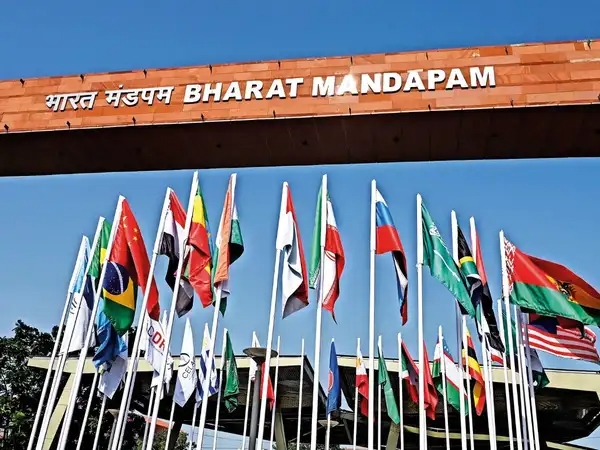
The call came in the New Delhi Declaration, adopted at the 18th BRICS Summit under India's chairship. The 140-point declaration sets out an expansive agenda covering global governance, peace and security, trade, finance, technology, artificial intelligence, health, food and energy security, climate change and people-to-people cooperation.
Greater Voice for Global South
The leaders reaffirmed their commitment to a more representative, equitable and accountable multilateral system and stressed the central role of the United Nations.
On Security Council reform, China and Russia, both permanent members of the Council, reiterated their support for the aspirations of India and Brazil to play a greater role in the UN, including the Security Council. The declaration also called for amplifying the voice of the Global South.
The leaders linked the reform agenda with efforts to eradicate poverty and tackle inequality, calling for stronger implementation of the 2030 Agenda for Sustainable Development.
IMF, World Bank Reforms
BRICS leaders pressed for reforms of the Bretton Woods institutions, arguing that their governance structures should reflect the transformation of the global economy.
They called for greater voice and representation for emerging markets and developing economies in the IMF and World Bank, including a realignment of IMF quota and voting shares and stronger representation of developing countries in the World Bank.
Trade, Tariffs and Sanctions
The declaration backed reform of the World Trade Organization and reaffirmed support for an open, fair and rules-based multilateral trading system.
The leaders voiced concern over rising tariffs, non-tariff measures and protectionist actions, saying such measures could disrupt global trade and supply chains. They also condemned unilateral economic and secondary sanctions, saying they can adversely affect development, health and food security.
Peace, Gaza and Terrorism
BRICS leaders reaffirmed the importance of diplomacy, conflict prevention, international law and the UN Charter in addressing global conflicts.
On Gaza, they called for maintaining the ceasefire and ensuring full and unhindered humanitarian access, opposed forced displacement and reiterated support for a two-state solution based on the 1967 borders, with East Jerusalem as the capital of the Palestinian state.
The declaration also condemned terrorism in all its forms and specifically referred to the April 22, 2025 terror attack in Jammu and Kashmir that killed 26 people, stressing zero tolerance for terrorism and rejecting double standards.
AI, Technology and Cybersecurity
Artificial intelligence emerged as another major area of cooperation. BRICS leaders backed international cooperation to make AI safe, secure, inclusive and reliable while ensuring that developing countries, particularly the Global South, benefit from its opportunities.
They also supported cooperation on cybersecurity, digital connectivity, digital public infrastructure and emerging technologies, including quantum technologies.
Food and Energy Security
The declaration placed food security and resilient agricultural supply chains high on the BRICS agenda. Leaders welcomed the proposed BRICS AGRIN network covering agro-inputs, genetic resources and information, along with cooperation on digital agriculture, agroecology and regenerative farming.
On energy, they stressed the need for secure and uninterrupted energy supplies while acknowledging that fossil fuels would continue to play an important role, particularly for emerging and developing economies. They supported just, orderly and equitable energy transitions and cooperation on smart grids, energy storage and critical energy infrastructure.
Development, Industry and Finance
BRICS leaders backed greater cooperation in industrial development, startups and MSMEs, including access to finance and technology and adoption of advanced digital production.
They highlighted the role of science, technology and innovation in sustainable growth and welcomed cooperation in areas such as quantum technologies and research infrastructure.
The declaration also supported stronger financial cooperation, local-currency financing, resilient infrastructure and efforts to mobilise private capital for development projects.
Leaders reaffirmed the growing role of the New Development Bank in financing infrastructure and development priorities in emerging economies and encouraged further expansion of its membership.
Climate, Health and Resilience
Climate change, disaster preparedness and sustainable development formed another significant part of the declaration. BRICS countries backed stronger early-warning systems, climate-resilient infrastructure and greater access to financing for disaster risk reduction.
The leaders also placed health cooperation on the agenda, covering universal health coverage, infectious disease surveillance, digital health, medical products and health infrastructure. Cooperation on healthy lifestyles and mental health was also encouraged, including a BRICS mental-health network led by India's NIMHANS.
Culture, Women and Youth
The declaration called for greater people-to-people exchanges through cooperation in culture, education, tourism, sports and youth programmes.
BRICS leaders also welcomed initiatives aimed at expanding women's entrepreneurship and economic participation, including better access to finance, markets, technology and skills.
The declaration recognised the growing role of BRICS as a platform for inclusive global governance and welcomed greater participation by businesses, think tanks, academia and civil society.
India Hands Chairship to China
The leaders commended India's BRICS chairship in 2026 and thanked the Indian government and people for hosting the summit in New Delhi. The declaration noted that more than 400 meetings and engagements were held across 30 Indian cities during the chairship.
China will take over the BRICS chairship in 2027 and host the 19th BRICS Summit, with the declaration extending full support to the Chinese chairship.
---------------
Hindusthan Samachar / Indrani Sarkar

18 Aug 2026