New Delhi, 10 September (H.S.):
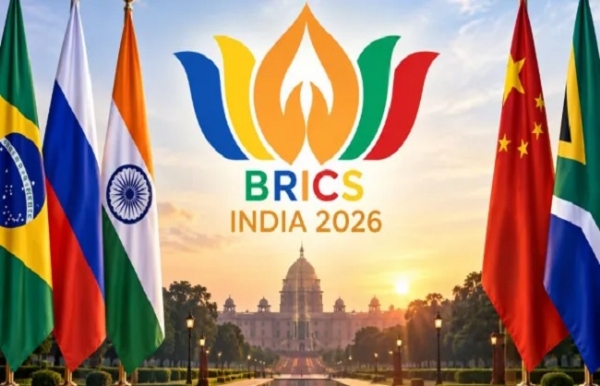
The 18th BRICS Summit, under India’s chairmanship, will be held on September 12 and 13 at Bharat Mandapam in New Delhi. This will be India’s fourth time leading the BRICS grouping. The theme of India’s chairmanship is “Building for Resilience, Innovation, Cooperation and Sustainable Development.”
BRICS has emerged as an important platform for coordinating economic policies among major emerging economies. It serves as a key forum where leading member countries work towards developing common positions on issues related to global governance. Through sustained dialogue, the grouping has increasingly become an effective mechanism for advancing the interests and priorities of the Global South within multilateral institutions.
The BRICS agenda spans a broad range of areas, including development, finance, technology, trade and people-to-people exchanges. The grouping reflects the growing economic influence and aspirations of emerging economies worldwide while providing member countries with a platform to share experiences and seek collective solutions to common challenges.
The summit is being organised as BRICS marks two decades of its journey. India is hosting the BRICS Summit at Bharat Mandapam in New Delhi from September 12 to 13 and is assuming the chairmanship of the grouping for the fourth time since its establishment. The guiding theme of India’s presidency, “Building for Resilience, Innovation, Cooperation and Sustainable Development,” reflects an approach focused on consolidating existing achievements and enhancing institutional effectiveness.
Development, sustainability and innovation have been placed at the heart of the agenda for the 18th BRICS Summit, while the aspirations of the Global South have also been given prominence. India aims to further strengthen BRICS as a constructive, solution-oriented and results-driven platform.
BRICS, originally an acronym used for four emerging economies, has evolved into a much larger grouping and an important geopolitical bloc spanning four continents. Its journey began as a dialogue among four countries and has since developed into a considerably broader grouping. As its membership has expanded, the bloc has incorporated oil-rich nations, African economies and partners from Southeast Asia. At the centre of this expanded framework is India, which is assuming the BRICS chairmanship for the fourth time since the group’s establishment.
The BRICS grouping currently comprises 11 major countries: Brazil, China, Egypt, Ethiopia, India, Indonesia, Iran, Russia, Saudi Arabia, South Africa and the United Arab Emirates. Collectively, these countries account for 49.5 per cent of the world’s population, around 40 per cent of global GDP and 26 per cent of global trade. These figures underscore the grouping’s considerable demographic and economic weight.
The expanded BRICS membership has also significantly broadened the group’s geographical reach across Asia, Africa, the Middle East and Latin America. This diversity brings together large consumer markets, natural resources, technological capabilities and varied development experiences on a common platform.
BRICS: Emergence and Expansion
The acronym “BRIC” was coined in 2001 by Goldman Sachs in a report on global economics. Based on econometric analysis, the study projected that Brazil, Russia, India and China could become some of the world’s largest economies over the following five decades. The growing economic strength of these countries, along with their extensive geographical presence across three continents, highlighted their emerging significance in the global economy.
The BRIC concept subsequently evolved into a formal grouping. With the admission of South Africa in 2010, BRIC became BRICS. This transition marked the group’s evolution from an economic concept identified by analysts into a formal platform for political, economic and developmental cooperation.
Objectives, Goals and Key Areas of Cooperation
BRICS was initially conceived as a platform for dialogue on major issues influencing the international agenda. During its early years, the grouping focused on developing common perspectives on global political and economic issues. One of its key objectives was to promote a more democratic, legitimate and balanced international order.
The grouping has also placed considerable emphasis on sustainable economic and social development, social inclusion and shared prosperity among emerging economies. Over time, these priorities have provided a strong foundation for deeper and broader cooperation among member countries.
Through successive summits, BRICS cooperation has gradually expanded to encompass strategic global issues as well as practical areas of collaboration. Its agenda includes critical subjects such as terrorism, climate change, food and energy security, trade and agriculture. The grouping also focuses on labour and employment, telecommunications, international finance and the global economic situation.
BRICS has consistently advocated greater representation and equality within international institutions, including the World Trade Organisation and the global financial system. These efforts are aimed at making global governance more inclusive, effective and responsive to contemporary challenges.
As India hosts the 18th BRICS Summit, its presidency provides an opportunity to reinforce cooperation among the expanded membership while placing development, innovation, sustainability and the priorities of the Global South at the centre of the grouping’s future agenda.
---------------
Hindusthan Samachar / Jun Sarkar
18 Aug 2026