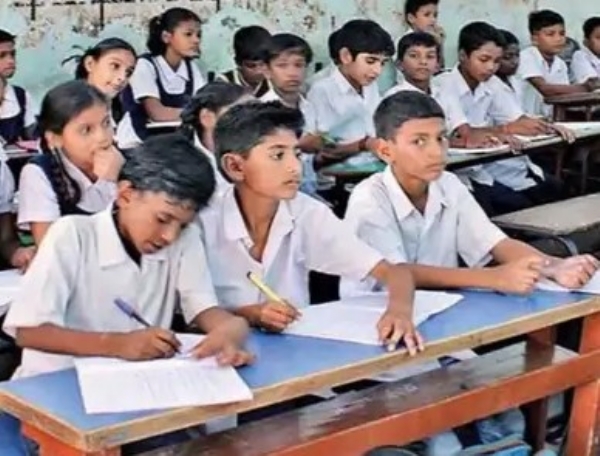
Kolkata, 10 September (H.S.) : The syllabus review committee of the West Bengal School Education Department has begun examining the Bengali language curriculum from Classes I to X to identify and remove what it considers unnecessary foreign words introduced during the previous Trinamool Congress government.
Sources in the School Education Department said the initial blueprint for identifying and removing such words was prepared during a recently held three-day residential induction programme.
The state School Education Minister said several foreign words had naturally become part of the Bengali language over the years and there was no objection to retaining them in the curriculum. However, he said concerns had been raised over the “forceful and unnecessary” inclusion of certain words during the previous regime.
He cited words such as “amma” alongside the existing Bengali word “maa” for mother and “gosol” alongside “snan” for bathing as examples.
According to the minister, objections had also been raised over the inclusion of words such as “nasta” for breakfast or snacks, “asmaan” for sky and “fazar” for dawn. He said educationists had questioned the need for introducing these words when Bengali alternatives such as “pratorash” or “jolojog”, “akash” and “bhor” were already available.
Earlier this month, Chief Minister Suvendu Adhikari had also criticised the inclusion of such words in the Bengali curriculum at a public meeting.
Addressing an annual event of Vivekananda Vidya Vikas Parishad, the West Bengal affiliate of Vidya Bharati, on September 3, Adhikari accused the previous Trinamool Congress government of deliberately altering the Bengali syllabus with a political motive.
He alleged that the curriculum had been framed in a manner that sidelined the teachings of prominent figures such as Ishwar Chandra Vidyasagar and Swami Vivekananda.
“Division was created in the minds of children through such distortion of language,” Adhikari claimed.
The syllabus review exercise is now underway to identify the words in question and examine whether they should continue to remain part of the Bengali curriculum.
---------------
Hindusthan Samachar / Satya Prakash Singh

18 Aug 2026
ED raids KPSC office, 20 other locations over Karnatak veterinary recruitment scam
ED raids KPSC office, 20 other locations over Karnatak veterinary recruitment scam..