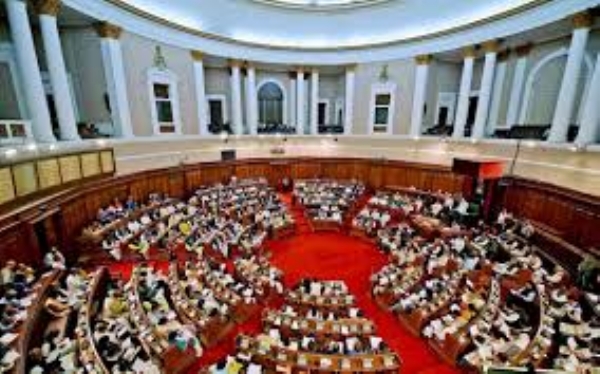
Kolkata, 10 September (H.S.): The West Bengal Assembly on Thursday passed by voice vote an amendment Bill empowering the state government to transfer teaching and non-teaching employees from one state university to another. However, no separate numerical figures indicating the number of members voting in favour of or against the Bill were provided during the proceedings.
The West Bengal Universities and Colleges (Administration and Regulation) Amendment Bill, 2026 was introduced by Higher Education Minister Jagannath Chattopadhyay during a special session of the Assembly. The state Cabinet had approved the Bill on September 8. The legislation seeks to insert a new provision in Section 14A of the existing 2017 Act, enabling inter-university transfer of teaching and non-teaching employees whenever required.
The Bill assumes significance as it gives the government greater flexibility to redistribute human resources among state universities according to institutional requirements. In particular, the government plans to utilise the services and experience of senior professors from established universities in newly created institutions, including universities in places such as Jhargram and Cooch Behar.
Chief Minister Suvendu Adhikari said experienced teachers could play a crucial role in strengthening the academic foundations of newly established universities. They would help guide these institutions on infrastructure development, classroom management and the process of developing them into centres of excellence.
According to the government, the move would help address the shortage of experienced faculty in new universities and ensure more effective utilisation of higher-education resources across the state. The government has also maintained that employees transferred under the new provision would retain their seniority and that expenses related to the transfer would be borne by the state government.
Addressing the Assembly, Suvendu Adhikari said the legislation sought to strike a balance between institutional autonomy and accountability to the government. He also clarified that the proposed transfers would not affect PhD supervision or ongoing academic projects.
The Chief Minister took a firm position on opposition to the provision, saying that those unhappy with the Bill's provisions were free to leave their jobs. He described the legislation as a response to the “ground reality” and said several experienced professors would be able to contribute to the development of new universities through the proposed system.
However, the Bill has faced opposition from sections of the teaching community. Teacher organisations, including the Jadavpur University Teachers' Association, have raised concerns over university autonomy and job security. They have argued that vesting the government with the power to transfer university employees could affect the administrative independence of higher-education institutions.
The legislation, therefore, goes beyond being a routine administrative measure concerning staff transfers. It represents a significant change in the management of state universities, particularly in the distribution of academic and administrative manpower, and could have wider implications for the balance between university autonomy and government oversight in West Bengal's higher-education system.
Hindusthan Samachar / Satya Prakash Singh

18 Aug 2026