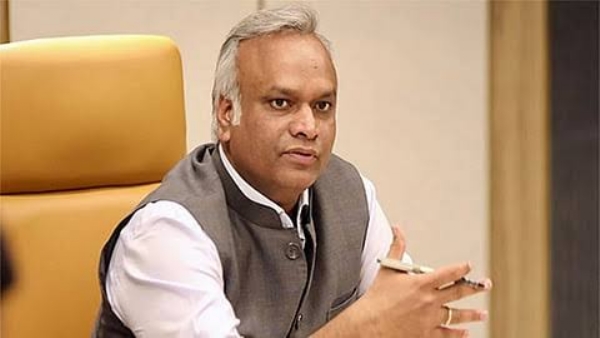
Bengaluru, 07 August (H.S.):The Karnataka government is planning to establish a Karnataka Urban Policing Innovation Centre (KUPIC) to modernise policing in the State’s rapidly expanding cities through technology, research and innovation, Home Minister Priyank Kharge has said.
The proposed centre is envisioned as a dedicated platform for developing and deploying technology-driven solutions to emerging challenges in urban policing, including crime prevention, traffic management, surveillance and public safety.
The framework for KUPIC was discussed at a detailed review meeting chaired by Kharge and attended by senior police officers and members of expert advisory groups. The discussions focused on the proposed centre’s structure, objectives and areas of research, as well as how technological innovations could be integrated into day-to-day policing.
Kharge said rapid urbanisation had significantly altered the nature of challenges confronting police forces. Growing populations, changing patterns of crime, increasing traffic congestion and evolving public safety concerns required policing systems to adapt quickly and make greater use of technology, he said.
KUPIC is expected to focus on research, innovation and technology development aimed at improving the efficiency and effectiveness of urban police forces. Emerging technologies, including Artificial Intelligence, data analytics, smart surveillance systems and digital platforms, are expected to form a key part of the initiative.
The government expects these technologies to help police analyse information more effectively, strengthen crime prevention mechanisms and enable evidence-based decision-making.
Smart surveillance and traffic management are among the priority areas identified for the proposed centre. It will also explore technology-based interventions to improve public safety and address new forms of crime and other challenges arising from the rapid expansion of urban centres.
Kharge stressed that innovation should become an institutional and continuous process within the policing system rather than being adopted only in response to specific problems.
“Our cities are continuously expanding and evolving. The policing system must modernise accordingly,” Kharge said.
He said the proposed institutional framework would encourage sustained research and innovation, enabling police forces to respond more effectively to changing urban conditions.
The ultimate objective, he added, was to develop an urban policing model that combines modern technology with improved responsiveness and efficiency while remaining citizen-centric.
---------------
Hindusthan Samachar / Arun Lakshman