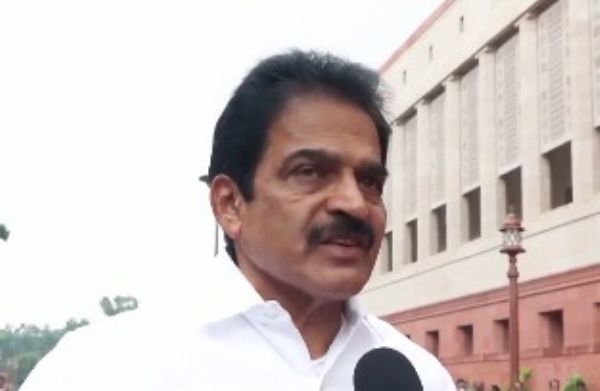
New Delhi, 05 August (H.S.): The Congress on Wednesday announced that it will oppose the Foreign Contribution (Regulation) Amendment Bill, 2026 (FCRA Amendment Bill) in Parliament. Congress General Secretary (Organisation) K.C. Venugopal alleged that the government is attempting to reintroduce the legislation in its earlier form, granting special exemptions to certain organisations while imposing stringent restrictions on other non-governmental organisations (NGOs). He asserted that the Congress and the entire Opposition would strongly resist what he described as a “repressive” piece of legislation.
Speaking to reporters in the Parliament complex, Venugopal said that Leader of the Opposition in the Lok Sabha Rahul Gandhi had firmly conveyed the party’s concerns to the government on the issue. He maintained that the Congress and the Opposition had taken a clear and unequivocal stand, adding that the government could not restore the FCRA to its previous form.
Venugopal further alleged that the proposed framework was intended to benefit organisations affiliated with the Rashtriya Swayamsevak Sangh (RSS), while subjecting other NGOs to a different and more restrictive set of rules. Such an approach, he said, was unacceptable, and the Congress would ensure that no such “repressive” legislation is passed by Parliament.
Notably, the proposed legislation has also drawn criticism in the United States. On August 4, U.S. Representative Riley Moore stated on social media platform X that the amendments under consideration by the Indian Parliament could pave the way for greater government control over churches and religious institutions. Describing the proposal as a move against the Christian community, he warned that if the Bill progressed in its present form, it could have implications for India-U.S. bilateral relations.
Earlier, in June, U.S. Senator James Risch, Chairman of the Senate Foreign Relations Committee, described the existing provisions of the FCRA as excessively stringent and lacking transparency for NGOs. He had cautioned that any use of the law to seize the funds or assets of foreign-funded Christian organisations would be a matter of serious concern.
Before that, U.S. Congressman Chris Smith had also written in June that the proposed amendments could expand the government's powers to take control of the assets of foreign-funded organisations. He urged the U.S. administration to raise the issue with the Government of India and press for the withdrawal of the proposed amendments.
In addition, several parliamentary aides associated with the U.S. Democratic Party expressed concern that sweeping amendments to the FCRA could adversely affect civil society and raise questions about the shared democratic values underpinning India-U.S. relations.
---------------
Hindusthan Samachar / Jun Sarkar


05 Aug 2026