New Delhi, 31 August (H.S.): Mir Yar Baloch is an active advocate of Balochistan’s independence, as well as a writer, journalist, human rights activist and representative of the ‘Free Baloch Movement’. He has long been raising his voice for Baloch rights at various international forums. In May 2025, he declared Balochistan an independent country. Presented here are edited and significant excerpts from his conversation with Senior Correspondent Saurav Rai.
Question: What is the current political basis for the demand by Baloch organisations for an independent Balochistan? How much public support do you have?
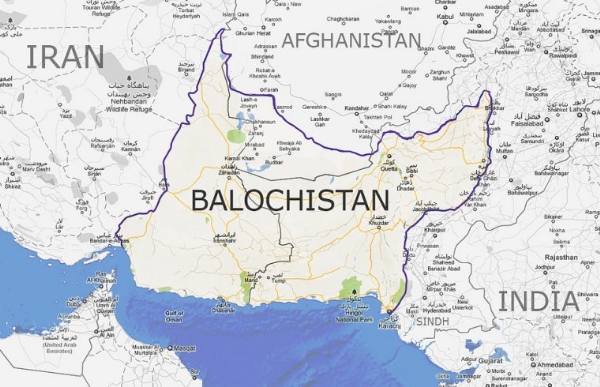
Answer: Balochistan is a country thousands of years older than Pakistan. It has its own distinct identity, history, language, way of life, laws, geographical territory and diplomatic, political and economic relations with the world. The international community must acknowledge this reality.
If anyone believes that recognising Balochistan’s independence would create instability, anarchy, or economic and security risks in the region, they do not understand our values, tolerance, peaceful nature or geographical position. Alternatively, they may have been influenced by Pakistan’s diplomatic propaganda and claims.
The Baloch have completely rejected the presence of the Pakistani military there. The military has been confined to certain areas, while the situation on the ground has moved beyond Pakistan’s control. Pro-independence forces are active in Balochistan and exercise influence over major roads and areas. Ordinary people view them as their protectors and liberators, while they shut the doors of their homes when they see Pakistani soldiers.
Pakistan has already lost the war. There is a “silent revolution” underway among the Baloch.
Question: Pakistan claims that foreign powers are behind separatist activities in Balochistan, particularly accusing India. What is your response?
Answer: First of all, it is incorrect to describe the Baloch as separatists. They have their own country, which is larger in area than France. We are demanding our rights against Pakistan’s occupation in accordance with international norms.
There is no point in relying on statements made by the Pakistani government and military. Their history is one of lies, deception and concealment of facts. Pakistan received economic and military assistance from the United States and Western countries and subsequently used that assistance to pursue its own interests.
Former heads of Pakistan’s Inter-Services Intelligence (ISI) and former defence ministers have publicly acknowledged that Pakistan received assistance from the United States and used it to advance its interests in Afghanistan. The international community should take these allegations seriously.
If the international community or India provides us with assistance in the future, pro-independence forces will be able to drive the Pakistani military out of Balochistan within a year.
Question: Do you want India to formally recognise Balochistan’s independence?
Answer: Our leadership institutions have clearly stated in their policy declarations that they seek diplomatic, political and moral support from India for the Balochistan independence movement.
Balochistan is not part of Pakistan; it is an independent country. We are not obliged to formulate our policies by seeking the approval of Pakistani military officials or political leaders.
The Baloch believe that New Delhi should now openly recognise Balochistan’s independence. There should be discussions on long-term defence and economic cooperation between the two sides. Indian technology companies and investors associated with major industries should begin working with Balochistan on defence and economic projects.
Through this, India could act as a responsible and reliable partner in supporting Balochistan’s ports and nation-building projects.
If Pakistan can seek assistance from the international community to serve its own interests, Balochistan too has the right to approach the world and neighbouring countries such as India over its resources and the issue of independence.
We have oil, gas, gold, silver and several other important minerals. We are not merely seeking assistance from the world; we are also inviting countries to partner with us and engage in trade.
Question: Several civilians were recently killed during Pakistani military operations. What evidence are you presenting before the international community?
Answer: Pakistani actions against the Baloch cannot be dismissed as mere allegations. We have evidence. Recently, three young Baloch men were detained by Pakistani security forces in the Bolan region, and their bodies were later found in deserted areas.
Since 1948, around 200,000 Baloch people have been killed. Nearly 50,000 Baloch have allegedly been forcibly disappeared.
Twenty-three-year-old Naseebullah Baloch, son of Ali Murad and a resident of Killi Sardar Karez near Quetta’s Western Bypass, was detained from his home at around 4 a.m. on July 28. There has been no information about him since.
Zahir Baloch, a resident of Pedarak in Kech district, was detained on August 24 while travelling to Turbat. His whereabouts remain unknown.
Pakistan’s military’s public relations department has said that approximately 90,000 military operations were conducted in Balochistan between January and December 2025. That amounts to an average of around 200 operations every day.
The Pakistani military has also stated that 31,080 operations were conducted between January and July 2026. Asim Munir has told the international media that only around 1,500 people are engaged in armed struggle for Balochistan’s independence. If that is the case, why have thousands of military operations been conducted?
Such a high number of military operations indicates that the Balochistan struggle is much broader in scope. The independence movement in Balochistan cannot be eliminated through military action.
Question: What is the way forward to take your struggle, or what you describe as the independence movement, out of the cycle of violence?
Answer: The Pakistani military present in Balochistan is an external force deployed there illegally. It is not present with the consent of the Baloch people.
The forces supporting Balochistan’s independence are protecting the lives, property, resources and identity of the Baloch people. Therefore, they should be regarded as the real security forces of Balochistan.
We want the world to support the Balochistan independence movement and ensure that this issue receives an international hearing. Our objective is to enable the Baloch people to determine their own future and decide political affairs concerning their territory according to their own wishes.
Question: Have all nationalist and pro-independence organisations in Balochistan agreed on a common political leadership and a shared roadmap, or do differences still remain?
Answer: There is broad agreement among political and resistance organisations on the demand for an independent Balochistan.
If any organisation has a different view on administrative or other matters, that view should be respected, provided it does not undermine the objective of an independent and united Balochistan.
If any organisation compromises on this principle, it may lose the trust and support of the Baloch people.
It is important for the movement to have common and broadly acceptable leadership. Hyrbyair Marri is widely regarded as an acceptable leader within the Baloch independence movement. He has devoted his life to the independence of Balochistan and to presenting the Baloch movement before the international community.
We believe Marri, together with other leaders, will succeed in uniting the organisations and securing international support for the Baloch movement.
Question: If an independent Balochistan is established in the future, what kind of political model would it have?
Answer: Broad efforts are underway to bring leaders with different views on the Baloch movement onto a common platform.
Hyrbyair Marri, chairman of the Free Balochistan Movement, presented the Balochistan Liberation Charter several years ago. It outlines a roadmap for an independent and united Balochistan.
The charter has been translated into 11 languages, including Balochi, English, Hindi, Marathi, Punjabi, Gujarati, Persian, Pashto and Arabic. It incorporates the views of various sections of Baloch society, including journalists, professors, historians, doctors, social and political leaders, student leaders, farmers, traders and ordinary Baloch people.
According to the charter, Balochistan would be a democratic country where women would enjoy equal rights with men. Protecting the rights of Hindus, Sikhs, Jains, Christians, Jews and other minority communities would be the responsibility of the state.
Religion would be kept separate from politics. The Republic of Balochistan would exercise control over all mineral and natural resources, which would be utilised for the welfare and prosperity of the Baloch people.
The document has received widespread appreciation and acceptance among the people of Balochistan.
Question: Balochistan is internationally significant because of strategic projects such as the China-Pakistan Economic Corridor (CPEC) and Gwadar. How do you view these projects and relations with China?
Answer: The message from the Baloch side to China is clear: it should immediately terminate all trade agreements concerning Balochistan that have been entered into indirectly through Pakistan.
The six crore people of Balochistan have rejected CPEC. Every Baloch wants development. The opposition exists because China established the foundation for this project through Pakistan.
Since Balochistan is a separate country, China should take into account its independent status, territorial integrity and history.
China should completely halt the project, or recognise the Republic of Balochistan and negotiate fresh agreements with it as it would with two independent countries. Pakistan cannot be allowed to determine projects for Balochistan.
Balochistan is planning to launch major projects under the name “Balochistan World Economic Corridor”. The estimated cost is around $500 billion.
In addition to Gwadar, plans are being discussed to build 10 more world-class seaports along the Baloch coast. The estimated cost of each project is said to be around $15 billion.
The entire Balochistan would be connected through a network of railways and roads.
Question: If the international community does not recognise Balochistan soon, what will be your political and diplomatic roadmap?
Answer: After decades of diplomatic efforts, Balochistan can now demonstrate to the world that a peaceful environment is the first prerequisite for development and trade.
Ensuring the safety of investors’ money and providing a peaceful environment would be the responsibility of the Republic of Balochistan.
If the Pakistani military itself is not safe there, how can it provide a secure environment for China, the United States, Barrick Gold or other global businesses and investors?
The world is now moving rapidly towards recognising an independent Balochistan. They describe Pakistan as an external country occupying Balochistan.
The international community should also enter into agreements concerning Balochistan with Balochistan rather than Pakistan.
We want to make it unequivocally clear to the world that Balochistan is now an independent country. It is not prepared to accept Pakistani interference in its territory, airspace or maritime boundaries.
---------------
Hindusthan Samachar / Jun Sarkar
18 Aug 2026