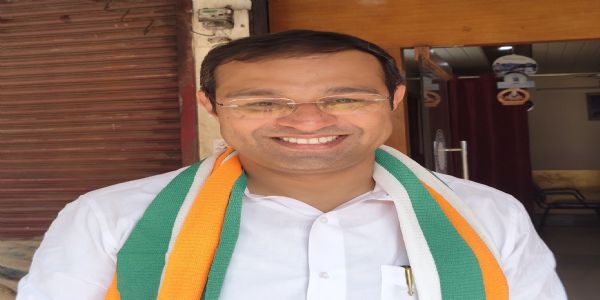
Kolkata, 31 August (H.S.): India and Russia need to build on their decades-old foundation of trust and strategic cooperation by expanding collaboration in emerging areas such as advanced technology, innovation, trade, manufacturing, energy, education and people-to-people exchanges, Union Minister of State for Education and Development of North Eastern Region Sukanta Majumdar said on Monday.
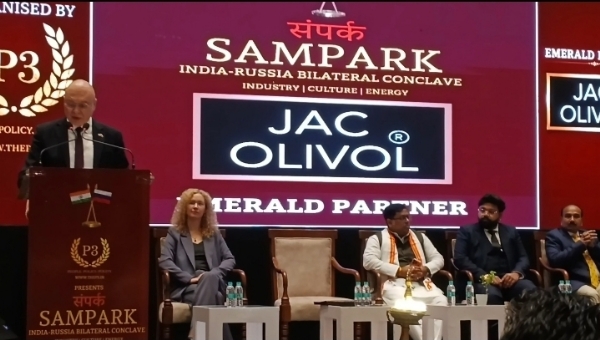
Addressing the SAMPARK–India-Russia Bilateral Conclave 2026 in Kolkata, Majumdar described India-Russia relations as a “time-tested partnership” and said the relationship must evolve in line with the changing global political and economic environment.
He said the mutual trust built over decades remained the greatest strength of the partnership, but it was now necessary to take the relationship into new areas in response to the challenges and opportunities of the 21st century.
“From the early stages of India’s industrialisation to cooperation in science, technology, space and defence, Russia and the erstwhile Soviet Union have remained important partners for India. This historical foundation gives us a strong opportunity to make the next phase of our relationship more ambitious,” Majumdar said.
He identified manufacturing, railways, aviation, mining, technology, research and innovation as key areas with significant potential for deeper India-Russia cooperation. Alongside the strategic partnership, he said, economic engagement must also be strengthened, with greater participation from industry and the private sector.
Highlighting energy cooperation as an important pillar of bilateral ties, Majumdar referred to the longstanding cooperation in the nuclear energy sector. He said, while existing projects should continue to advance, both countries should also explore opportunities in advanced nuclear technologies and emerging areas such as small modular reactors.
The Union Minister also stressed the need to strengthen cooperation among universities, research institutions, scientists, students and young innovators.
India-Russia relations, he said, could not remain confined to government-to-government engagement. Universities, researchers, entrepreneurs and young people must become active participants in the next phase of the partnership.
Majumdar also highlighted Kolkata’s longstanding intellectual and cultural significance, saying the city could emerge as an important hub for a new phase of India-Russia dialogue and cooperation.
He said greater collaboration in education, language, literature and cultural studies could help deepen ties between the younger generations of the two countries.
Russia Calls for Broader Economic and Technological Engagement
Russian Consul General in Kolkata Maxim V. Kozlov also called for giving a new direction to India-Russia relations, stressing that the partnership was rooted not only in diplomatic and strategic interests but also in centuries of cultural exchanges, mutual respect and friendship between the peoples of the two countries.
Welcoming the organisation of the conclave in Kolkata, Kozlov said discussions on India-Russia relations had for a long time been concentrated largely in cities such as New Delhi and Mumbai. The emergence of such an initiative in eastern India, he said, was therefore significant.
He expressed hope that SAMPARK would develop into an important platform for regular dialogue between India and Russia.
Recalling the historical links between the two countries, Kozlov referred to the contributions of Russian traveller Afanasy Nikitin, scholar Gerasim Lebedev and painter Vasily Vereshchagin in strengthening awareness and cultural understanding between Russia and India.
He said literature, cinema and the arts had also helped create a distinctive emotional bond between the people of the two countries.
Turning to contemporary economic relations, Kozlov said India and Russia had set an ambitious target of taking bilateral trade to USD 100 billion by 2030. He stressed the need to make bilateral trade more balanced and diversified while expanding the presence of Indian products in the Russian market.
He also called for accelerating negotiations on a free trade agreement between India and the Eurasian Economic Union and developing effective mechanisms to facilitate trade. Greater use of national currencies in bilateral transactions, he said, could also help simplify trade and financial settlements.
Kozlov highlighted connectivity as another important pillar of the India-Russia partnership, pointing to the potential of the International North-South Transport Corridor (INSTC) and the Northern Sea Route.
According to him, these routes could strengthen supply chains, reduce transportation time and costs, and open up new opportunities for trade and investment.
He also identified civil aviation, artificial intelligence, data centres, advanced technologies and critical minerals as emerging areas offering considerable potential for India-Russia cooperation.
Alongside traditional areas such as shipbuilding, railways, metallurgy and petrochemicals, he said there was scope for new cooperation in energy infrastructure, gas and other sectors.
Nuclear energy, Kozlov said, remained a major area of bilateral cooperation. He cited the Kudankulam Nuclear Power Project as an important example of technological collaboration between the two countries.
He said India and Russia could explore cooperation in next-generation nuclear technologies, including advanced nuclear systems and small modular reactors.
Kozlov further identified artificial intelligence, digital technologies, quantum computing, advanced materials, robotics, biotechnology and cybersecurity as areas where India and Russia could jointly achieve significant results.
He called for bringing together the scientific and engineering capabilities, markets and human resources of both countries to develop joint technology parks, research centres and innovation platforms.
Critical minerals, he said, represented another emerging area of cooperation, with opportunities for joint efforts in geological exploration, mining, mineral extraction and processing.
In agriculture, Kozlov pointed to the potential for cooperation involving energy resources, fertilisers and agricultural commodities, as well as the development of new projects, improved transportation networks and better market access.
Both Majumdar and Kozlov emphasised that the next phase of India-Russia relations should not depend solely on traditional strategic cooperation but should increasingly be driven by technology, trade, innovation, education, research, energy and stronger people-to-people connections.
Majumdar said governments could create an enabling environment for cooperation, but the real strength of the relationship would come from the participation of people, institutions, businesses and young innovators.
Kozlov, meanwhile, said the key challenge now was to translate the considerable potential between the two countries into tangible and practical outcomes.
The two sides described the SAMPARK conclave as an important platform for shaping the next phase of India-Russia relations, bringing together policymakers, diplomats, academics, business leaders, researchers and young people to identify new avenues for cooperation and convert shared opportunities into concrete partnerships.
Hindusthan Samachar / Satya Prakash Singh
18 Aug 2026
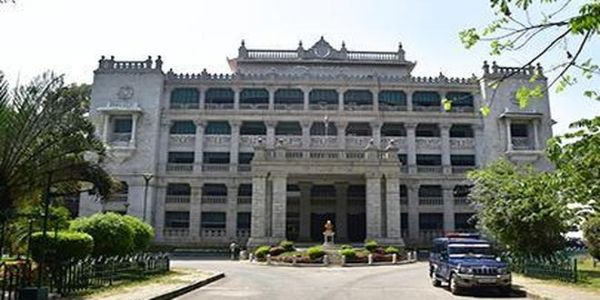
ED raids KPSC office, 20 other locations over Karnatak veterinary recruitment scam
ED raids KPSC office, 20 other locations over Karnatak veterinary recruitment scam..