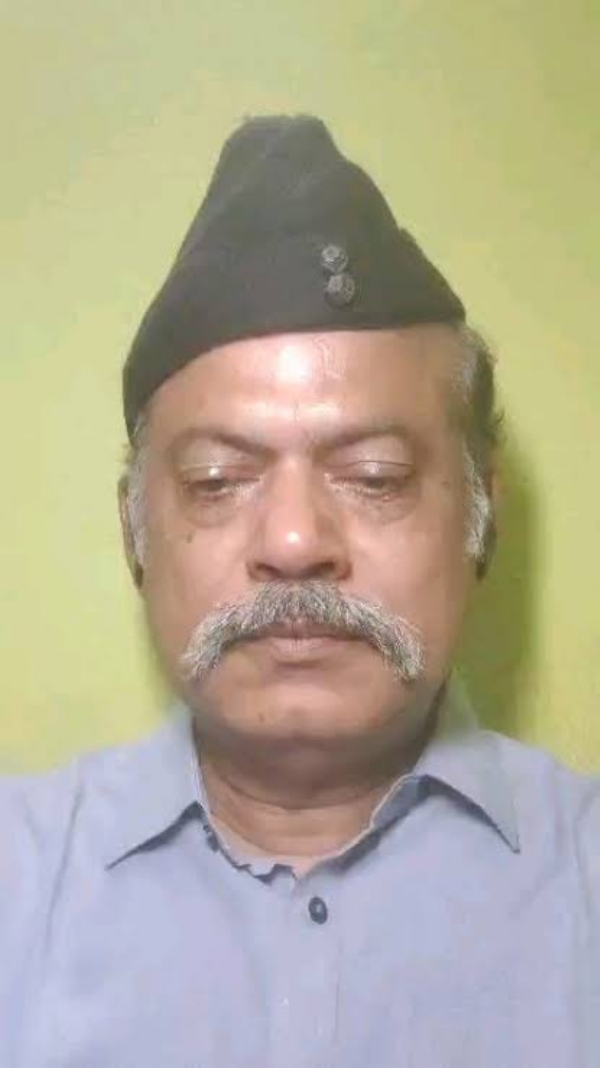
Kolkata, 31 August (H.S.) : India’s longstanding defence partnership with Russia has been built not merely on the acquisition of military equipment but on decades of trust, technology transfer, training, industrial cooperation and the development of indigenous capabilities, said Col. R.K. Srivastava (Retd.), former Director of Military Intelligence and a graduate of the Defence Services Staff College, Wellington.
Speaking at the SAMPARK – India-Russia Bilateral Conclave in Kolkata, Col. Srivastava reflected on the evolution of India-Russia defence cooperation and said the relationship had played a significant role in shaping India’s military, technological and industrial capabilities over several decades.
Looking back at the long history of cooperation, he said the contribution of Russia to India’s defence preparedness went far beyond the supply of military platforms and equipment.
“It was all very nice and beautiful. We need to look back at our long history of experience, even with the equipment and systems that were provided by our Russian friends. When we look back, we realise how much we have received from Russia and how deeply this cooperation has shaped our capabilities,” he said.
Col. Srivastava noted that Russian-origin equipment had been closely associated with several important phases in the development of India’s defence capabilities. Over time, he said, the relationship had evolved from a conventional supplier-recipient model into a broader partnership encompassing technology, training, production and the creation of indigenous industrial capacity.
“When we talk about Russian equipment, every part of the Russian system has been available to us in one form or another. We have worked with it, operated it and, over time, developed our own capabilities around it,” he said.
He recalled that Russian cooperation had at one stage included the supply of machinery and equipment that helped India establish and strengthen domestic production capabilities. This, he said, was particularly significant because the partnership contributed to the creation of an ecosystem capable of supporting, maintaining and developing military systems within India.
“There was a time when Russian friends provided us with a lot of equipment and machinery. This was not simply about buying equipment. It was about establishing production capabilities,” he said.
Referring to the broader strategic relationship, Col. Srivastava described the period around 1971 as an important milestone in the development of India-Russia friendship and strategic cooperation.
“When we look back at it, we can see that our friendship, particularly from the period around 1971 onwards, has been one of the important pillars of our strategic relationship,” he said.
He pointed out that decades of cooperation had also created a substantial base of technical expertise, trained personnel and institutional familiarity within India. A significant portion of India’s defence inventory, he said, had either originated in Russia or been developed through cooperation with the country.
“A very substantial part of our inventory has Russian origins. In some of our different systems and platforms, a very large proportion of the equipment comes from Russia or has been developed through cooperation with Russia,” he said.
At the same time, he emphasised that India had progressively moved beyond being merely an operator of imported systems. Indian personnel and institutions had developed the capabilities to maintain, upgrade and adapt equipment, while domestic manufacturing capabilities had expanded significantly.
“We have moved forward. We have developed our own capabilities and our own people. We have trained them, and that is very important. Technology is meaningful only when you have the people and the industrial ecosystem to absorb it,” he said.
Referring to major Russian-origin aircraft and other defence platforms inducted into the Indian armed forces, Col. Srivastava said the deeper value of the partnership lay in technology transfer and the willingness of both countries to collaborate in developing new capabilities.
“We saw the major aircraft series, including the Sukhoi, coming into India through our cooperation with Russia. But the most important thing was the transfer of technology. Technology transfer is really the strength of this relationship,” he said.
He said India’s requirements had also evolved, with the focus increasingly shifting from procurement towards collaboration, joint development and production. Such an approach, he argued, would be critical to strengthening India’s self-reliant defence industrial base.
“If we want to develop something, we want to collaborate. On our part, we will contribute what we have, and our Russian partners have also been willing to provide technology. That is what makes this relationship strong,” he said.
According to Col. Srivastava, the India-Russia defence relationship should not be viewed simply through the prism of equipment purchases. Its wider contribution included technology absorption, human-resource development, manufacturing, maintenance and the gradual expansion of India’s indigenous technological capabilities.
“We should not look at the relationship only from the point of view of buying equipment. We have to look at it from the point of view of technology, training, production, maintenance and the development of our own industrial capabilities,” he said.
He also highlighted cooperation in the space sector, describing it as another area in which the two countries had shared expertise and experience and contributed to the development of Indian technological capabilities.
“All the space programmes and the cooperation between our countries have contributed to Indian technology, training and the development of our people. A great deal of knowledge and experience has come through these partnerships,” he said.
Col. Srivastava said the experience accumulated over several decades provided a strong foundation for taking bilateral cooperation into emerging areas. The next phase, he suggested, should focus on connecting the technological and industrial ecosystems of India and Russia.
“I am sharing these experiences because we have seen all types of cooperation and all types of operations over the years. This history gives us confidence that we can work together in new areas as well,” he said.
He stressed that the future of the partnership should be centred on building an integrated ecosystem involving research institutions, industries, technology developers and other stakeholders rather than limiting cooperation to individual defence projects.
“The most important part of what we are talking about today is that our Russian friends have developed a very robust ecosystem. We also have a strong ecosystem. The challenge and the opportunity are to connect these ecosystems,” he said.
Against the backdrop of a changing global geopolitical and economic environment, he said India and Russia needed to strengthen links between their research, development and industrial establishments.
“Today, when the international order is changing and the global economic and political environment is evolving, we have to look at how we can create stronger links between our research, development and industrial facilities,” he said.
Research and development, he maintained, would have to remain at the heart of the next generation of bilateral cooperation. Both countries possess significant technological capabilities, and closer integration could create new opportunities in defence as well as other advanced technology sectors.
“There are many developments taking place in Russia, and we have also developed significant capabilities in India. The important thing is to integrate these capabilities so that we can work together on research and development,” he said.
Col. Srivastava also called for broadening the scope of cooperation beyond governments and major defence companies. Research institutions, private industries, technology companies, engineers, scientists and young innovators, he said, should become part of a wider India-Russia technological ecosystem.
“We have to create an ecosystem. Of course, there are critical areas of economic cooperation and strategic cooperation, but we also need to create an ecosystem where research institutions, industries and technology developers can work together,” he said.
He further argued that India’s expanding technological and industrial capabilities offered an opportunity to redefine the traditional defence relationship with Russia. While defence would remain an important pillar, future cooperation should increasingly focus on innovation, advanced technologies, joint development and production.
“We have many more ideas today. We have already indicated that Russia has a very important position in the defence market, but the relationship should now move beyond the traditional defence market towards technology, innovation and joint development,” he said.
Col. Srivastava stressed that jointly developed technologies and systems should ultimately contribute to manufacturing capacity in India and, where commercially viable, generate products capable of competing in international markets.
“The systems and technologies that we develop together should ultimately be produced in India. They should meet our own requirements and, wherever possible, they should also be competitive in the international market,” he said.
He said such an approach would represent an important transition from the traditional buyer-seller model towards a more balanced partnership based on co-development, co-production and technological collaboration.
“We have to take this relationship to the next level. We have to move from simply receiving equipment to jointly developing technologies, jointly producing systems and creating products that can compete in the global market,” he said.
Concluding his remarks, Col. Srivastava said the strength of the India-Russia partnership ultimately rested on the trust and institutional experience accumulated over generations.
“That is what the India-Russia relationship has given us over all these years — trust, technology, experience and friendship. We have to build on that foundation and create more and more opportunities for cooperation. We have to make sure that this partnership continues to grow, not only in defence but across technology, industry, research and development,” he said.
Hindusthan Samachar / Satya Prakash Singh
18 Aug 2026
ED raids KPSC office, 20 other locations over Karnatak veterinary recruitment scam
ED raids KPSC office, 20 other locations over Karnatak veterinary recruitment scam..