Jammu, 29 August (H.S.): The Union Agriculture Ministry has taken a significant step towards establishing a dedicated National Sanjeevani Research Centre for Sea Buckthorn in Ladakh's Nubra Valley by constituting a high-level committee to examine the proposal and assess its feasibility.
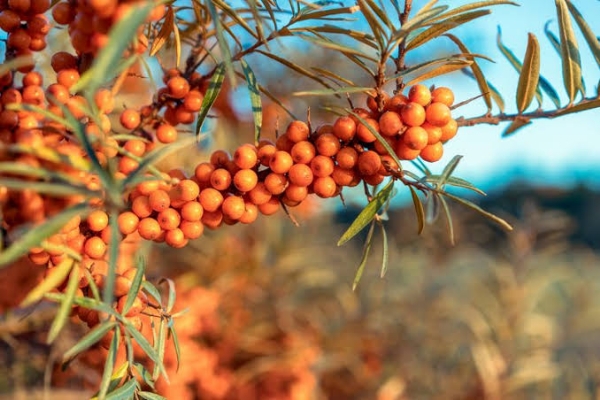
Sea buckthorn, a naturally occurring Himalayan plant, is increasingly being recognised for its considerable potential in agriculture, food processing, nutraceuticals and other value-added products. The crop also offers promising livelihood opportunities for farmers and rural communities living in the difficult mountainous terrain of Ladakh.
The plant gained wider national recognition after Prime Minister Narendra Modi highlighted its medicinal and nutritional properties during his Mann Ki Baat programme and described it as “Sanjeevani.”
The proposal for establishing the research centre was formally pursued by Ladakh Lieutenant Governor Vinai Kumar Saxena, who wrote to Union Agriculture and Farmers Welfare Minister Shivraj Singh Chouhan on August 14 seeking the establishment of the facility in Ladakh.
The proposed centre is planned in Nubra Valley, regarded as the largest Sea Buckthorn-producing area in Ladakh. It is envisaged as a dedicated institution for research, innovation, development, value addition and commercialisation of the high-value Himalayan crop.
Following the proposal, the Indian Council of Agricultural Research (ICAR) constituted a committee on August 21 to examine the project and recommend a suitable institutional and operational framework.
The committee is headed by Dr V. B. Patel, Additional Director General, Horticultural Science Division, ICAR. It undertook its first field visit to Ladakh on August 24 and held discussions with government officials, scientists and other stakeholders to assess the ground realities and potential of the crop.
Other members of the committee include Dr Maheshwar Singh, Dean (Agriculture), University of Ladakh, Leh; Dr Tsering Stobdan, Scientist-F, DRDO, Leh; and Tsewang Punchok, Director (Horticulture), UT Ladakh Administration.
The panel has been assigned the task of reviewing the current status of Sea Buckthorn genetic resources, its natural distribution, cultivation, production and utilisation in Ladakh. It will also examine ongoing research and identify areas where scientific intervention could help improve productivity, processing and commercial utilisation.
An important part of the committee's mandate is to consider different institutional models for the proposed centre. These include a standalone national research centre, a regional station of an existing ICAR institute, or a multi-institutional network involving ICAR, the UT Ladakh Administration, DRDO, CSIR, AYUSH and private industry.
The committee will also assess the possibility of establishing farmer clusters, nurseries and cooperatives, besides encouraging public-private partnerships for cultivation, processing, branding and marketing of Sea Buckthorn.
Such an integrated approach could help bridge the gap between cultivation and commercialisation while providing farmers with better access to technology, processing facilities and markets.
The panel has further been directed to prepare broad financial estimates covering capital and recurring expenditure, manpower and equipment requirements. It will also formulate a five-year action plan with measurable outputs, timelines and monitoring indicators.
The committee has been given 45 days from the date of its constitution to submit a comprehensive feasibility report and Detailed Project Report (DPR).
Lieutenant Governor Vinai Kumar Saxena has welcomed the move, saying the proposed research centre could significantly strengthen the administration's efforts to promote and commercialise Sea Buckthorn in Ladakh.
He said the proposed National Sanjeevani Research Centre in Nubra could transform the enormous potential of the Himalayan resource into scientific innovation, value-added products and sustainable livelihood opportunities for farmers and local communities.
The proposed centre, if approved, could emerge as a major platform for combining scientific research with traditional knowledge, modern cultivation techniques, processing, entrepreneurship and market development. Beyond promoting a single crop, the initiative has the potential to create a new value chain around Sea Buckthorn and generate opportunities for farmers, entrepreneurs, researchers and local communities across Ladakh.
With increasing interest in natural products, nutraceuticals and sustainable Himalayan resources, the proposed centre could give Sea Buckthorn a more prominent role in Ladakh's agricultural economy while supporting environmentally sustainable and locally driven development.
---------------
Hindusthan Samachar / Krishan Kumar

18 Aug 2026