New Delhi, 29 August (H.S.): The Indian Railways is increasingly using modern construction techniques to complete challenging projects such as building subways beneath active railway tracks within shorter timeframes. In Ahmedabad, the Western Railway has set an example by installing a 21-metre-long pedestrian subway during a night block of less than eight hours. In Bhiwandi, a waterproof pedestrian subway has been constructed beneath seven operational railway tracks using hydraulic pushing technology. Both projects have employed factory-manufactured precast reinforced cement concrete (RCC) boxes along with advanced waterproofing techniques.
According to the Ministry of Railways, the construction unit of Western Railway installed factory-manufactured precast RCC boxes at the site in Ahmedabad to build the pedestrian subway. The 21-metre-long subway comprises 14 precast segments. It was installed using the cut-and-cover method during a night block lasting less than eight hours. The technique enabled the work to be completed without causing prolonged disruption to railway operations.
To enhance the strength and waterproofing capability of the subway, the RCC boxes were post-tensioned and equipped with technologies including swelling gaskets, dimple boards and SBS membranes. These measures are expected to improve the long-term durability of the structure and prevent water seepage.
In Bhiwandi, the Railways completed an even more challenging project on the Panvel-Vasai rail section. For the first time, a waterproof pedestrian subway has been constructed beneath seven operational railway tracks. Four large precast RCC segments were installed beneath the tracks using hydraulic pushing technology.
The subway has been designed to withstand the load generated by heavy freight trains, with its structure conforming to standards capable of handling heavy traffic comparable to that of a Dedicated Freight Corridor. Multiple layers of sealing and protective membranes have been incorporated to make the structure waterproof.
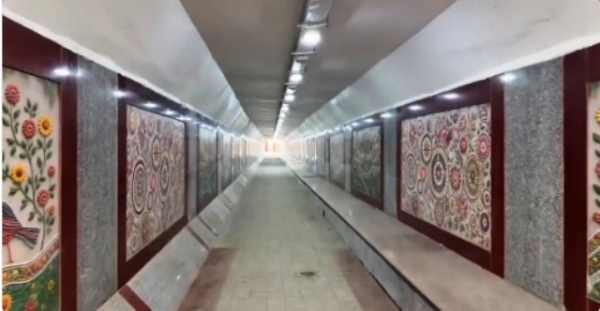
The new subway will provide pedestrians and two-wheeler riders with a safe, all-weather passage. It is equipped with covered approaches, lighting, ventilation and drainage facilities.
The Ministry of Railways said modern techniques such as precast RCC construction and hydraulic pushing are enabling complex infrastructure projects to be completed in shorter timeframes while enhancing railway operational safety and structural durability. The Ahmedabad and Bhiwandi projects represent another step towards developing modern, safer and passenger-centric railway infrastructure.
---------------
Hindusthan Samachar / Jun Sarkar

18 Aug 2026