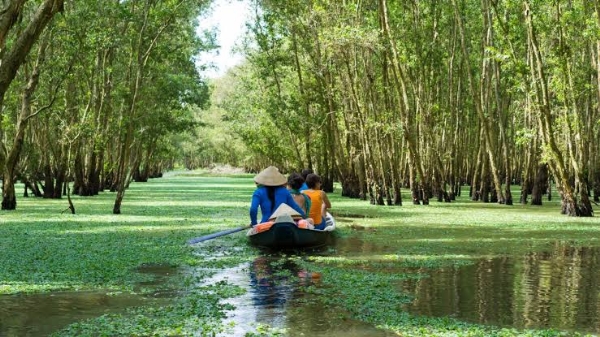
Kolkata, 29 August (H.S.): West Bengal is set to take a major step towards developing eco-friendly river tourism along the Hooghly, with the state Tourism Development Department procuring two 100-passenger hybrid-electric ferries from Garden Reach Shipbuilders and Engineers (GRSE).
Tourism Minister Shankar Ghosh, while addressing a GRSE programme, said the ferries would form part of an integrated tourism corridor aimed at connecting Kolkata with major religious, cultural and heritage destinations along the Hooghly.
The initiative seeks to combine green mobility with West Bengal's rich religious, cultural and colonial heritage, while creating employment opportunities and strengthening local economies.
River tourism played a very important role in the developed nations. Unfortunately, in our state this sector was never explored properly and the initiatives were almost nil, Ghosh said.
The two ferries built by GRSE feature a twin-hull catamaran design and are equipped with lithium-ion battery propulsion, solar-panel integration, emergency power backup, fire-fighting systems and life-saving equipment. According to the minister, the vessels have been classified by the Indian Register of Shipping (IRS).
Ghosh said the state government was working towards developing an integrated tourism corridor, described as Little Europe by the Ganges, connecting Babughat with Mayapur along the Hooghly.
The proposed route will cover major religious destinations such as Dakshineswar, Belur Math, Hanseswari Temple and Annapurna Temple in Barrackpore. It will also highlight the colonial heritage of Barrackpore, Srirampore, Chandannagar and Bandel, along with the region's history associated with India's freedom movement.
The corridor will showcase our rich colonial heritage and freedom movement history, the minister said.
The minister emphasised that the project was not merely a tourism initiative but also an economic development programme.
River tourism can become a crucial catalyst for regional economic growth, generating direct and indirect employment for local boatmen, vendors, heritage guides and hospitality operators along the Ganges banks, Ghosh said.
According to him, eco-friendly river transport can promote local commerce, help preserve riverbanks and transform historic river routes into sustainable tourism and trade hubs.
As part of the proposed river tourism network, charging stations for electric vessels are planned at Barrackpore, Srirampore, Chandannagar and Hooghly.
New jetties have also been proposed at Kolkata, Barrackpore, Serampore, Chandannagar, Hooghly, Ambika Kalna, Matiara, Nadia and Baranagar, in collaboration with the West Bengal Tourism Development Corporation Ltd.
Calling the procurement of the two ferries a historic collaboration between a Central PSU and state tourism, Ghosh said the government aims to establish a modern, eco-friendly, disciplined and world-class tourism ecosystem that preserves Bengal's heritage while strengthening local economies.
Inland Waterways to Get Greater Economic Role
Ghosh also highlighted the economic potential of inland waterways, saying the state wants to develop full-fledged river tourism along the Hooghly and make National Waterway-1 and National Waterway-97 more functional for business and connectivity.
He said improved use of inland waterways could particularly benefit people living in remote areas by expanding economic opportunities and connectivity.
We hope this is the first sacred step towards fully developed river tourism along the Hooghly River, Ghosh said.
---------------
Hindusthan Samachar / Priyanka Pandey
18 Aug 2026
ED raids KPSC office, 20 other locations over Karnatak veterinary recruitment scam
ED raids KPSC office, 20 other locations over Karnatak veterinary recruitment scam..