New Delhi, 24 August (H.S.):
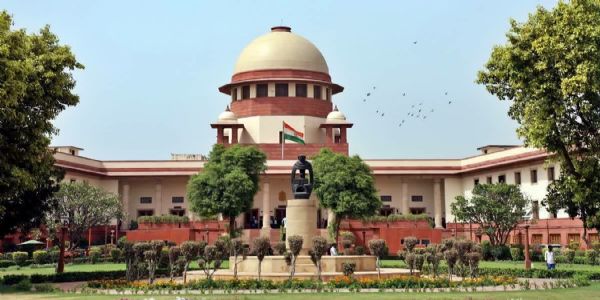
The Supreme Court has prohibited construction and development activities within 100 metres of the banks of Rajasthan’s Jojari River. A bench headed by Justice Vikram Nath said the restriction would remain in force until the high flood line and ecological buffer zone along the river are properly demarcated and scientifically determined.
As an additional precautionary measure, the Supreme Court has also prohibited the operation of hazardous or polluting industries within 500 metres of the river’s existing flood line. Earlier, on May 29, the apex court had taken a serious view of pollution in the Jojari River and directed that accountability be fixed for officials responsible for the contamination. The court had also directed the state Director General of Police to register an FIR and conduct an investigation through a Special Investigation Team (SIT).
On November 17, 2025, the Supreme Court had reprimanded the Rajasthan government over its failure to effectively address pollution in the Jojari River. The court had observed that it would ensure that concrete measures were taken beyond the directions issued by the National Green Tribunal (NGT), noting that the ground situation remained extremely alarming. It had also said that the continued discharge of industrial pollution into rivers reflected a failure on the part of the state government, despite the matter having been under consideration for years.
The court had noted that, apart from the Rajasthan State Industrial Development and Investment Corporation Limited (RIICO), the municipal bodies of Pali, Balotra and Jodhpur had challenged the NGT’s 2022 order directing measures to clean the Jojari River. The court had asked the Rajasthan government to clarify whether it was serious about challenging the NGT’s order.
On October 10, 2025, the Supreme Court had directed that the suo motu proceedings concerning toxic water in the Jojari River be heard alongside the pending appeals challenging the NGT’s order. The court had taken suo motu cognisance of the matter on September 16, 2025, observing that the discharge of industrial waste into the river was adversely affecting public health and the surrounding ecosystem.
The court had noted that industrial waste from factories in the surrounding areas was being discharged directly into the river, contaminating water sources used by hundreds of villages. It had observed that residents were being deprived of access to clean drinking water and that the pollution was having serious consequences for human health and the wider ecosystem.
The court had further noted that large quantities of industrial effluents from textile and tile manufacturing units were being discharged into Rajasthan’s Jojari River, rendering the water unfit for consumption by people and livestock in hundreds of villages.
The Jojari River originates near Pondlu village in Rajasthan’s Nagaur district and flows through Jodhpur and Barmer districts before joining the Luni River.
---------------
Hindusthan Samachar / Jun Sarkar
18 Aug 2026