New Delhi, 24 August (H.S.):
Indian Railways has launched a special nationwide campaign to clean and disinfect drinking water tanks and filters at railway stations to ensure the availability of safe and hygienic drinking water for passengers. Under the campaign, zonal railways will conduct comprehensive inspections of all facilities associated with drinking water supply and address deficiencies within a stipulated timeframe.
The Railway Ministry said in a statement on Monday that the Railway Board has directed zonal railways to inspect drinking water sources, filtration and treatment plants, underground and overhead tanks, PVC tanks, water booths, taps and other water dispensing points. All drinking water tanks will be emptied, desilted, thoroughly cleaned and disinfected. Tank covers and vents, as well as overflow pipes, will also be inspected to prevent contamination caused by birds, animals and algae.
During the campaign, damaged tanks, pipelines and filters will be repaired or replaced wherever necessary. Authorities will also ensure that there are no improper connections between drinking water and non-potable water pipelines. Pipelines will be checked for leaks and necessary measures will be taken to prevent water wastage.
Railways has also directed officials to pay special attention to locations where drinking water is supplied through hand pumps and borewells. Water from such sources will be tested regularly to ensure that it remains safe for consumption.
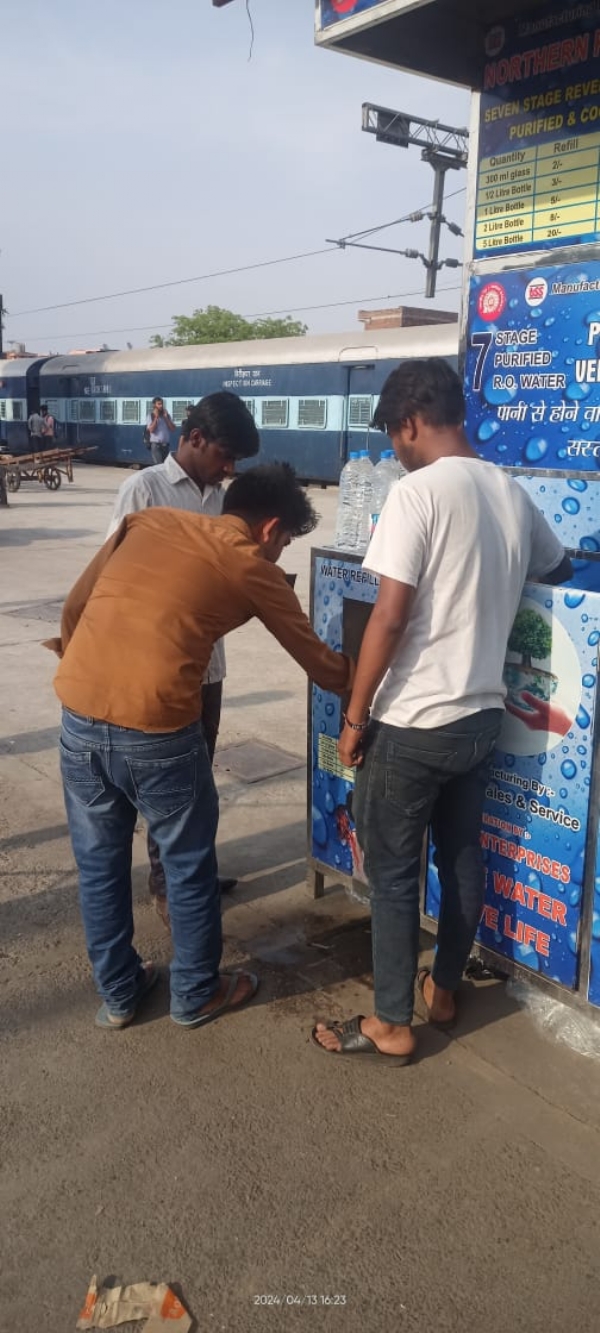
Water coolers and water purification systems installed at railway stations will also undergo comprehensive inspections. Cooler tanks will be cleaned, leaks in pipes and taps will be repaired, and complete hygiene will be maintained around water dispensing areas. UV and RO systems will be installed wherever required. Old or defective systems will undergo servicing and overhauling, while filter candles and other essential components will be replaced in a timely manner.
The same cleaning and quality-control standards will also apply to water vending machines to ensure that the water supplied through these machines remains safe and hygienic.
Railway officials will collect water samples from drinking water sources, treated water outlets, tanks, coolers, water vending machines and selected taps or water booths for physical, chemical and bacteriological testing. Residual chlorine levels in drinking water will also be monitored daily. Where necessary, immediate rechlorination or other corrective measures will be undertaken.
The Railway Board has also directed zonal railways to expedite the construction of already sanctioned new overhead and underground tanks and the replacement of old tanks. Where new infrastructure is required, the approval process will be initiated.
Zonal railways have been instructed to prepare and monitor station-wise details of deficiencies identified during inspections and the action taken to rectify them. This will help ensure that problems detected during the campaign are resolved within the prescribed timeframe.
The campaign will not be limited to drinking water facilities meant for passengers. Similar cleaning, inspection and improvement measures will also be undertaken for drinking water systems in railway colonies and workplaces.
According to the Railways, these measures will strengthen regular inspection, cleaning, maintenance, water-quality testing and corrective action across the drinking water network, helping ensure the availability of safe and hygienic drinking water for both passengers and railway employees.
---------------
Hindusthan Samachar / Jun Sarkar
18 Aug 2026