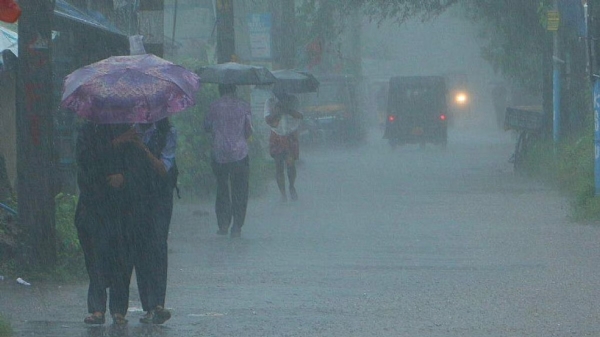
Thiruvananthapuram, 24 August (H.S.):Kerala has recorded a 23 per cent deficit in monsoon rainfall between June 1 and August 24, according to data released by the India Meteorological Department (IMD).
The State normally receives 1,671 mm of rainfall during this period. However, only 1,278.7 mm was recorded this year, indicating a substantial decline in monsoon precipitation across several districts.
Only six districts—Kannur, Kasaragod, Kottayam, Kozhikode, Pathanamthitta and Thiruvananthapuram—received rainfall within the normal range. All the remaining districts reported varying degrees of deficiency.
Wayanad recorded the highest rainfall deficit in Kerala at 51 per cent. The hill district normally receives 2,114.7 mm of rain during the period but received only 1,039.7 mm this year. The severe shortfall could raise concerns over agriculture, groundwater availability and water storage in the district.
Idukki recorded the second-highest deficit at 45 per cent. Against the normal rainfall of 2,092 mm, the district received just 1,147 mm. Kollam followed with a rainfall deficiency of 30 per cent.
In contrast, Pathanamthitta received rainfall close to its seasonal average. The district recorded 1,220 mm of rain against the normal level of 1,250 mm.
Thiruvananthapuram also reported nearly normal rainfall. The State capital received 629.6 mm during the period, marginally lower than the expected 632.5 mm.
The district-wise variation shows that although some parts of Kerala received rainfall close to normal, several regions—particularly the high-range districts—experienced a considerable shortfall. The overall 23 per cent deficit could have implications for farming, drinking-water availability and hydroelectric power generation if rainfall does not improve during the remaining monsoon period.
The figures underline the uneven distribution of seasonal rainfall across Kerala, with high-range districts facing much sharper deficits than some northern and southern districts. Rainfall during the rest of the season will therefore be closely watched, particularly in areas dependent on monsoon-fed reservoirs and farming.
---------------
Hindusthan Samachar / Arun Lakshman

18 Aug 2026
ED raids KPSC office, 20 other locations over Karnatak veterinary recruitment scam
ED raids KPSC office, 20 other locations over Karnatak veterinary recruitment scam..