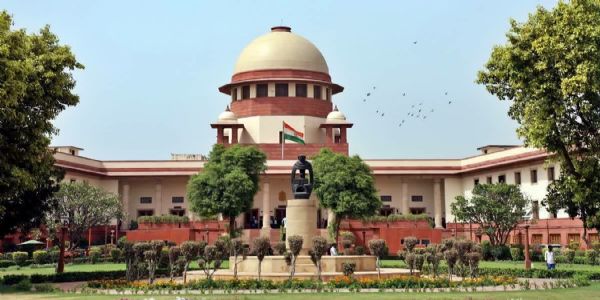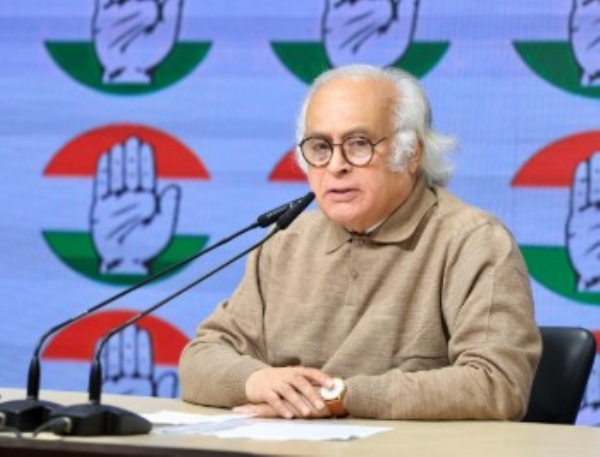
New Delhi, 22 August (H.S.): Congress general secretary Jairam Ramesh has sharply criticised the Central government’s Industrial Relations Code, 2020, saying it weakens essential safeguards for workers. He also expressed concern over the Supreme Court’s 5:4 verdict of August 20 in State of Uttar Pradesh vs Jai Bir Singh, arguing that the court’s new interpretation of the term “industry” could create uncertainty in industrial relations.
In a post on X, Ramesh said the majority judgment has put forward a “hypothesis” that effectively redefines the triple test laid down in the landmark Bangalore Water Supply and Sewerage Board vs A. Rajappa case of February 1978. He said the interpretation of “industry” has a direct bearing on who qualifies as a “workman” and who is entitled to protection under labour laws.
Ramesh said that in the 1978 judgment, the Supreme Court had laid down three key elements for determining whether an activity qualified as an “industry”: systematic activity, cooperation between employers and employees, and the production or distribution of goods or services to satisfy human wants and needs. The court had also held that the profit motive was not decisive and that activities undertaken by charitable organisations and public bodies could also fall within the scope of the definition.
He said only core sovereign functions, such as judicial functions, law and order, and defence, were excluded from its ambit. According to Ramesh, the triple test remained a broad and established basis for determining what constituted an “industry” under the Industrial Disputes Act, 1947, for nearly five decades.
Ramesh said the 2026 majority judgment narrows this approach in two significant ways. First, it requires an activity to have an “obvious commercial character” akin to trade or business, a condition that was not part of the earlier triple test. Second, he said, the scope of the exemption for sovereign functions has been expanded, potentially allowing more government activities to be excluded from the definition of “industry”.
He noted that the Supreme Court has clarified that this redefinition will not affect proceedings that have already been concluded or are pending under the old Industrial Disputes Act, nor will it govern the interpretation of the new Industrial Relations Code. Despite this, Ramesh expressed apprehension that the “hypothesis” recorded in the judgment could lead to future litigation and legal uncertainty, particularly before labour courts and industrial tribunals.
Ramesh said this could, in practice, pave the way for a narrower interpretation of “industry” to become established. He also pointed out that the Industrial Relations Code already empowers the Central government to exempt additional categories of establishments from the scope of the legislation.
He described the dissenting opinion of Justice B.V. Nagarathna as significant, saying she had rejected the need to reconsider the triple test established in the Bangalore Water Supply case. According to Ramesh, Justice Nagarathna cautioned against unsettling settled law in the interest of judicial certainty and observed that judicial precedents developed under the old legislation could assist in interpreting the new Code.
Ramesh said the August 2026 majority judgment comes at a time when clarity in industrial relations is essential for maintaining industrial peace. He argued that as the private sector’s role in providing services continues to expand in an open economy, any move to narrow the definition of “industry” could weaken protections available to workers.
---------------
Hindusthan Samachar / Jun Sarkar
18 Aug 2026