UP capable of meeting requirement of skilled, semi-skilled
and non-skilled manpower in country and abroad: Labour Minister Anil Rajbhar
Confluence of Japanese technology and UP's youth power will
create new possibilities for development: Skill Development Minister Kapil Dev
Agarwal
There is a huge potential for cooperation with Japan in the
healthcare sector: Additional Chief Secretary Amit Ghosh
UP will train youth in Japanese language, technology and
work culture as per the needs of Japan: Principal Secretary Dr. Hariom
With the growing labour demand in Japan, there are huge
global employment opportunities for the youth of UP: Principal Secretary M.K.
Shanmuga Sundaram
Skill development partnership with Japan will open new
international employment opportunities for the youth of UP: Mission Director
Pulkit Khare
Lucknow, 21 Aug (HS): In the sectoral session of UP-Japan
Healthcare and Care Economy Partnership held on Friday in the Mars Hall of
Indira Gandhi Pratishthan, the vast possibilities of partnership between Uttar
Pradesh and Japan in the fields of healthcare, medical education, robotics,
pharma, technological investment and skilled human resources were discussed.
State government ministers, senior officials, Japanese delegation and
representatives of various institutions participated in the program. The
speakers said that the confluence of Japan's cutting-edge technology, quality
and efficiency and Uttar Pradesh's huge youth power and developing healthcare
infrastructure can become the basis for new economic and employment
possibilities for both the countries.
Deputy Chief Minister Brajesh Pathak said that Uttar Pradesh
is among the country's fastest-growing economies today. Improved law and order,
expressways, air connectivity, power, and other infrastructure expansion have
made the state conducive to investment. He noted that Japan is known worldwide
for its technology, quality, and efficiency, while Uttar Pradesh boasts a large
youth population and trained human resources. Combining the capabilities of
both can create a significant model in healthcare and the care economy.
He said that the number of medical colleges in the state has
increased significantly. Nursing and paramedical institutions are also being
expanded alongside medical colleges. This is developing the state's strong
capacity to produce trained human resources to meet future healthcare needs.
Labor and Employment Minister Anil Rajbhar said that the
Uttar Pradesh government is prioritizing employment generation along with
investment. There is a need for skilled, semi-skilled, and non-skilled manpower
in the country and abroad, and Uttar Pradesh is ready to meet this need.
He said the government's commitment is to provide work
for every hand. This employment will not be limited to the state or
country, but will also connect youth to the global employment market. He said
Uttar Pradesh is now rapidly advancing in road, water, and air connectivity,
and has excellent infrastructure available for investors.
Highlighting India-Japan relations, Anil Rajbhar said that
Uttar Pradesh has affinity for Japan and Japan has trust in India. He said that
by linking this partnership with investment, employment, and technical
cooperation, the state's economy can be given new impetus.
Kapil Dev Agarwal, Minister of State (Independent Charge)
for Vocational Education, Skill Development, and Entrepreneurship, said that
Prime Minister Narendra Modi has done significant work in establishing India's
new identity on the world stage and establishing India's capabilities on the
global platform. Under his inspiration and guidance, Chief Minister Yogi
Adityanath traveled to Japan, and the subsequent visit of the Japanese
delegation to Uttar Pradesh is evidence of the growing trust and strengthening
relations between the two countries.
He said that during Chief Minister Yogi Adityanath's visit
to Japan, he was reminded of Swami Vivekananda. Just as Swami Vivekananda's
Hindi language, saffron robes, and commitment to nation-building presented
India's cultural strength to the world, the age-old ties of culture, trust, and
friendship between India and Japan are today taking the form of economic and
technological partnership.
Minister Kapil Dev Agarwal said that Japan is known globally
for its technology, quality, discipline, and efficiency, while Uttar Pradesh
possesses a vast youth force and trained human resources. The confluence of
Japanese technology and Uttar Pradesh's youth power is evident today in Uttar
Pradesh. This partnership will create new possibilities for development in many
sectors, including healthcare.
He said that the Uttar Pradesh government has provided a
transparent and accessible system for investors through a one-window system.
The government has placed special emphasis on skilling the state's youth with
modern technology and training them in foreign languages. The aim is to provide
them with respectable employment opportunities not only within the country but
also abroad.
Minister Agarwal said that the Japanese delegation traveled
by road instead of air to get a closer look at the state's infrastructure. This
gave them the opportunity to see that the state government has not limited
infrastructure development to mere promises, but has put it into practice. He
said that seeing the state's roads, connectivity, and infrastructure firsthand
will further strengthen the Japanese delegation's confidence in Uttar Pradesh.
He said that under the leadership of Chief Minister Yogi
Adityanath, the state's economy has strengthened and the government has created
an environment that promotes both investment and employment. Kapil Dev Agrawal
assured the Japanese representatives that the Skill Development Department of
Uttar Pradesh is ready to provide Japanese companies with skilled manpower as
per their needs and that by acquiring modern technology from Japan, both sides
will jointly create a new future.
Welcoming the Japanese delegates, he said that the
friendship between India and Japan is not limited to economic relations but has
a strong foundation of culture, trust and human relations between the two
countries.
Amit Ghosh, Additional Chief Secretary of the Department of
Medical Health and Medical Education, stated that Uttar Pradesh offers vast
potential for collaboration with Japan in the healthcare sector. He added that
the state is developing a favorable environment for investment in
pharmaceuticals, medical devices, robotics, and medical technology.
He stated that the UP Promote Pharma Council has been formed
to promote the pharmaceutical sector in the state. Investment proposals have
been received for a medical devices park in the Yamuna Expressway area.
Japanese institutions have also expressed interest in the fields of robotics,
medtech, and innovation labs. Possibilities are being explored for the
development of a medical technology hub on approximately 400 acres.
He said that there is also potential for Japanese companies
and investors to participate in the development of medical colleges through a
PPP model. By combining Japan's technological expertise with Uttar Pradesh's
rapidly developing health infrastructure, a strong ecosystem of medical
education, medical services, and technological innovation can be created.
Dr. Hariom, Principal Secretary of the Skill Development
Department, stated that Uttar Pradesh has an extensive network of ITI and polytechnic
institutes. The state has the capacity to train millions of youth each year. If
clear and demand-based proposals are received from Japan, specialized training
centers could be developed for youth. These centers could provide training in
Japanese language, technical skills, caregiving, work culture, and Japanese
workplace behavioral standards. This would provide youth with both the skills
and language proficiency necessary for employment in Japan.
Dr. M.K. Shanmuga Sundaram, Principal Secretary, Department
of Labor and Employment, stated that India is among the youngest countries in
the world, while Japan faces the challenge of a rapidly aging population and
labor shortages. In the coming years, Japan will require a large number of
trained workers in various sectors, including caregiving. He explained that
India and Uttar Pradesh have a large labor force available. Millions of workers
from the country and the state are registered on the e-Shram portal. Japan
offers employment opportunities in various sectors, including caregiving,
construction, manufacturing, and logistics. He added that safe and organized
migration can connect the youth of Uttar Pradesh to the global employment
market.
Pulkit Khare, Mission Director of the Uttar Pradesh Skill
Development Mission, stated that the large youth population in Uttar Pradesh is
the state's greatest strength. The state government is constantly striving to
provide this youth with better employment and self-employment opportunities by
training them to meet the changing needs of industry and the global market. He
added that collaboration with Japan in the field of skill development could
pave the way for new international employment opportunities for the youth of
Uttar Pradesh. Understanding the needs of Japanese industries, it is essential
to integrate demand-based training, modern trades, language training, and work
culture into the training system.
The Uttar Pradesh Skill Development Mission is working to
establish effective and systematic skill-to-employment pathways by establishing
better coordination between industry and training institutions. With Japan's
cooperation, the quality of training, technical proficiency, and employability
of youth can be further strengthened in accordance with international standards.
Mansi Kasliwal, director of the Step Foundation, stated that
Uttar Pradesh could play a key role in meeting the growing need for care
workers. She emphasized the need for a training model based on a care skills
test, Japanese language, nursing care language, and workplace behavioral
readiness. Rana Dhiraj, CEO of C2C India, emphasized learning from Japan's work
culture and said that Uttar Pradesh could become a major source of talented and
trained human resources for Japan.
Uttar Pradesh has a large population of young, trained human
resources, offering immense potential for long-term partnerships in skills
training, Japanese language, caregiving, medical technology, and employment.
Experts emphasized Japan's work culture, including punctuality, cleanliness,
discipline, and quality. To find employment in Japan, young people will need to
develop an understanding of the Japanese language and work culture, along with
technical skills.
India-Japan cooperation can be expanded to areas such as
medical education, pharma, medical devices, robotics, artificial
intelligence-based healthcare, caregiving, skill development, and technology
transfer. Uttar Pradesh's young population can meet Japan's labor needs, while
Japan's technology and work culture can provide a new direction to the state's
healthcare and skill development systems. This partnership will increase
employment opportunities for youth abroad and encourage Japanese investment,
technology transfer, and new industries in the state.
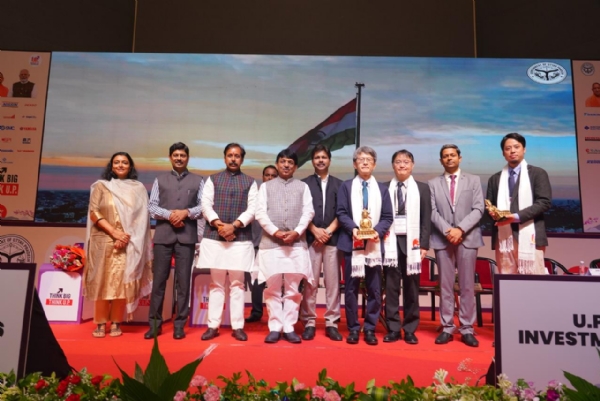
At the end of the program, Juichi Kobayashi, Director
General of the Industrial Policy Department of Yamanashi Prefecture, Japan,
Shikeko Taka of the Advanced Policy Promotion Department, Yu Agura of the
Japanese Corporation, and Suichi Khamada, Director of Lohia Corporation,
Kanpur, were honored. Prerna Sharma, Special Secretary and CEO of Invest UP,
presented mementos to the Japanese delegates.
Hindusthan Samachar / Abhishek Awasthi
18 Aug 2026
ED raids KPSC office, 20 other locations over Karnatak veterinary recruitment scam
ED raids KPSC office, 20 other locations over Karnatak veterinary recruitment scam..