New Delhi, 09 July (H.S.):
The Central Government has launched two pilot projects on the Shastri Park and Kailash Nagar drains, which flow into the Yamuna in Delhi, as part of a new initiative to promote Nature-Based Solutions (NBS) for the rejuvenation of the Ganga and its tributaries. The projects will develop a constructed wetland-based model for treating polluted water from urban drains while also supporting training and capacity-building programmes to encourage the wider adoption of nature-based river restoration measures.
The Ministry of Jal Shakti said on Thursday that sewage treatment plants (STPs) and sewer networks alone are not sufficient for restoring rivers. Therefore, the National Mission for Clean Ganga (NMCG) is incorporating Nature-Based Solutions into its river restoration strategy to maintain environmental flows (e-flows) and strengthen river ecosystems. The objective is to ensure sustainable and long-term river rejuvenation.
According to the ministry, the NMCG is mainstreaming Nature-Based Solutions under its Sustainable River Rejuvenation (SRR) programme. As part of this initiative, pilot projects based on constructed wetlands are being developed for the in-situ treatment of polluted urban drains. The programme also promotes research, innovation, and capacity building to facilitate the large-scale adoption of these environmentally sustainable approaches.
The two projects being developed on the Shastri Park and Kailash Nagar drains, both of which discharge into the Yamuna, will have a combined treatment capacity of approximately 10 MLD (million litres per day). These initiatives represent a significant step towards adopting low-energy, climate-resilient, and sustainable technologies for urban drain management.
Unlike conventional wastewater treatment systems, the projects will minimise dependence on heavy mechanical infrastructure and energy-intensive treatment processes. Stone masonry structures will be constructed to regulate water flow and increase water retention time. Rock filters will be installed to remove solid waste, while aquatic vegetation and phytoremediation techniques will be used to absorb nutrients, facilitate oxygen transfer, and naturally reduce pollutants, excess nutrients, and certain heavy metals. These measures are expected to improve dissolved oxygen levels, reduce organic pollution, and enhance the river's biodiversity.
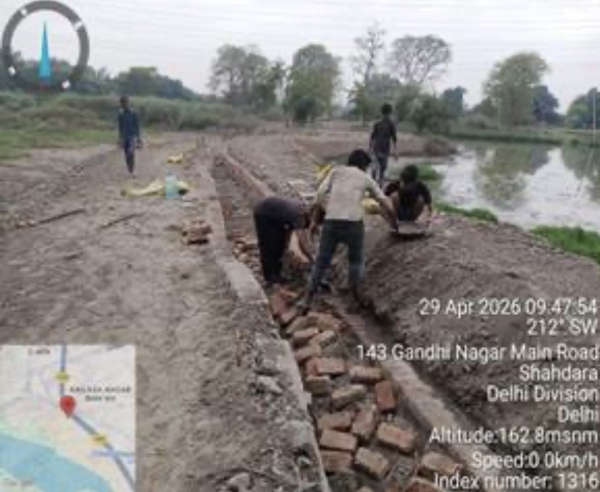
Construction work on both projects is progressing rapidly. At the Kailash Nagar drain, desludging and desilting operations have been completed, and brick lining work is currently underway. Rock filters will be installed during the next phase of construction. At the Shastri Park drain, preliminary desilting and desludging activities are in progress, after which stone masonry structures, rock filtration systems, and aquatic plants will be installed.
According to the ministry, the two projects will collectively treat nearly 10 MLD of wastewater every day. They are also expected to serve as cost-effective, scalable, and replicable models for managing urban drains throughout the Ganga basin.
To strengthen technical expertise in river restoration, the ministry organised six training and capacity-building programmes between August 2025 and March 2026, benefiting more than 100 government officials and technical experts.
The ministry further announced that, following these pilot projects, a constructed wetland project will also be launched at Khatauli in Uttar Pradesh for the rejuvenation of the Kali River, a tributary of the Ganga. The project aims to reduce pollution from domestic and industrial wastewater at its source, thereby improving the river's water quality and restoring its ecological health.
---------------
Hindusthan Samachar / Jun Sarkar

10 Jul 2026
PM Modi, Albanese Visit Melbourne Cricket Ground, Reaffirm People-to-People Ties Through Sport
10 Jul 2026
PM Modi Extends Birthday Wishes to Rajnath Singh, Hails His Contribution to India's Defence Strength

10 Jul 2026